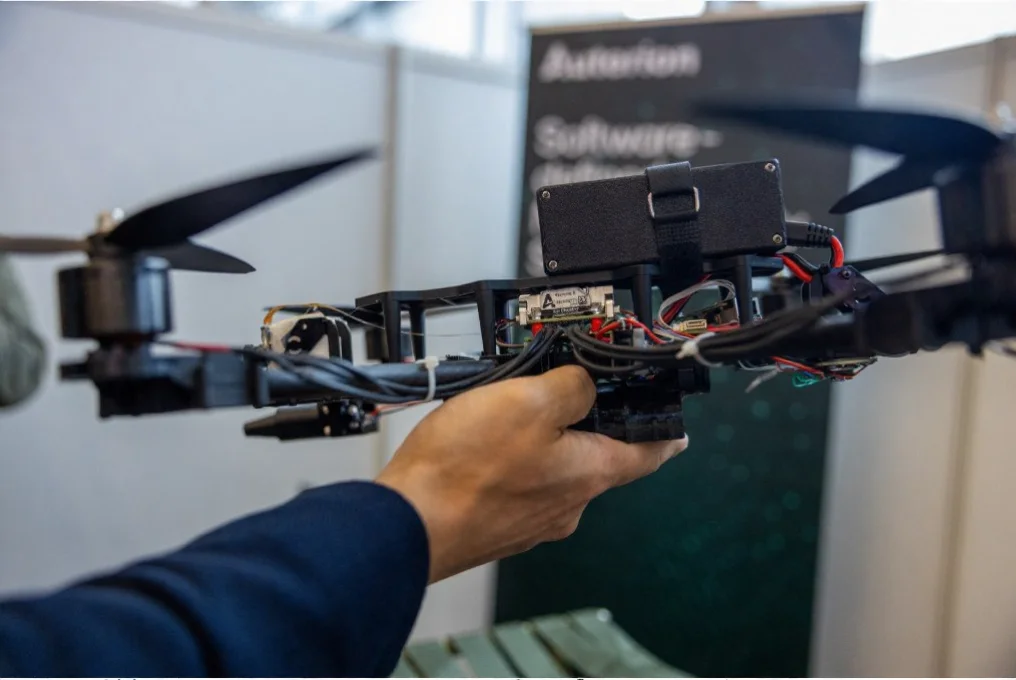
Ukraine’s drone warfare capabilities are receiving a transformative boost as the Pentagon greenlights the delivery of 33,000 AI-powered drone guidance modules through a $50 million contract with Auterion, a leading US-German defense software firm. This monumental shipment—set for completion by the end of 2025—represents a tenfold increase in previous support, signaling a bold escalation in Ukraine’s autonomous battlefield technology.
AI-Guided Warfare at Unprecedented Scale
The Skynode S module, Auterion’s flagship drone guidance computer, lies at the heart of this upgrade. This compact, passively cooled onboard processor is engineered to convert legacy, manually piloted drones into fully autonomous weapons platforms. In practice, it’s more than just a component—it’s the nervous system of a self-thinking aerial hunter.
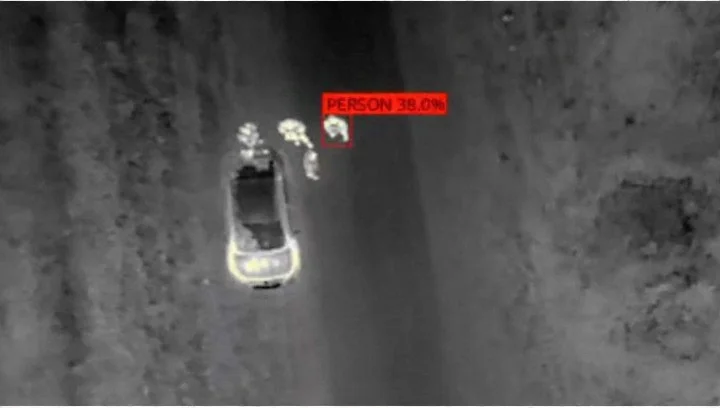
Equipped with high-resolution cameras and resilient radio modules, the Skynode S is designed to operate in contested electromagnetic environments, identifying, tracking, and shadowing mobile targets up to one kilometer away. These capabilities are particularly vital in GPS- and communications-denied zones, a battlefield condition often faced by Ukrainian forces due to sophisticated Russian jamming operations.
Auterion CEO Lorenz Meier confirmed the scale-up in an interview with the Financial Times, noting, “We’ve already shipped thousands, and now we’re scaling up to tens of thousands. These are unprecedented volumes.”
This scaling isn’t simply quantitative—it’s qualitative. Auterion’s software integrates real-time object recognition, autonomous tracking, and inter-drone communication, essentially turning a dispersed fleet of UAVs into a swarming, self-coordinating AI force.
Revolutionizing Drone Capabilities in the Ukrainian Theater
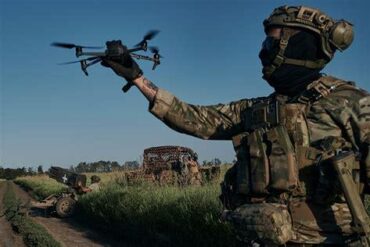
Ukrainian forces are already well-versed in drone innovation, having deployed earlier versions of Auterion’s tech in live combat scenarios. But the new Skynode S modules represent a leap forward, enabling drones to operate with high degrees of autonomy without centralized control. This shift is a force multiplier for the frontlines, where speed, precision, and coordination often define survival.
What makes these modules especially strategic is their ability to engage in swarm behavior. When multiple drones are equipped with Skynode S, they can seamlessly communicate, share target data, and execute coordinated missions—all without human oversight. The drones effectively become a networked organism, capable of responding dynamically to threats, obstacles, or mission shifts in real time.
Tactical Edge in a High-Tech Arms Race
These AI-driven modules are expected to neutralize tens of thousands of enemy drones, specifically targeting Russian long-range strike UAVs—many of which are sourced from Iran. Based on conservative estimates of 70–80% interception efficacy, the deployment of 33,000 units could potentially eliminate 23,000 to 26,000 hostile drones. Pushed to 90% efficiency, that number approaches 30,000.
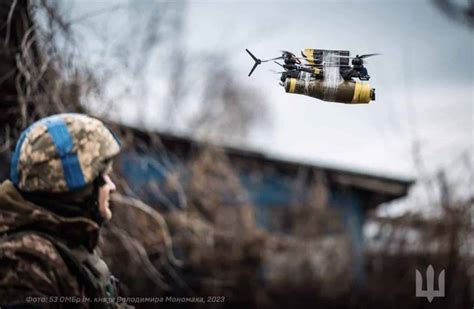
Such projections aren’t mere hypotheticals. On Ukraine’s current battlefields, where the skies are contested by loitering munitions and surveillance UAVs, every autonomous drone adds exponential value. Beyond defense, these modules can also identify enemy movements, relay data to artillery units, and conduct recon in urban warfare zones—all while evading GPS jamming and signal spoofing.
Auterion’s Civilian-Military Symbiosis
Although Auterion is now a key player in military-grade AI, its roots stem from the open-source PX4 drone software community. Lorenz Meier has emphasized that the company’s goal is not to compete with Ukraine’s domestic drone manufacturing ecosystem, but to enhance it through software superiority. The modules integrate easily into existing drone platforms, making them ideal for field upgrades and retrofits.
Auterion’s vision is one of modular flexibility. Ukrainian engineers can embed Skynode S into both commercially available drones and custom UAV builds, transforming a wide range of platforms into cohesive, mission-specific fleets.
NATO Learns From Ukraine’s Rapid Innovation
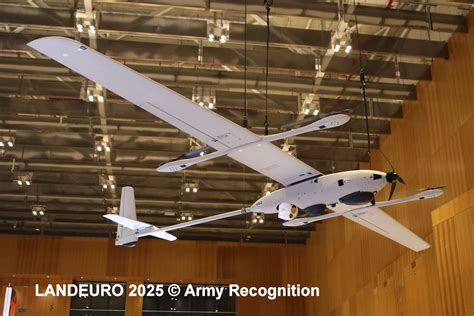
The growing technological alliance between Ukraine and Western defense firms is also rippling through NATO itself. At the LANDEURO 2025 conference in Wiesbaden, General Alexus G. Grynkewich, NATO’s Supreme Allied Commander Europe, acknowledged that Ukraine is currently outpacing NATO in tech innovation, particularly in drone warfare.
“Ukraine is showing us the future of warfare,” Grynkewich stated. “Their ability to rapidly integrate cutting-edge technologies, particularly in autonomous systems, is something NATO must study and adopt.”
The Pentagon’s contract with Auterion reflects this realization. It’s not just an act of support—it’s a strategic endorsement of software-defined warfare as the next critical domain in combat operations.
AI Autonomy Redefines Air Superiority
The implications of AI-enhanced drones go well beyond the Ukrainian battlefield. By investing in platforms like Skynode S, the U.S. Department of Defense is signaling a broader doctrinal shift toward autonomous combat systems. This is a movement away from centralized command and toward distributed, responsive warfare networks, where intelligence is decentralized and decision-making is delegated to the edge—literally, to the drone itself.
For Ukraine, this technology offers more than a tactical advantage—it’s a survival imperative. Russian strikes frequently attempt to blind Ukrainian ISR (intelligence, surveillance, reconnaissance) networks. AI-enabled drones can restore this lost visibility, autonomously adjusting to changing environments and remaining operational even as signals go dark.
The Future of Autonomous Defense Is Being Written in Ukraine
As 2025 progresses, Ukraine’s battlefield becomes a proving ground for emerging doctrines in AI warfare. With the deployment of 33,000 Skynode S units, the country is no longer just deploying drones—it is operating one of the most advanced autonomous drone networks on Earth.
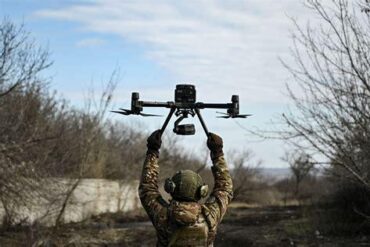
From frontline soldiers guiding AI-assisted quadcopters to command centers coordinating drone swarms across regions, Ukraine is setting a precedent. This is not the future of warfare. It is the present—one defined by machine speed, software agility, and adaptive lethality.
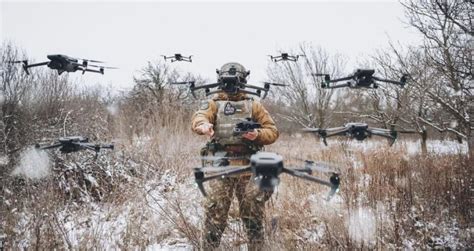
While geopolitical alliances shift and evolve, technology does not wait. Ukraine’s rapid adoption of AI-enabled drone systems places it at the vanguard of 21st-century warfare, with the Pentagon as both ally and observer. As deliveries continue into late 2025, all eyes will remain on Ukraine—not only for its resilience, but for its role as a global testbed of next-generation military autonomy.
The battlefield is changing. And Ukraine, armed with Skynode S, is flying straight into that future.