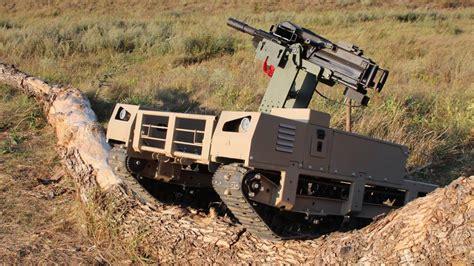
In a significant leap forward for its battlefield robotics program, Ukraine’s Ministry of Defense has officially approved the domestically produced Termit unmanned ground vehicle (UGV) for operational deployment. The decision, announced on June 21, 2025, comes at a pivotal moment in the country’s military strategy, reflecting a broader shift toward autonomous systems designed to reduce human risk and increase tactical efficiency across contested frontlines.
The approval of the Termit UGV — a next-generation tracked robotic system — underscores Kyiv’s growing commitment to developing homegrown, tech-forward capabilities. With war on Ukrainian soil entering its fourth year following Russia’s full-scale invasion in 2022, the strategic utility of drones has transitioned from supplemental to central. Land-based drones like Termit are now seen as essential tools in navigating trench warfare, urban combat, and remote logistics.
The Rise of Ground Drones in Ukrainian Warfare
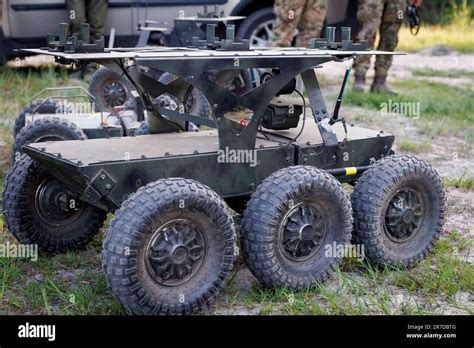
While Ukraine’s aerial drone program has captured global headlines for its innovation and adaptability, its ground-based drone development has followed a more methodical but no less impactful path. The Termit is a culmination of battlefield feedback, combat-tested prototypes, and an urgent need to automate dangerous frontline tasks. Early UGVs were primarily used for mine clearing and supply delivery, but Termit represents a shift to multipurpose battlefield platforms.
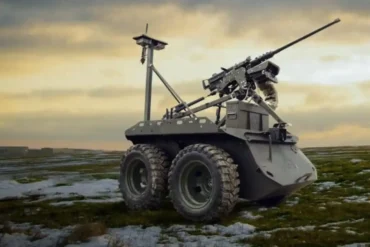
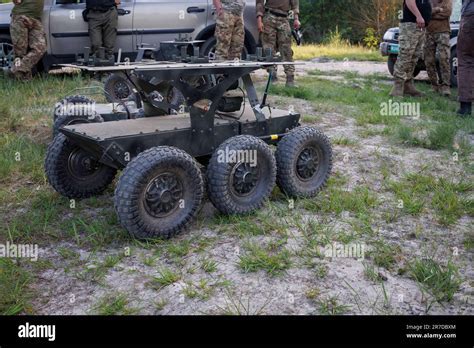
The Termit features a low-profile, tracked design optimized for rugged and uneven terrain, enabling it to maneuver through bombed-out urban environments, forested areas, and muddy no-man’s-land trenches with relative ease. Its compact shape and distributed weight also minimize the chances of detection and targeting, giving it stealth advantages over larger or wheeled alternatives.
Crucially, the Termit can be configured for various mission profiles depending on battlefield demands. It is modular, meaning it can be equipped with:
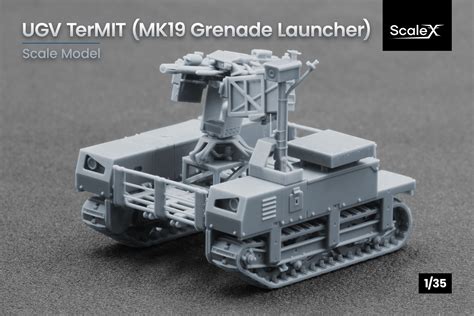
- Combat payloads, including remotely operated weapon stations.
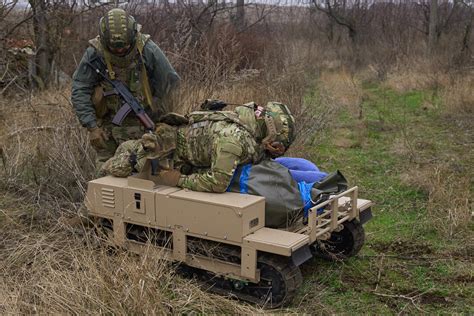
- Medical evacuation stretchers, allowing for extraction of wounded personnel under fire.
- Engineering and logistics kits, including explosives transport, ammunition resupply, and even communication relays.
This battlefield versatility makes Termit one of the most capable robotic ground systems in the Ukrainian arsenal to date.
Technical Capabilities: Balancing Power and Mobility
At the core of Termit’s performance is its advanced traction battery system, which powers the unit for several continuous hours and gives it the ability to traverse dozens of kilometers on a single charge. This endurance is critical in contested areas where resupply or remote charging may be impractical or dangerous.
The drone has a payload capacity of up to 300 kilograms, making it suitable for transporting everything from anti-tank mines and surveillance drones to humanitarian aid and battlefield medical kits. This weight rating also opens up opportunities for more advanced weapon integration in the future, including turret systems and loitering munitions.
Its onboard computing architecture supports both semi-autonomous and remote-controlled operations. Operators can guide Termit manually via encrypted links or allow it to follow pre-programmed paths using GPS and terrain-mapping software. As artificial intelligence technologies mature, future Termit models could integrate more autonomous behavior, including threat identification and obstacle avoidance.
Battlefield Context: War Drives Innovation
Ukraine’s battlefield drone programs — both aerial and ground-based — have grown exponentially under the pressure of full-scale war. Since 2022, unmanned systems have become indispensable in modern Ukrainian doctrine. Faced with manpower constraints, contested logistics corridors, and the constant risk of artillery and drone strikes, the military has increasingly leaned on machines to fill critical gaps.
Ukraine’s push to mass-produce drones is not limited to the air. President Volodymyr Zelensky’s ambitious directive to manufacture 30,000 long-range drones in 2025 was accompanied by a broader call to invest in strike-capable drone hybrids like the Palianytsia and Peklo, which merge traditional missile systems with drone mobility and navigation.
Termit fits snugly into this framework, acting as a force multiplier that bridges the gap between infantry and artillery. It enables supply chains to operate deeper into contested zones, extends the reach of small unit tactics, and most importantly, reduces the exposure of human soldiers to front-line danger.
The Strategic Value of Modular UGVs
Modularity is not just a design trend; it is a survival strategy. On a modern battlefield where the lines between offense, defense, and logistics blur quickly, units require platforms that can adapt in real-time. Termit’s modular configuration allows commanders to switch roles with minimal downtime, adjusting the drone’s hardware to meet rapidly evolving threats.
For example, during an offensive push, Termits may lead convoys as IED detection vehicles, absorbing risk that would otherwise fall on troops or manned vehicles. In defensive scenarios, they might deploy in static positions with mounted weapons for area denial. And during humanitarian operations, they could serve in casualty extraction roles or deliver critical supplies to civilians in war-torn villages.
Additionally, the drone’s small footprint and quiet electric operation make it ideal for covert missions or night operations, especially when paired with thermal or low-light optics. With Russia increasingly employing electronic warfare tools to disrupt drone networks, the relative simplicity of ground drone communication links gives Termit an edge in signal-jammed environments.
Domestic Innovation Under Fire
The story of Termit’s development is also a story of Ukraine’s technological resilience. Despite the constant threat of missile strikes on industrial hubs and research facilities, the Ukrainian defense tech ecosystem has continued to deliver cutting-edge solutions. Companies working under state contracts, as well as independent startups, have coalesced into a robust network of rapid prototyping, combat testing, and field iteration.
The Ministry of Defense has worked to streamline approval and deployment processes for systems like Termit, reducing bureaucratic lag time that could otherwise stifle innovation. Through this ecosystem, Ukraine has achieved a degree of self-sufficiency that few countries under active siege could replicate.
Moreover, the visibility of these systems on the battlefield — and the success stories that emerge from their use — also contribute to national morale and international fundraising. Crowdsourcing, diaspora tech hubs, and defense partnerships with Western countries have all played roles in bringing systems like Termit from blueprint to battlefield.
Future Outlook: Termit as a Tactical Template
While Termit represents a substantial step forward, its approval is likely just the beginning. Ukraine’s military doctrine is increasingly centered on integrated unmanned operations, where UGVs, UAVs, and maritime drones operate in tandem with human forces and one another. These systems create a sensor-shooter loop, linking surveillance drones in the sky with strike drones on the ground and coordinating fire with manned artillery units or missile batteries.
The success of Termit could also lead to scaled-down versions for use in dense urban settings, or larger models built to carry heavier weapon systems. Additionally, lessons learned from its field performance will inform the next generation of Ukrainian robotics, with improvements in armor, autonomy, and AI-enabled decision-making already in conceptual development.
As Ukraine continues to wage an asymmetric war against a larger and deeply entrenched adversary, its ability to outthink and outmaneuver through technology becomes one of its greatest strategic advantages. Termit is more than a tool — it is a symbol of adaptive warfare, a reflection of a nation that is transforming battlefield adversity into innovation under fire.
Conclusion
The deployment of the Termit unmanned ground vehicle signals a decisive moment in the evolution of Ukraine’s ground warfare capabilities. Born out of necessity, refined through innovation, and launched in the crucible of war, Termit is not only a tactical asset but a testament to Ukraine’s engineering tenacity. Its battlefield versatility, rugged design, and modular configuration set a new standard for what modern unmanned ground systems can achieve.
As the war grinds on and the lines between traditional and robotic warfare continue to fade, Ukraine’s approval and deployment of Termit will likely be remembered as a turning point — the moment unmanned ground vehicles moved from experimental support roles to indispensable frontline assets.