Ukraine’s authorization of the Zmiy Droid 12.7 armored ground drone for operational use marks a decisive moment in the country’s rapid transformation of land warfare. Confirmed by the Ministry of Defense on January 7, 2026, the induction places a domestically produced robotic strike and reconnaissance system directly into frontline service, reflecting a doctrine forged not in laboratories or exercises, but under constant fire. The approval signals Kyiv’s intent to accelerate the substitution of human presence in the most lethal combat roles with hardened, remotely operated platforms that can endure prolonged exposure to artillery, loitering munitions, and electronic warfare.
The Zmiy Droid 12.7 enters service as part of a broader Ukrainian effort to normalize the use of unmanned ground vehicles in high-intensity conflict. Rather than serving as experimental assets, these systems are expected to perform sustained missions, hold firing positions, and integrate seamlessly with infantry, aerial drones, and artillery. Ukrainian defense officials describe the platform as a practical answer to battlefield realities, where survivability, reliability, and ease of control matter more than theoretical performance envelopes.
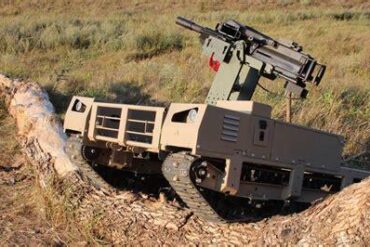
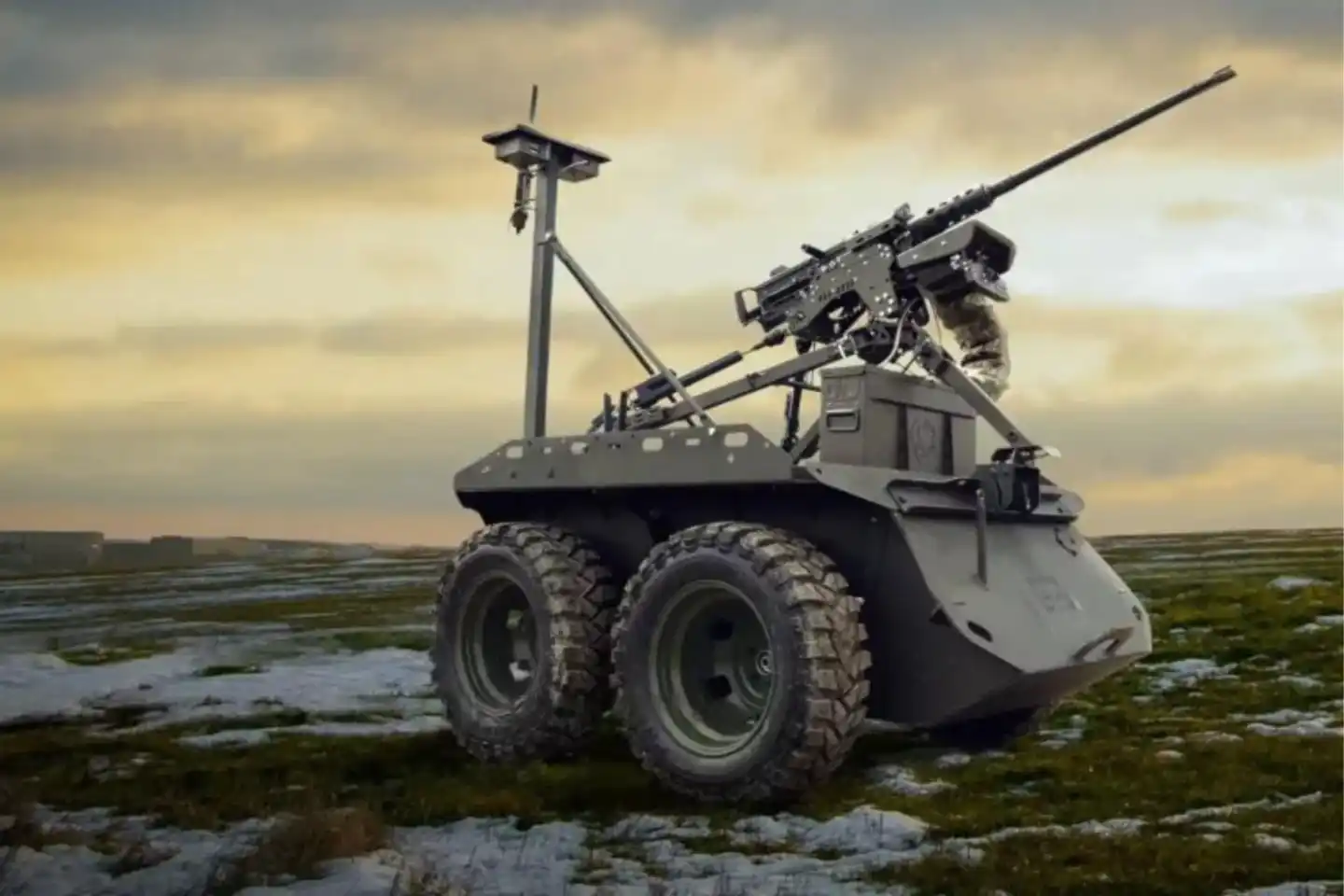
At its core, the Zmiy Droid 12.7 represents a maturation of Ukraine’s wartime robotics ecosystem. Built on the battle-proven Zmiy ground platform and equipped with the remotely operated Wolly combat module, the system is designed to deliver heavy, suppressive fire while keeping operators at a safe distance. The authorization confirms that the platform has met operational thresholds for durability, firepower, and command-and-control resilience in contested environments.
From Emergency Innovation to Standardized Combat Asset
Ukraine’s path to fielding the Zmiy Droid 12.7 has been shaped by necessity. Continuous exposure to high-casualty engagements forced Ukrainian engineers and commanders to rethink how ground combat power is applied. The result is a system optimized not for showcase demonstrations but for daily use under fire. Defense industry sources emphasize that the Zmiy Droid 12.7 was developed by Ukrainian manufacturers with direct frontline feedback loops, allowing rapid iteration based on real combat losses and successes.
This development model stands in contrast to traditional procurement cycles, which often span decades. In Ukraine’s case, lessons learned from destroyed or damaged robots were immediately fed back into reinforced armor layouts, improved suspension components, and more robust communications hardware. The Ministry of Defense’s decision to authorize the system reflects confidence that the platform can be produced, maintained, and operated at scale under wartime conditions.
Heavy Firepower Without Human Exposure
The defining feature of the Zmiy Droid 12.7 is its armament. The Wolly combat module mounts a 12.7 mm heavy machine gun, providing firepower comparable to crew-served weapons traditionally deployed by infantry teams. This caliber allows the robot to suppress enemy positions, engage light armored vehicles, and neutralize fortified firing points. By placing such firepower on a compact, unmanned chassis, Ukrainian forces gain the ability to contest ground without exposing soldiers to direct fire.
The weapon station is protected by a camouflage cover that reduces visual and thermal signatures, while the entire system is configured to sustain long firing sessions. Operators can engage targets remotely, adjusting fire with precision while remaining concealed. This capability is particularly valuable in static or semi-static engagements, where the robot can absorb incoming fire and continue operating long after a human crew would be forced to withdraw.
Designed to Survive Modern Threats
Survivability is central to the Zmiy Droid 12.7’s design philosophy. Its armored hull provides protection against small arms fire and battlefield fragmentation, while reinforced structural elements increase resistance to anti-personnel mines. Ukrainian operators report that the platform has demonstrated the ability to withstand multiple strikes from FPV attack drones, a critical requirement in an environment saturated with inexpensive, high-precision loitering threats.
Mobility is equally important. The Zmiy Droid 12.7’s robust suspension and large off-road tires enable it to traverse mud, sand, snow, and shallow water obstacles. This versatility allows deployment across Ukraine’s varied terrain, from urban rubble and forested areas to open fields and flooded lowlands. The platform’s mobility ensures it can reposition quickly, reducing vulnerability to counter-battery fire and drone-guided strikes.
Communications in a Contested Electromagnetic Battlespace
Modern warfare is as much about spectrum dominance as kinetic force, and the Zmiy Droid 12.7 reflects this reality. The system is equipped with a dedicated antenna designed to maintain communications in contested electromagnetic conditions, where jamming and interception are constant threats. Reliable command links allow operators to maneuver the platform, control the weapon station, and receive sensor feedback even when adversaries attempt to disrupt signals.
The integrated control module enables a single operator to drive the platform and manage the combat module simultaneously. This unified interface reduces reaction times during engagements and minimizes the manpower required to deploy the system. In practice, this means fewer personnel exposed near the front and faster decision-making when contact is made.
Human-in-the-Loop Automation
While the Zmiy Droid 12.7 incorporates advanced automation, Ukrainian officials stress that lethal decisions remain under human control. The Wolly combat module includes AI-assisted target capture and tracking, allowing the system to lock onto identified threats and maintain aim during movement or recoil. This assistance reduces operator workload during prolonged engagements, particularly when multiple targets appear in quick succession.
Crucially, the system does not autonomously select targets or fire without human authorization. This approach balances efficiency with accountability, ensuring that automation enhances performance without removing human judgment from the use of force. In the chaos of frontline combat, such assistance can mean the difference between effective suppression and missed opportunities.
Proven Performance in Sustained Combat Roles
Ukrainian military officials point to prior deployments of similar robotic systems to illustrate the operational value of the Zmiy Droid 12.7’s class. Documented engagements have shown unmanned ground platforms armed with 12.7 mm machine guns successfully destroying Russian MT-LB multipurpose light armored tractors, demonstrating that these robots can engage and defeat armored targets under real combat conditions.
In another cited case, a robotic firing position remained deployed for 45 consecutive days, returning to its crew only once every two days for brief maintenance, ammunition replenishment, and battery charging. Such endurance highlights a key advantage of unmanned systems: they do not suffer fatigue, psychological stress, or attrition in the same way human crews do. This allows commanders to maintain constant pressure on enemy positions with fewer rotations and reduced logistical strain.
Redefining Frontline Roles
The primary mission of the Zmiy Droid 12.7 is to replace soldiers in the most dangerous zones of the battlefield. Forward firing positions, exposed observation points, and contested approaches are increasingly assigned to unmanned platforms capable of absorbing enemy fire. By acting as both shield and sword, the robot reduces personnel losses while sustaining combat effectiveness.
Ukrainian commanders emphasize that the system is not intended to operate in isolation. Instead, it is integrated into combined arms operations, working alongside infantry units, aerial reconnaissance drones, and artillery assets. A Zmiy Droid 12.7 can fix enemy forces in place with suppressive fire, enabling infantry maneuvers or precision strikes guided by overhead drones. This synergy reflects a battlefield where humans and machines collaborate closely rather than compete for roles.
Industrial Capacity Under Fire
The authorization of the Zmiy Droid 12.7 also highlights the resilience of Ukraine’s defense industry. Developing, producing, and supporting armored robotic systems during an ongoing conflict requires adaptive supply chains and rapid problem-solving. Ukrainian manufacturers involved in the project bring years of experience operating under wartime constraints, allowing them to prioritize components and designs that can be sourced and repaired domestically.
This industrial self-reliance reduces dependence on foreign suppliers and shortens repair cycles. Damaged platforms can be recovered, refurbished, and returned to service quickly, ensuring that losses do not translate into prolonged capability gaps. For Ukraine, this capacity is as strategically important as the robot itself.
Implications for Modern Land Warfare
The induction of the Zmiy Droid 12.7 into operational service underscores how the war has accelerated Ukraine’s adoption of robotic combat systems. While many militaries are still debating future concepts for unmanned ground warfare, Ukrainian forces are fielding, losing, repairing, and improving these platforms in real time. The result is a rapidly evolving doctrine that treats armored robots as routine battlefield assets rather than experimental curiosities.
This shift carries broader implications. As unmanned ground vehicles prove their worth in high-intensity conflict, they challenge long-standing assumptions about the limits of automation on land. The Zmiy Droid 12.7 demonstrates that with sufficient protection, firepower, and communications resilience, robotic systems can hold ground, deliver sustained fire, and survive in environments once considered too hostile for machines.
A Signal of Intent
By formally authorizing the Zmiy Droid 12.7, Ukraine sends a clear signal about the future direction of its armed forces. The decision reflects confidence not only in a specific platform, but in an entire approach to warfare that prioritizes adaptability, survivability, and the preservation of human life. As the conflict continues to evolve, systems like the Zmiy Droid 12.7 are likely to become increasingly common, shaping how battles are fought and how armies measure combat power in the age of robotic war.