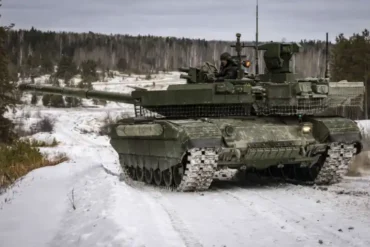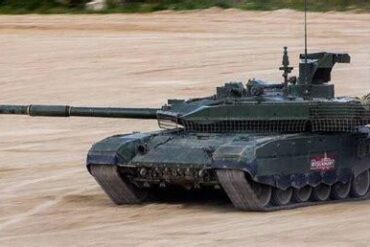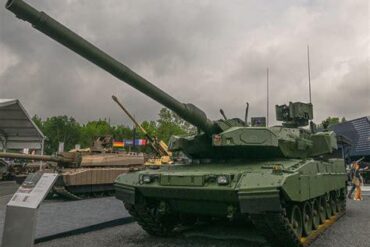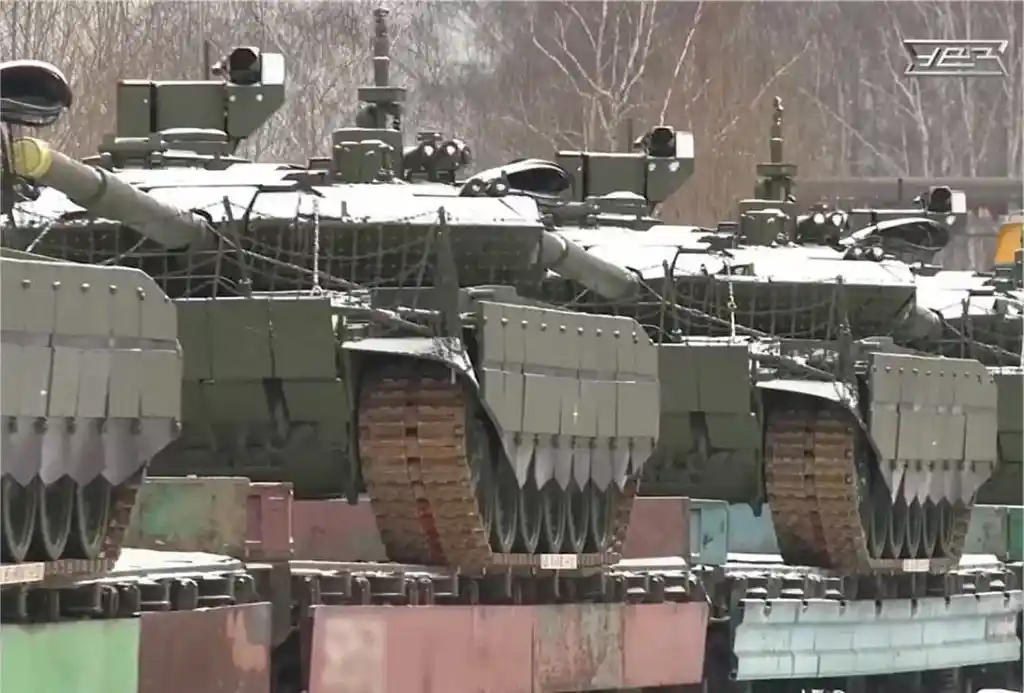
Russia has delivered a fresh batch of T-90M Proryv main battle tanks to its armed forces, signaling an unrelenting commitment to military production despite the weight of nearly four years of international sanctions. State manufacturer Uralvagonzavod confirmed the shipment just before the new year, with footage aired on Russian television showcasing the tanks being transported by rail—rolling symbols of Moscow’s enduring industrial output in the face of wartime isolation.
T-90M Proryv: Cornerstone of Modern Russian Armored Warfare
The T-90M Proryv represents the apex of Russian tank engineering, combining firepower, protection, and networked combat systems into a single platform. Developed as a deep modernization of the original T-90 design, the T-90M entered service shortly before the invasion of Ukraine in February 2022. It incorporates enhancements based on combat experience in Syria and Donbas, ensuring relevance in the most lethal modern battlefields.
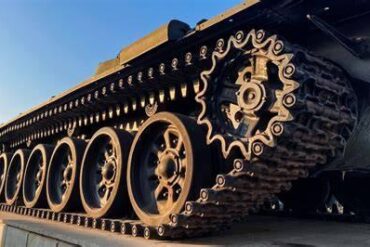
Its primary weapon is an improved 125mm smoothbore gun with an automatic loader, offering rapid and lethal strikes against both armor and fortified targets. The Relikt explosive reactive armor protects against tandem-charge and kinetic penetrators, while a panoramic thermal sight and the Kalina battle management system give commanders real-time awareness and target prioritization. The tank is propelled by the V-92S2F diesel engine, delivering 1,130 horsepower, enabling high mobility even under combat load.
Adaptation in the Age of Drones and Precision Warfare
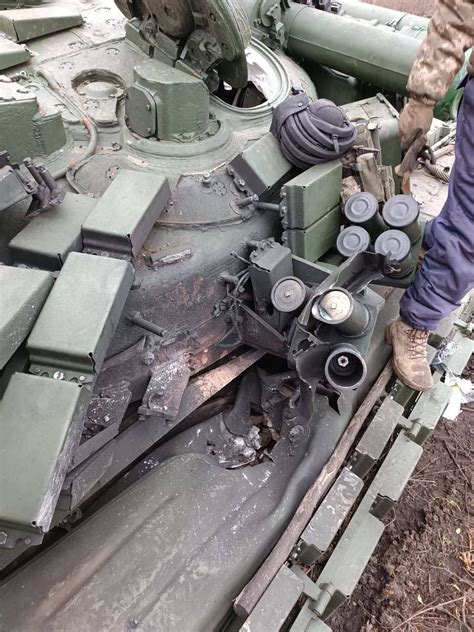
What distinguishes the T-90M is its ongoing evolution. The dynamic nature of the war in Ukraine, where drone strikes and Western-supplied anti-tank guided missiles (ATGMs) dominate, has forced Russia to rapidly innovate on the battlefield. Footage from the front lines increasingly shows T-90Ms deploying with additional armor, mesh cages, and counter-drone defenses.
Recent adaptations include:
- Slat-armor cages to deflect FPV drones.
- Turret-top mesh screens aimed at disrupting top-attack munitions such as Javelin and NLAW.
- Electronic countermeasure (ECM) devices, believed to be repurposed infantry or UAV EW modules, to jam drone targeting systems.
- Infrared suppressors and makeshift “cope cages”, designed to minimize visibility to thermal-guided loitering munitions.
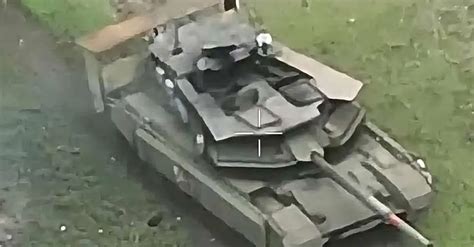
These field upgrades have now reportedly transitioned into factory-standard features. Sources close to Uralvagonzavod suggest that newly manufactured T-90Ms incorporate integrated drone countermeasures and soft-kill active protection systems designed to blind or deflect incoming threats. Such advancements underscore Russia’s strategic pivot to meet the asymmetric threat landscape defined by drone swarms and Western precision weapons.
Production Amid Sanctions: Parallel Supply Chains and Strategic Substitution
Despite export restrictions on Western electronics and optics, Russia’s tank production line remains active. Defense analysts attribute this to a combination of:
- Component substitution using lower-grade but available domestic alternatives.
- Parallel import networks established through China, Central Asia, and Iran.
- Stockpiles of pre-sanctioned materials.
These workarounds have enabled Moscow to maintain T-90M output, even if at times with compromises in sensor range or system reliability. Nevertheless, the Kremlin’s focus is now quantity backed by sufficient quality—striving to outlast Ukrainian forces by sheer industrial persistence.
Strategic Utility: Beyond Firepower to Symbolism
The T-90M’s battlefield role extends far beyond its technical specifications. For Russian military leadership, it is a symbol of resilience, proof that Russia’s industrial base can withstand international pressure and support sustained offensive operations. From Kupiansk to Zaporizhzhia, these tanks are forming the armored spearheads of Russia’s most intense battles.
In operational terms, the T-90M enables Russia to:
- Penetrate fortified Ukrainian positions.
- Engage NATO-supplied tanks like the Leopard 2A6, Challenger 2, and M1A1 Abrams.
- Resist ambushes by infantry armed with modern ATGMs.
- Integrate into broader combined-arms warfare, supported by UAV reconnaissance and electronic warfare teams.
Russian commanders view these platforms as essential to maintaining mechanized momentum, particularly as Ukraine escalates the use of Western-trained maneuver brigades.
Losses and Replenishment: The Race to Regain Parity
By mid-2025, Western intelligence assessments estimated that Russia had lost over 2,500 tanks since the start of the full-scale invasion. Many were destroyed by anti-tank missiles, others captured or abandoned during chaotic retreats. These losses pressured the Kremlin into ramping up production, particularly of modern tanks like the T-90M.
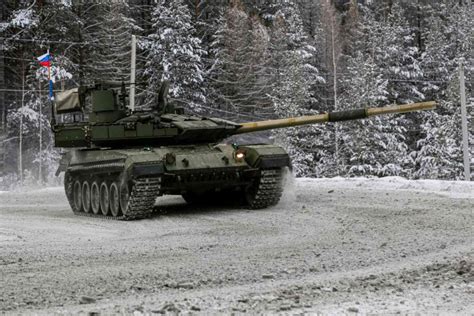
With older platforms like the T-72B3 and T-80BVM increasingly vulnerable to modern threats, the T-90M has emerged as Russia’s best hope to bridge the capability gap. As Ukraine absorbs and deploys Western armor, Russia is gambling that mass production of modernized tanks can offset qualitative advantages with numbers and adaptation.
Wartime Economy: Industrial Mobilization at Scale
The uninterrupted delivery of T-90Ms speaks to a broader trend: the transformation of the Russian economy into a war machine. With most sectors subordinated to military needs, the Kremlin has shifted industrial strategy toward prolonged conflict. Defense plants operate around the clock under state contracts, and the Uralvagonzavod facility in Nizhny Tagil has become a focal point of this mobilization.
Military insiders suggest that tank production quotas for 2026 have increased substantially, with dual priorities:
- Replacing battlefield losses.
- Equipping new mechanized formations for potential offensives.
This industrial push is complemented by a doctrine shift within the Russian General Staff: favoring combined arms assaults supported by electronic warfare, drone reconnaissance, and sustained armored pressure—areas where the T-90M’s capabilities are increasingly pivotal.
Conclusion: Armor for Attrition
The Russian Army’s continued acquisition of T-90M Proryv tanks underlines its commitment to sustaining long-term military operations in Ukraine. It demonstrates not only the survival of Russia’s defense-industrial base but its adaptive capacity in the face of rapidly evolving threats. As international observers debate the endurance of the Russian war machine, the emergence of trainloads of newly built tanks tells its own story: one of industrial endurance, strategic adaptation, and a clear intent to hold ground—and take more—on the battlefields of Ukraine.