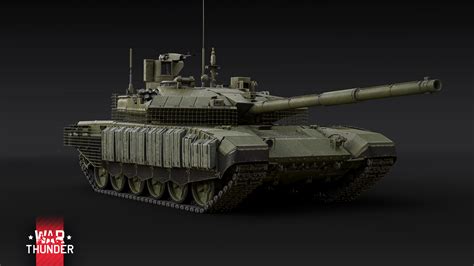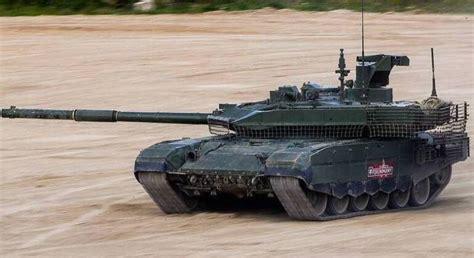
Russia has dramatically increased production of its most modern T-90M Proryv main battle tank, reaching a manufacturing rate of 300 units per year, with a bold target of 1,000 annually by 2028. This surge in output—five times greater than pre-2022 levels—underscores a significant evolution in Russia’s military-industrial capabilities and long-term strategic ambitions.
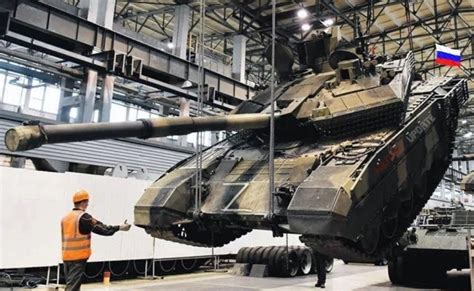
Strategic Expansion of Uralvagonzavod Tank Production
The backbone of this effort is Uralvagonzavod, Russia’s premier armored vehicle manufacturer. By implementing factory upgrades, acquiring automated machining centers, and launching three-shift production cycles, the company has managed to triple its annual T-90M output from the estimated 60 units per year seen prior to 2022. Defense analysts, including the Conflict Intelligence Team (CIT), confirm these figures and suggest further increases are feasible as Russia insulates its industrial base from sanctions-related disruptions.
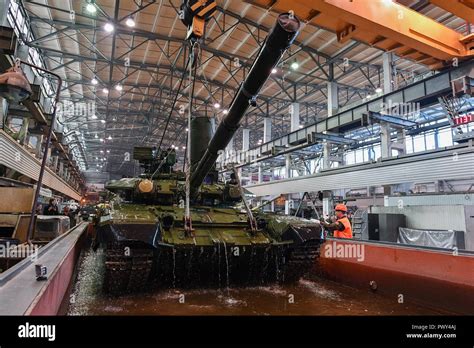
What differentiates Uralvagonzavod from Western manufacturers is its vertically integrated model. The ability to handle casting, welding, machining, and assembly in-house provides significant autonomy. While NATO countries often rely on complex international supply chains and just-in-time logistics, Russia’s internal capacity offers resilience in wartime production conditions. The Kremlin’s mobilization decrees and state subsidies have further solidified this industrial expansion.
The T-90M: Russia’s Technological Pinnacle in Armor Warfare
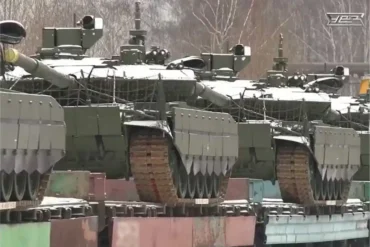
The T-90M Proryv represents the apex of Russian main battle tank evolution. It is a direct response to both battlefield realities in Ukraine and broader global tank design trends. Enhancements over earlier T-90A models include a 125mm 2A82-1M smoothbore gun, Kalina digital fire control system, and networked battlefield management suite—all of which give it the capability to detect, target, and engage threats more effectively in contested environments.
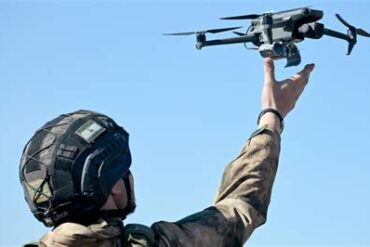
The T-90M’s combat survivability is boosted by the Relikt explosive reactive armor (ERA) system, replacing the older Kontakt-5. The tank’s design now incorporates modular armor, slat armor, and counter-drone measures, reflecting hard lessons learned from Ukrainian battlefield tactics. Russia’s integration of active protection systems (APS), soft-kill electronic jammers, and radar warning receivers aims to mitigate the devastating impact of loitering munitions and FPV drones.
Battlefield Deployment and Tactical Evolution
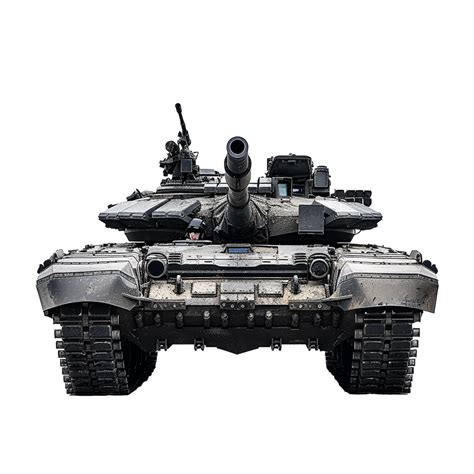
On the battlefield, the T-90M is not merely a replacement—it’s a cornerstone of modern Russian combined arms doctrine. Deployed alongside motorized infantry, self-propelled artillery, and electronic warfare units, the T-90M is used to spearhead assaults, support defensive lines, and suppress fortified enemy positions. Despite the significant losses Russian armored units have faced, particularly from Western-supplied ATGMs and drone swarms, the T-90M’s layered protection and doctrine-centric deployment strategy allow it to withstand and adapt to new threats.
Estimates suggest between 540 to 630 T-90Ms have been produced since 2022, with approximately 130 visually confirmed as destroyed or abandoned. The remaining 410–500 units represent around 15% of Russia’s active tank fleet in Ukraine. However, the continuous inflow of new tanks offsets attrition and indicates a sustainable long-term armor replenishment strategy.
Technical Specifications: Firepower Meets Agility
The T-90M is constructed on a modified T-90 chassis and powered by the V-92S2F 1,130 hp diesel engine, allowing speeds of up to 70 km/h and an operational range of 550 km. It is equipped with:
- Main Gun: 125mm 2A82-1M smoothbore cannon, capable of firing APFSDS, HE-FRAG, and Refleks ATGMs.
- Secondary Armament: 7.62mm PKT coaxial machine gun and 12.7mm Kord remotely operated heavy machine gun.
- Armor Protection: Multi-layered composite armor with Relikt ERA, enhanced side skirts, and slat armor.
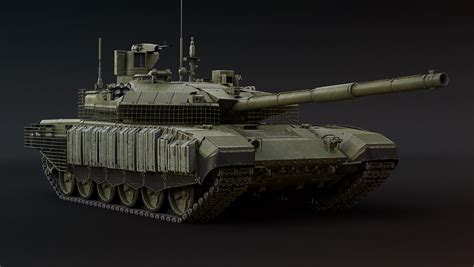
These features allow the T-90M to excel in close quarters, urban, and open-field engagements, giving it a significant edge over legacy Soviet models and a competitive edge against many Western MBTs deployed in Ukraine.
T-90M vs Western Counterparts on Ukrainian Soil
The Ukrainian Armed Forces operate a mixed fleet, including T-64BVs, T-72M1s, T-80BVs, and Western-supplied tanks like the Leopard 2A4/A6, Challenger 2, and M1A1SA Abrams. While the latter group matches or exceeds the T-90M in armor and optics, few of the Western tanks in Ukrainian service are fielded with modern active protection systems (APS), placing them at risk against advanced Russian anti-tank weaponry and drone-assisted strikes.
In contrast, the T-90M’s Relikt ERA and soft-kill EW systems offer real-time defense against top-attack drones and shoulder-launched ATGMs. Moreover, its three-man crew configuration (thanks to an autoloader) allows for more efficient internal space usage and a higher sustained rate of fire.
Resilience Amid Sanctions and Supply Constraints
One of the more astonishing aspects of Russia’s T-90M surge is the nation’s ability to maintain production amid intensifying Western sanctions and export restrictions. The robustness of Russia’s domestic supply chains, combined with strategic pre-war stockpiling and a state-directed wartime economy, has kept production lines active even under pressure. The defense industry’s survival strategy includes sourcing domestically manufactured microelectronics, reconfiguring CNC processes, and rerouting materials procurement via non-Western trade partners.
This state-backed industrial resilience stands in stark contrast to the limited tank production capacity across Europe. In some cases, Russia is now outproducing the entirety of NATO’s European tank industry, raising critical alarms for policymakers monitoring the strategic balance of land power in Eastern Europe.
Forward Trajectory: Threats and Strategic Implications
Russia’s goal to hit 1,000 tanks annually by 2028 is not merely an aspirational figure. With current infrastructure enhancements at Uralvagonzavod and continued insulation from foreign economic disruptions, analysts suggest this target is achievable, if sanctions enforcement and access to advanced manufacturing tools remain inconsistent. The ramifications are profound:
- Replenishment of strategic reserves beyond immediate battlefield use.
- Rearming of allied states or clients, should geopolitical conditions allow exports.
- Shift in Eurasian land power parity, especially in contested regions such as the Baltics, Caucasus, and Central Asia.
Continuous Upgrades and Battlefield Adaptation
The evolution of the T-90M continues. Reports indicate that new variants under testing include advanced hard-kill APS, drone detection sensors, and jamming technologies aimed at neutralizing enemy fire control systems. These upgrades position the T-90M not only as a stopgap but as a forward-looking armored platform, ready for the next generation of warfare.
As the war in Ukraine intensifies and transitions toward a prolonged conflict, the T-90M’s role will remain central to Moscow’s strategic calculus. Whether used to pressure Ukrainian defenses, deter NATO deployments, or project strength abroad, the T-90M’s increasing numbers and evolving design make it a formidable symbol of Russian industrial and military resolve.