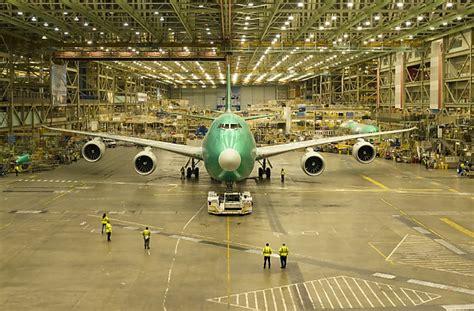
The Boeing 747, famously known as the “Queen of the Skies,” is one of the most iconic aircraft in aviation history. Its journey, spanning over five decades of production, revolutionized long-haul air travel and left an indelible mark on both commercial and cargo aviation. From its groundbreaking design in the 1960s to its final delivery in 2023, the Boeing 747 not only broke records but also redefined what was possible in the skies.
The Dawn of a Giant: Launch and Early Production
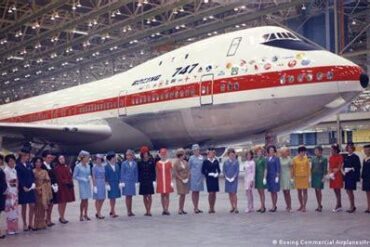
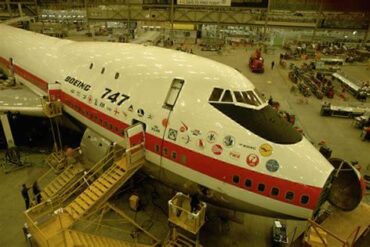
The Boeing 747 program officially began in 1968, with the rollout of the first unit—nicknamed the “City of Everett”—from Boeing’s purpose-built facility in Everett, Washington. Designed to meet Pan American World Airways’ need for a high-capacity, long-haul aircraft, the 747 became the world’s first widebody jet. Its double-deck design and four-engine configuration allowed airlines to fly more passengers than ever before.
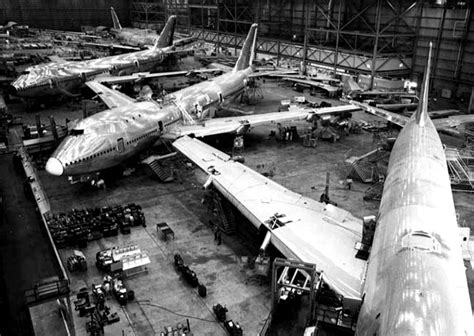
Production began slowly, as Boeing developed the infrastructure to handle the massive jet. Early development also included five prototype aircraft used in flight testing, among them the original N7470 and four additional test airframes. These early builds laid the groundwork for what would become a multi-generational success story in aerospace manufacturing.
Total Production Numbers: A Breakdown by Variant
Across its lifetime, 1,574 Boeing 747s were built, encompassing multiple passenger, cargo, and specialty variants. Each generation brought technical improvements, with some models achieving greater commercial success than others. Here’s a breakdown of total units built by variant:
- 747-100: 206 units
- 747-200: 393 units
- 747SP: 45 units
- 747-300: 81 units
- 747-400: 694 units
- 747-8: 155 units
The 747-400 series, launched in 1989, emerged as the best-selling variant by a wide margin, accounting for nearly 44% of all 747 production. It introduced modern avionics, a glass cockpit, fuel-efficient engines, and winglets, which all contributed to its commercial dominance.
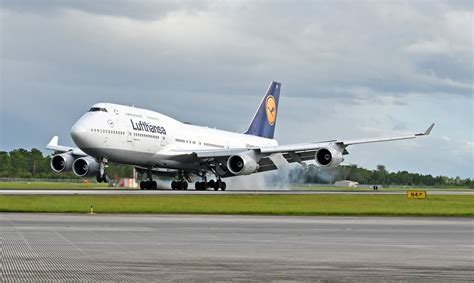
The Legacy of the 747-400: A Modern Aviation Milestone
The 747-400 was more than just a commercial success—it symbolized the peak of long-haul luxury and range. Airlines around the world relied on it for high-demand transoceanic routes. Within the 747-400 family, Boeing delivered several subtypes, each tailored to unique needs:
- 747-400 (base passenger): 442 units
- 747-400D (domestic high-density): 19 units
- 747-400ER (extended range): 6 units
- 747-400M (Combi passenger/freighter): 61 units
- 747-400F (freighter): 126 units
- 747-400ERF (extended range freighter): 40 units
Despite being introduced at a time when the aviation industry was on the cusp of change, the 747-400 proved remarkably adaptable and remained in production until 2009. It was the last 747 series to see widespread passenger use across continents.
Rise and Fall of the 747-8 Series
The final variant of the 747 family—the 747-8—was launched in the 2000s in response to increasing demand for efficient, long-haul cargo solutions. Its passenger model, the 747-8i, entered service in 2012. However, the -8i failed to gain significant traction, with only 48 units sold. In contrast, the 747-8F freighter variant performed moderately better, totaling 107 deliveries.
The design featured a longer fuselage than the 747-400, more advanced engines derived from the 787 Dreamliner program, and an updated flight deck. Yet by the time of its launch, the aviation market had already begun to favor twin-engine widebodies like the Boeing 777, 787, and Airbus A350.
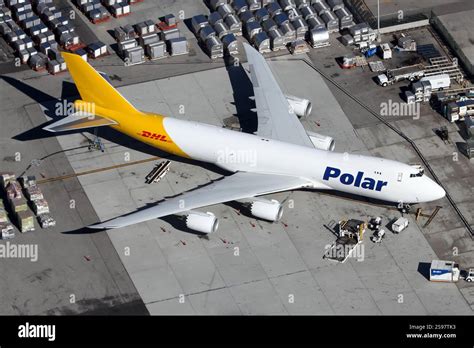
The Production Facility: Boeing Everett Plant
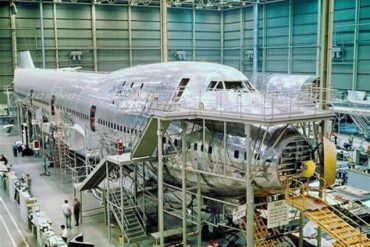
Every Boeing 747 was built in the Everett Factory in Washington State—a structure that holds the title of the largest building in the world by volume, at 13.3 million cubic meters. Initially constructed specifically to accommodate the enormous size of the 747, this facility became the beating heart of jumbo jet production.
Over the decades, Boeing integrated newer technologies into its production line, including computer-aided design (CAD), just-in-time (JIT) manufacturing, and later, digital twin modeling and robotics. These upgrades significantly improved efficiency and quality control, especially during the transition from the 747-400 to the 747-8.
Why Did Boeing End the 747 Program?
By 2020, Boeing made the difficult but inevitable decision to end the 747 program. The shift was driven largely by economics. Twinjets had become more fuel-efficient, more cost-effective, and more versatile for long-range routes. Aircraft like the Boeing 787 Dreamliner and Airbus A350 began dominating the long-haul market.
Additionally, orders for the 747 had dwindled dramatically. Where Boeing once booked over 120 orders in a single year (as it did in 1990), the final 12 years saw just 77 orders combined—with zero orders in 2019 and only one in 2020. The last 747, a 747-8F for Atlas Air, was delivered in January 2023, marking the end of an era.
Operators and the Future of the Boeing 747 Fleet
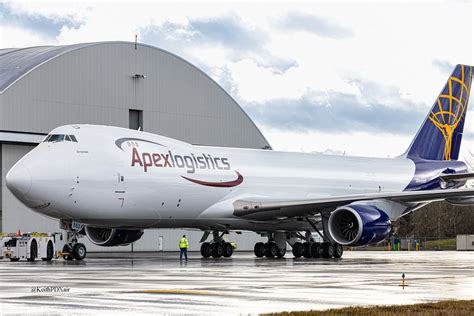
Despite the end of production, the Boeing 747 remains a significant presence in global aviation. As of 2025, more than 400 747s are still active, with the majority flying as freighters. These cargo workhorses are expected to remain in service for decades, thanks to their massive capacity and structural durability.
Several airlines still operate the 747 for passenger flights:
- Lufthansa continues to fly both 747-400s and 747-8is and was the launch customer for the -8i.
- Korean Air and Air China maintain 747s for long-haul routes.
- Rossiya Airlines, a subsidiary of Aeroflot, returned five 747-400s to service in 2024.
Lufthansa has announced plans to retire its 747-400s by 2028, though the 747-8i could remain in service into the 2030s.
Boeing 747’s Place in Aviation History
Few aircraft can claim to have changed the world, but the Boeing 747 did just that. It democratized air travel, shrunk the planet, and allowed airlines to move unprecedented numbers of passengers and cargo across continents. It served as Air Force One, carried space shuttles, and became a pop culture icon.
Even as it becomes a rarer sight in passenger service, the Boeing 747’s legacy is secure. The aircraft will remain a staple of aviation museums, freighter fleets, and the hearts of millions who flew aboard it. As the aerospace industry looks ahead to newer, greener technologies, the 747’s five-decade reign serves as a reminder of what engineering ambition and vision can achieve.
The Boeing 747’s chapter may have closed, but its legend will continue to fly for generations to come.