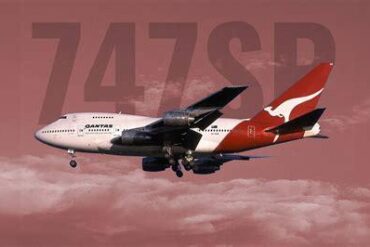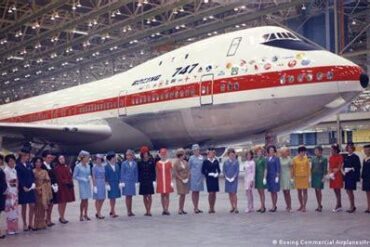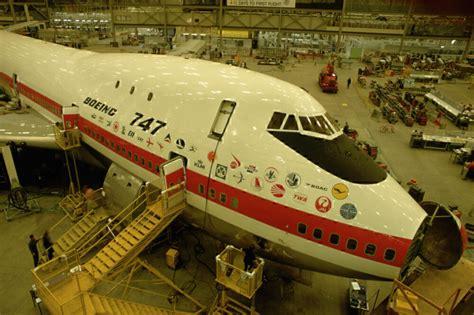
The Boeing 747SP occupies a uniquely intriguing corner of commercial aviation history. Instantly recognizable by its noticeably shortened fuselage and unusually long range, the aircraft stands apart even within the legendary Boeing 747 family. While most people associate the 747 with high-capacity, globe-spanning routes flown by major airlines, the SP tells a different story—one defined by specialization, ambition, and rarity. Understanding exactly how many Boeing 747SPs were built is more than a numerical curiosity; it reveals how shifting technology, economics, and geopolitics shaped one of Boeing’s most unconventional designs.
Developed during a period when airlines were striving to conquer nonstop intercontinental travel, the 747SP was designed to fly farther than any commercial jet of its era. It promised unmatched range, strong climb performance, and the ability to operate from challenging airports that limited other widebodies. Yet despite these strengths, the aircraft never achieved widespread adoption. Instead, it became one of the rarest large passenger jets ever to enter airline service, remembered as much for its exclusivity as for its performance.
To fully appreciate why the 747SP remains so compelling, it is essential to explore how many were built, who operated them, and why production stopped at such a surprisingly low number. This story illustrates how even technically brilliant aircraft can struggle when the market evolves faster than expectations.
The Exact Number of Boeing 747SPs Built
In total, only 45 Boeing 747SP aircraft were ever built. This figure represents the complete production run, with no later variants, no extended series, and no restarted manufacturing lines. Every 747SP airframe was produced within a relatively short window, making the type exceptionally rare among commercial jetliners.
This number becomes even more striking when placed in the broader context of the Boeing 747 program. Across all variants—from the original 747-100 to the final 747-8—Boeing built more than 1,500 jumbo jets. The SP therefore accounts for only a tiny fraction of total 747 production, cementing its status as one of the most exclusive members of the “Queen of the Skies” family.
Unlike other niche aircraft that eventually saw expanded orders or military adaptations, the 747SP remained a single-purpose solution. Its limited production was not the result of technical shortcomings but rather the narrow scope of the problem it was designed to solve. From the outset, Boeing understood that the SP would never rival standard 747 variants in sales volume, yet even optimistic projections did not anticipate just how small the final total would be.
Why the Boeing 747SP Was So Different
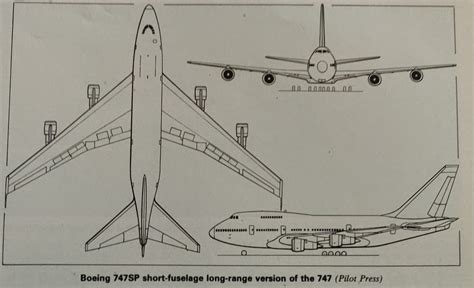
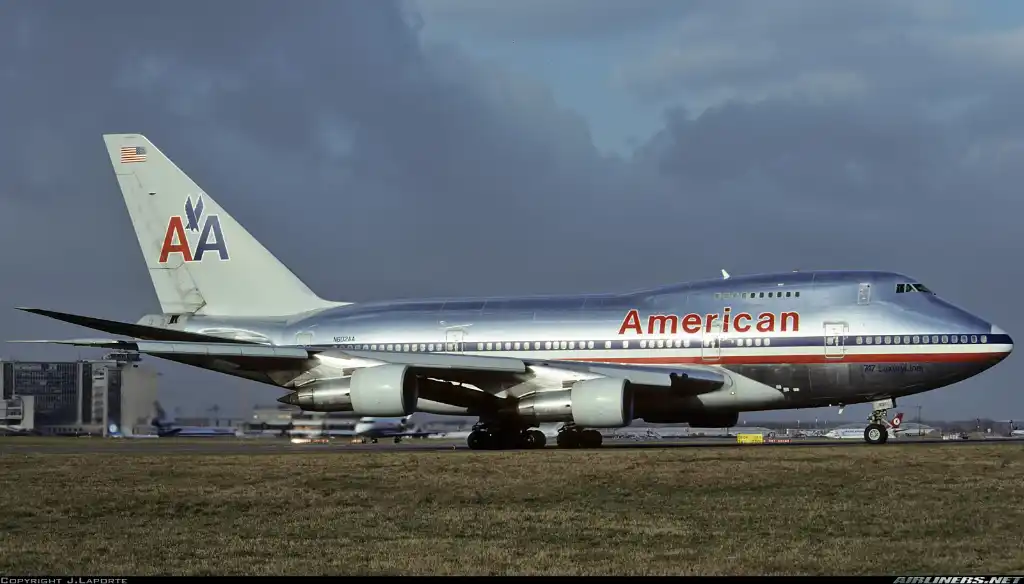
The defining feature of the 747SP was its dramatically shortened fuselage. By removing nearly 50 feet from the standard 747-100 design, Boeing reduced structural weight while retaining the massive wing and four-engine configuration. This allowed the aircraft to carry more fuel relative to its size, unlocking unprecedented range capabilities for a commercial airliner in the 1970s.
The result was an aircraft capable of flying routes that previously required multiple refueling stops. For airlines facing geographic isolation, political overflight restrictions, or high-altitude airports, the SP offered a solution that no other jet could match at the time. It was, in essence, a range specialist, optimized for endurance rather than passenger volume.
However, this specialization came with inherent trade-offs. The SP could carry significantly fewer passengers than other 747 variants, yet it retained the operating costs associated with a four-engine widebody. This imbalance would later become a central factor in its limited appeal.
A Production Run Defined by Specialization
The 45 aircraft that were built were delivered to a small and highly selective group of operators. Rather than achieving broad global adoption, the 747SP found homes with airlines that faced unique operational challenges. These carriers were less concerned with maximizing seat counts and more focused on achieving nonstop connectivity across extreme distances.
Pan Am, one of the most influential airlines of the era, became a prominent launch customer. The SP allowed Pan Am to operate some of the longest nonstop routes in the world, reinforcing its image as a global pioneer. South African Airways relied heavily on the type during a period when international overflight restrictions forced the airline to fly exceptionally long detours. Iran Air and Qantas also deployed the aircraft on routes that pushed the boundaries of contemporary aviation.
What stands out is not just how few airlines ordered the SP, but how rarely those airlines expanded their fleets. Most operators purchased only a handful of aircraft, underscoring how limited the use case truly was.
Why Were Only 45 Boeing 747SPs Ordered?
The small production total was the result of several converging factors rather than a single fatal flaw. At the time of its launch, the 747SP addressed a genuine and pressing need. Yet that need proved to be both temporary and highly specific.
One of the most significant influences was the rapid pace of technological advancement. During the late 1970s and early 1980s, improvements in engine efficiency and reliability transformed the capabilities of twin-engine widebodies. Aircraft such as the Boeing 767 and Airbus A310 began to demonstrate that long-range operations no longer required four engines.
At the same time, airline economics were shifting. Fuel prices fluctuated, and carriers became increasingly sensitive to cost per seat. The 747SP, despite its reduced size, still consumed fuel and required maintenance on a scale similar to larger jumbos. This made it difficult to justify outside of very specific missions.
Another limiting factor was acquisition cost. The SP was an expensive aircraft, and for many airlines, the financial commitment outweighed the benefits. As soon as more flexible alternatives emerged, interest in the SP declined sharply.
Operational Success Despite Commercial Limits
Among the airlines that operated it, the 747SP earned a reputation as a highly capable and reliable aircraft. Pilots praised its climb performance, particularly from hot-and-high airports where other widebodies struggled. Engineers appreciated its robust design, while route planners valued its ability to connect cities that were otherwise beyond reach.
For Pan Am, the SP symbolized ambition, enabling nonstop services that captured public imagination. South African Airways used the aircraft to maintain long-haul connectivity during politically restrictive times, turning a geopolitical challenge into an operational showcase. Iran Air and Qantas similarly leveraged the SP’s strengths to serve routes at the edge of global aviation capability.
In these roles, the 747SP delivered exactly what Boeing promised. Its limited production was therefore not a reflection of dissatisfaction among operators, but rather the reality that very few airlines truly needed what it offered.

Timing: The 747SP’s Greatest Challenge
In hindsight, the timing of the 747SP’s introduction played a decisive role in its fate. The aircraft arrived during a transitional period, just before advancements in twin-engine technology began to reshape long-haul travel. Had it entered service a decade earlier, it might have enjoyed greater success. Had it arrived later, it may never have been built at all.
As airlines gained confidence in extended-range twin-engine operations, the appeal of a four-engine range specialist diminished. Flexibility became a priority, with carriers favoring aircraft that could be deployed across a wide variety of routes. The SP, optimized for a narrow mission set, struggled to compete in this new environment.
This shift did not diminish the aircraft’s technical achievements, but it did render its core advantage less relevant. The market moved on, leaving the 747SP as a remarkable solution to a problem that no longer existed.
Inherent Limitations of the Boeing 747SP
Despite its strengths, the 747SP carried structural and economic limitations that became more pronounced over time. Its reduced seating capacity meant higher costs per passenger compared to both standard 747 variants and newer twinjets. While this was acceptable for niche routes, it was unsustainable as a broader strategy.
Fleet planners also faced challenges integrating the SP into larger operations. With only a small number of aircraft, training, maintenance, and spare parts logistics became disproportionately complex. This further discouraged airlines from expanding their SP fleets beyond initial orders.
As technology continued to advance, later aircraft achieved equal or greater range with fewer engines, lower fuel burn, and improved economics. The SP’s design, once revolutionary, began to age rapidly.
Was the Boeing 747SP a Success or a Failure?
Judging the 747SP purely by production numbers would suggest limited success. Only 45 aircraft were built, and the type never achieved widespread adoption. Yet such a conclusion overlooks the broader context in which the aircraft was conceived and operated.
From a technical standpoint, the 747SP was a clear success. It met and often exceeded performance expectations, enabling routes that were previously impossible. For the airlines that required its capabilities, it proved invaluable. Its limitations were not the result of poor engineering, but of a market that evolved faster than anticipated.
In this sense, the SP represents a different kind of achievement. It demonstrates how innovation can be both groundbreaking and commercially constrained. The aircraft solved a very specific problem at exactly the moment that problem began to disappear.
The Lasting Legacy of the Boeing 747SP
Today, the Boeing 747SP is remembered as one of the most distinctive aircraft ever to carry the 747 name. Its rarity has only enhanced its mystique, making surviving examples prized by enthusiasts and preservationists. While most have been retired, scrapped, or placed in storage, their legacy endures.
The SP stands as a reminder that aviation progress is not always linear. Sometimes, an aircraft arrives at the perfect intersection of ambition and necessity—only to be overtaken by the next wave of innovation. In that brief window, it leaves an outsized impact disproportionate to its numbers.
Ultimately, the answer to how many Boeing 747SPs were built—just 45—captures the essence of the aircraft itself. Rare, specialized, and unforgettable, the 747SP remains one of Boeing’s most fascinating creations, defined not by mass adoption but by its singular role in pushing the boundaries of what commercial aviation could achieve.