The Boeing 747 is one of the most recognizable aircraft ever created. With its unmistakable upper-deck hump, four powerful engines, and enormous wingspan, the aircraft transformed global aviation when it entered service in 1970. It enabled airlines to carry hundreds of passengers across oceans and continents at costs that earlier jetliners could never achieve. Over more than five decades of production, Boeing introduced several variants of the iconic jumbo jet, including the 747-100, 747-200, 747-300, 747-400, 747-8, and the unusual 747SP.
Among these models, the Boeing 747SP stands apart as the most unconventional member of the family. Instead of stretching the aircraft to carry more passengers—something Boeing would later do multiple times—the company did the opposite. Engineers shortened the fuselage dramatically, producing a compact, high-performance version of the jumbo jet that aviation enthusiasts eventually nicknamed the “Baby Queen.”
The decision to build a smaller 747 might seem strange at first. After all, the aircraft had originally been designed specifically for high-capacity routes, where its size provided a major economic advantage. Yet the aviation landscape of the early 1970s presented Boeing with a unique challenge. Airlines wanted an aircraft that could fly extraordinary distances nonstop, operate from shorter runways, and still maintain the prestige and passenger appeal of the jumbo jet.
The result was the 747SP, an aircraft that combined the recognizable look of the original jumbo with remarkable long-range capabilities. Though it ultimately sold in limited numbers, the aircraft played a fascinating role in aviation history and helped shape later versions of the 747.
What Made the Boeing 747SP Unique
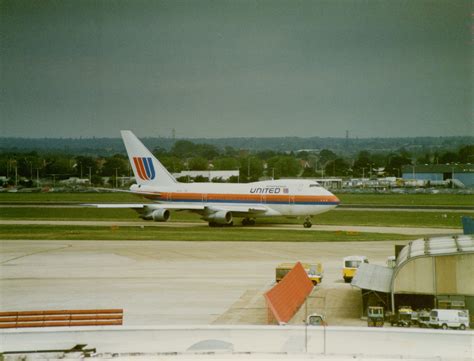
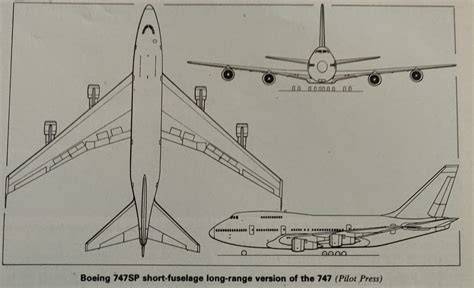
The Boeing 747SP, where SP stands for “Special Performance,” was essentially a radical redesign of the original 747-100. Engineers removed large sections of the fuselage both ahead of and behind the wing, shortening the aircraft from 231 feet 10 inches (70.6 meters) to just 183 feet 3 inches (55.85 meters).
Despite this dramatic reduction in length, Boeing kept the same massive wingspan of 195 feet 8 inches (59.64 meters). This unusual combination created an aircraft with a distinctive appearance—short and stubby compared with other 747 models, yet still possessing the giant wings that defined the jumbo jet.
Because the aircraft’s body was much shorter, engineers had to make several structural modifications. The vertical stabilizer, or tail fin, was significantly enlarged to maintain directional stability. Without this change, the shortened fuselage would have made the aircraft more difficult to control during certain phases of flight.
Other design differences included:
- Lighter structural components to reduce overall weight
- Simplified wing flaps compared with the standard triple-slotted system on other 747 models
- A redesigned fuselage center section
- Improvements to the aircraft’s aerodynamic efficiency
These changes produced a jet that was lighter, faster, and capable of flying significantly farther than earlier versions of the 747.
In many ways, the aircraft was closer in size to modern widebodies such as the Boeing 787-8 or Airbus A330-200, even though it had been designed decades earlier.
Record-Breaking Range and Speed
The most impressive characteristic of the 747SP was its remarkable range capability. The aircraft could fly approximately 6,650 nautical miles (12,325 kilometers) under optimal conditions, making it the longest-range airliner in the world at the time.
This performance allowed airlines to operate routes that had previously required refueling stops. In the 1970s, eliminating a stopover could dramatically reduce travel times and operating costs while making long-haul travel more attractive to passengers.
The aircraft was also the fastest member of the entire 747 family, with a typical cruising speed of Mach 0.86. Combined with its long range, this allowed airlines to connect distant cities more efficiently than ever before.
Another unique feature was its ability to cruise close to its service ceiling of 45,100 feet. While other versions of the 747 technically had the same maximum altitude, they rarely operated near it. The lighter and more aerodynamic 747SP could maintain high cruising altitudes much more easily.
This high-altitude capability offered several operational advantages. Aircraft flying higher often encounter less atmospheric drag and smoother air, which can improve both fuel efficiency and passenger comfort.
The Airline Demand That Created the 747SP
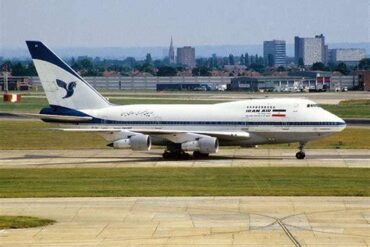
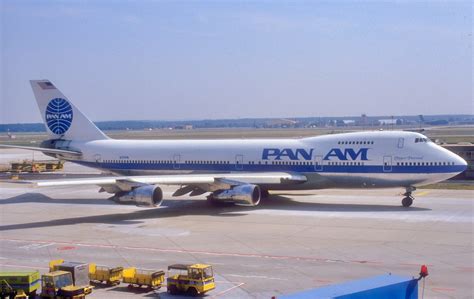
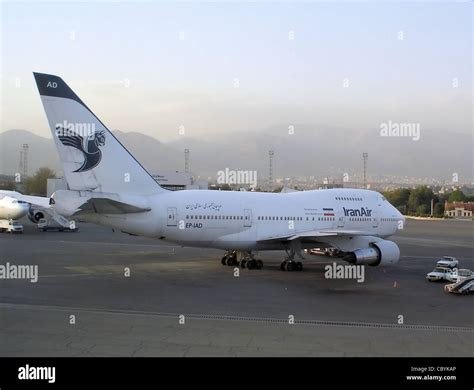
The origin of the 747SP can be traced to a specific request from two major airlines: Pan American World Airways (Pan Am) and Iran Air.
During the early 1970s, both airlines wanted an aircraft capable of flying nonstop between New York and Tehran, a route stretching more than 5,300 nautical miles. At the time, even the improved Boeing 747-200 lacked the range to operate such flights reliably with a full payload.
Boeing recognized that this demand represented an opportunity. If the company could develop a version of the 747 capable of flying extremely long distances, it could open entirely new global routes.
The 747SP program officially launched in 1973, with the goal of creating a jumbo jet that prioritized range and performance rather than passenger capacity.
Although the New York-to-Tehran route helped inspire the aircraft’s development, the first commercial route flown by Pan Am’s 747SP actually connected New York and Tokyo. This route demonstrated the aircraft’s ability to cross vast distances nonstop while maintaining the comfort and prestige associated with the jumbo jet.
Opening New Ultra-Long Routes
The range and performance of the 747SP allowed airlines to attempt routes that had previously been impractical or impossible.
Some notable long-distance routes included:
- New York (JFK) to Tehran
- New York to Tokyo
- Los Angeles to Sydney
- Los Angeles to Auckland
These flights spanned enormous distances across oceans and continents, pushing the limits of commercial aviation during the 1970s.
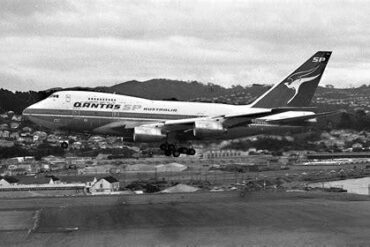
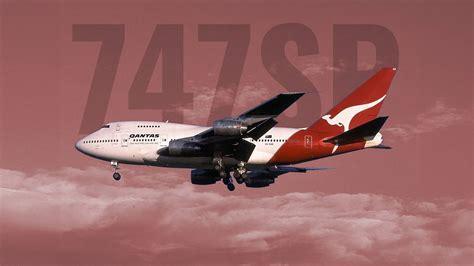
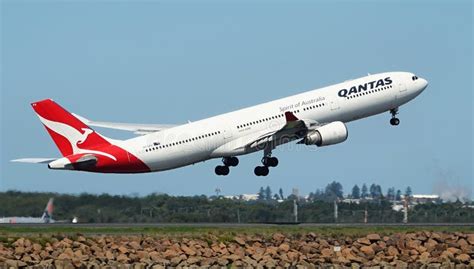
One airline that found particular value in the aircraft was Qantas, Australia’s national carrier. The airline used the 747SP to operate nonstop trans-Pacific routes to the United States, connecting Australia with North America more efficiently than before.
Interestingly, Qantas also used the aircraft on a much shorter route: Sydney to Wellington in New Zealand. The reason had nothing to do with distance. Wellington Airport had short runways and challenging weather conditions, making it difficult for large aircraft to operate safely.
The 747SP’s improved field performance—meaning its ability to take off and land from shorter runways—made it ideal for these operations.
Competition With the DC-10 and L-1011
Another important reason Boeing developed the 747SP was competition.
While the original 747-100 revolutionized air travel, it was also enormous. Many airlines struggled to fill its hundreds of seats, especially on routes with moderate passenger demand. This created an opportunity for aircraft manufacturers developing smaller wide-body jets.
Two aircraft emerged as strong competitors:
- McDonnell Douglas DC-10
- Lockheed L-1011 TriStar
Both aircraft used a three-engine (trijet) configuration and offered fewer seats than the 747, making them attractive for airlines that needed wide-body capacity without the enormous size of a jumbo jet.
Boeing did not have the financial resources in the early 1970s to design an entirely new wide-body aircraft to compete with these models. Instead, the company chose a faster solution: modify the existing 747 design.
By shortening the aircraft and improving its range, Boeing hoped the 747SP would compete directly with these trijets while maintaining the prestige of the jumbo jet brand.

Why the Boeing 747SP Struggled in the Market
On paper, the 747SP appeared to offer the perfect combination of range, performance, and brand recognition. Boeing predicted that the aircraft might sell around 200 units, a figure that seemed reasonable given the success of the DC-10 and L-1011.
Reality turned out very differently.
One of the biggest problems was that the 747SP remained structurally similar to the much larger 747-100. Even though Boeing removed significant portions of the fuselage, the aircraft still carried much of the weight and complexity of the original jumbo jet.
At the same time, the DC-10 and L-1011 used three engines instead of four, which reduced fuel consumption. As a result, those aircraft were more economical for airlines to operate, especially on routes where passenger demand was moderate.
The economics of the 747SP were therefore challenging. Airlines had to pay operating costs closer to those of a full-size jumbo jet while earning revenue from far fewer seats.
This imbalance between operating cost and passenger capacity severely limited the aircraft’s appeal.
The Oil Crisis That Changed Everything
Timing also played a major role in the aircraft’s commercial performance.
The 747SP program launched in 1973, a time when airlines were optimistic about the future of long-haul travel and jet fuel was relatively inexpensive. However, that same year brought the 1973 global oil crisis, which caused fuel prices to rise dramatically.
Suddenly, airlines around the world became far more cautious about operating large aircraft on long routes. Fuel efficiency became a critical factor in fleet decisions.
The 747SP entered commercial service in 1976, right in the middle of this challenging economic environment. Its four-engine design and heavy airframe made it less fuel-efficient than many competing aircraft.
As a result, demand for the aircraft never reached Boeing’s expectations.
The Rise of the Improved 747-200
Another factor that hurt the 747SP was the rapid improvement of the Boeing 747-200.
The original 747-100 had struggled with limited engine power. Its early Pratt & Whitney JT9D-3 engines provided barely enough thrust for such a large aircraft, resulting in long takeoff distances and restricted range.
The 747-200 addressed many of these issues. Boeing strengthened the aircraft’s structure, increased fuel capacity, and introduced more powerful engines such as the Pratt & Whitney JT9D-7, along with options from General Electric and Rolls-Royce.
These upgrades allowed the 747-200 to fly significantly farther than earlier versions. Over time, its range approached that of the 747SP.
For many airlines, the economics became clear. It was often more profitable to operate a larger 747-200 with some empty seats than to fly a smaller 747SP with similar operating costs.
This reality gradually reduced the market for Boeing’s specialized long-range jumbo.
Production Numbers and Final Deliveries
Because demand never reached expectations, the 747SP remained a niche aircraft throughout its production life.
Boeing ultimately produced only 45 examples, far below the original projection of 200 units. Most were delivered between 1976 and 1982, when the main production run ended.
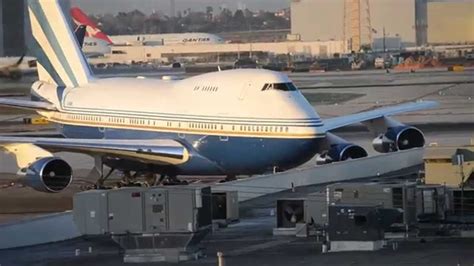
One final aircraft was built in 1989 for a VIP customer, marking the end of the program.
Despite its limited sales, the aircraft served a diverse group of operators, including Pan Am, Iran Air, Qantas, South African Airways, and several government and VIP operators.
Technological Influence on Later 747 Variants
Although the 747SP was not a commercial success, its development influenced later versions of the jumbo jet.
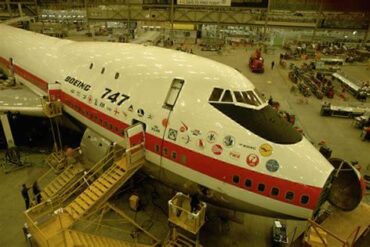
One of the most visible changes involved the upper deck design. Earlier 747 models had a short upper deck that ended well before the wings. The 747SP introduced a longer upper-deck structure extending closer to the wing area.
This design inspired the Boeing 747-300, which featured a significantly stretched upper deck that allowed airlines to add more premium-class seating.
The concept carried over again into the Boeing 747-400, which became one of the most successful wide-body aircraft in aviation history.
In this way, the 747SP contributed to the evolution of the jumbo jet even though it was produced in small numbers.
Record Flights and Aviation Achievements
Despite its commercial struggles, the 747SP achieved several impressive milestones.
The aircraft set multiple world records for long-distance flights, including three separate around-the-world journeys completed in record time. Its extraordinary range also allowed it to perform a delivery flight from Seattle to Cape Town, which became the longest nonstop commercial aircraft flight at the time.
These achievements demonstrated the remarkable performance capabilities that Boeing engineers had managed to extract from the shortened airframe.
The aircraft’s ability to fly faster, higher, and farther than other airliners of its era made it a technological showcase for Boeing.
The Legacy of the “Baby Queen”
Today, the Boeing 747SP occupies a unique place in aviation history. It was neither the most successful variant of the jumbo jet nor the most widely used, yet it demonstrated how far engineers could push the limits of an existing aircraft design.
The aircraft offered three major advantages:
- Extraordinary long-range capability
- Improved takeoff and landing performance
- A smaller capacity that was easier to fill than standard 747 variants
However, these strengths were ultimately overshadowed by the aircraft’s high operating costs and the rapid improvements in other wide-body aircraft.
Only a small number were built, but those that flew played important roles in connecting distant cities and pushing the boundaries of long-haul aviation.
The “Baby Queen” remains one of the most fascinating chapters in the story of the Boeing 747—a reminder that even legendary aircraft families sometimes produce bold experiments that defy expectations.