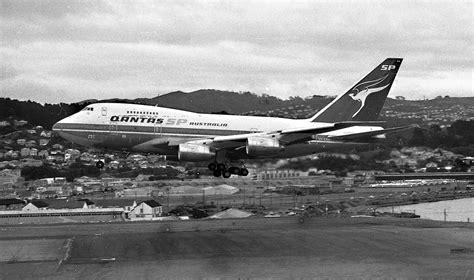
The story of Qantas operating the Boeing 747SP into Wellington is one of those rare aviation chapters where engineering compromise becomes operational triumph. It sits at the intersection of geography, aircraft design, and airline strategy, where a capital city hemmed in by hills and sea forced one of the world’s most traditional flag carriers to rethink what a “jumbo jet” could realistically achieve. Wellington’s runway was never just short; it was unforgiving, shaped by a narrow coastal shelf that left no room for expansion and no tolerance for performance miscalculations. For most widebody aircraft of the era, it was simply out of reach.
Yet demand across the Tasman Sea kept growing. Business travel between Australia and New Zealand intensified through the late twentieth century, and airlines faced a dilemma: operate smaller aircraft more frequently or find a widebody that could safely squeeze into Wellington’s constraints. Qantas pursued the second option with characteristic boldness, turning to Boeing’s most unusual widebody variant—the 747SP, a jet designed not for mass capacity, but for extremes of distance and performance.
What followed was not just an aircraft deployment but a carefully choreographed balancing act of physics, airline economics, and airport limitation management. The 747SP became the only jumbo-class aircraft capable of regularly handling Wellington’s operational environment while still preserving the economics of high-capacity trans-Tasman routes.
Wellington Airport and the Operational Limits of a Capital City
Wellington Airport has always been defined by its geography rather than its infrastructure. The runway, constrained to under 6,000 feet, sits on a narrow strip of reclaimed land wedged between hills and the sea. Crosswinds funnel through the Cook Strait, creating sudden shifts in wind direction that challenge even experienced crews. In aviation terms, it is a textbook example of a high-energy, low-margin airport environment.
For early widebody jets, this environment was effectively prohibitive. Aircraft such as the Boeing 747-200 required significantly longer takeoff distances when operating at intercontinental weights, especially under engine-out safety scenarios. Even minor reductions in available runway length translated into dramatic payload penalties. The consequence was simple: widebody operations into Wellington could not be justified without severe compromises.
This forced Qantas and other carriers to rely heavily on narrowbody aircraft for capital-to-capital connectivity. While reliable, these aircraft could not absorb the surging demand between Australia and New Zealand. Seat capacity constraints pushed fares higher and reduced scheduling flexibility, creating a structural inefficiency on one of the Southern Hemisphere’s busiest international corridors.
The Boeing 747SP: Engineering a Shorter Jumbo for Longer Reach
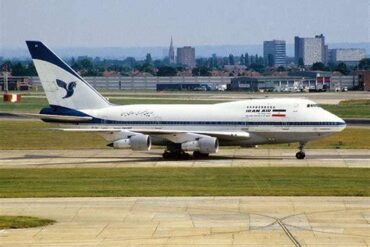
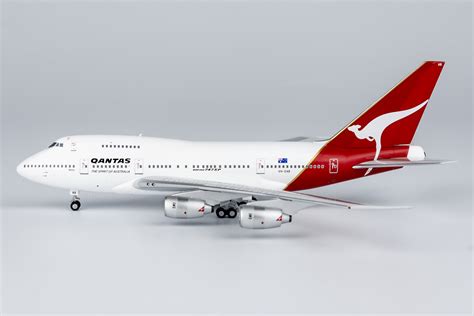
The Boeing 747SP emerged as an answer to a very different challenge: how to make a jumbo jet fly farther by making it physically smaller. Rather than designing an entirely new aircraft, Boeing chose to surgically modify the existing 747 platform. The fuselage was shortened dramatically, removing sections ahead of and behind the wing box, resulting in a much lighter airframe that retained the iconic 747 wing and systems architecture.
This reduction in structural length translated into a substantial drop in empty weight, freeing the aircraft from tens of thousands of pounds of non-essential mass. The result was a jet with a dramatically improved thrust-to-weight ratio, capable of climbing faster, cruising higher, and operating from shorter runways than its larger siblings. The engineering philosophy was almost counterintuitive: instead of adding capability through size, Boeing achieved it through subtraction.
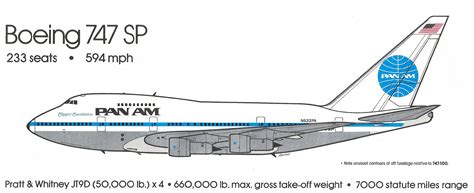
The aerodynamic consequences of this modification were significant. A shorter fuselage altered stability characteristics, requiring a redesigned vertical stabilizer and refined control surfaces to maintain balance, especially at low speeds. Boeing compensated with a larger tail fin and simplified flap systems that reduced weight and improved low-speed lift behavior. These changes gave the aircraft a unique flight profile among widebody jets of its generation.
Qantas Fleet Strategy and the Arrival of VH-EAA and VH-EAB
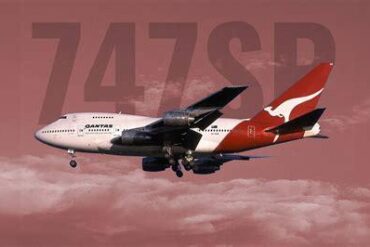
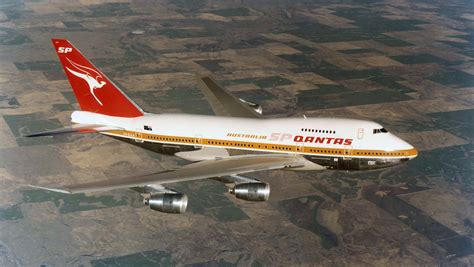
When Qantas introduced the 747SP into its fleet, it did so with a very specific mission in mind: unlock Wellington without sacrificing widebody economics. The airline registered two aircraft, VH-EAA and VH-EAB, and positioned them on high-demand trans-Tasman services connecting Sydney and Wellington. This was not an experimental deployment; it was a targeted solution to a persistent network bottleneck.
Operating a 747SP into Wellington required precision planning at every stage of flight operations. Payload and fuel calculations had to be tightly balanced because the runway length effectively capped maximum takeoff weight. Dispatchers worked within narrow margins, adjusting passenger loads and fuel reserves to ensure safe departure performance while still maintaining viable commercial capacity.
Cabin configurations were also adjusted to reflect operational realities. Instead of maximum-density layouts typical of long-haul jumbo operations, Qantas optimized seating for premium demand on business-heavy routes. This allowed the aircraft to carry between roughly 270 and 330 passengers, a significant improvement over narrowbody alternatives while remaining within performance constraints.
Short-Field Performance and High-Intensity Departure Profiles
The most impressive aspect of the 747SP’s Wellington operations was its ability to convert raw thrust into rapid acceleration under restrictive runway conditions. At maximum permissible weight, pilots executed carefully structured takeoff sequences designed to maximize available runway distance while preserving climb safety margins.
Engine thrust was managed with precision, and rotation timing became critical. Any delay or miscalculation reduced climb performance margins, especially given Wellington’s surrounding terrain. Once airborne, the aircraft’s improved thrust-to-weight ratio allowed for steep initial climb gradients, quickly clearing surrounding obstacles and transitioning into cruise configuration.
This operational profile demonstrated why the 747SP was uniquely suited to the task. It was not merely a smaller jumbo; it was a performance-optimized derivative capable of bridging the gap between widebody capacity and constrained airport infrastructure. The aircraft effectively turned Wellington from a restrictive endpoint into a viable widebody destination.
Trans-Tasman Economics and the Value of Widebody Capacity
The introduction of the 747SP into Wellington fundamentally changed the economics of trans-Tasman travel. Prior to its deployment, airlines had to rely on multiple narrowbody frequencies to match demand, increasing operational complexity and limiting economies of scale. With the SP, Qantas could consolidate demand into fewer, larger flights while maintaining schedule efficiency.
This shift also had a direct impact on seat-mile costs. Even with reduced payload compared to standard 747 variants, the SP still offered significantly lower per-seat operating costs than narrowbody fleets on high-demand routes. This allowed Qantas to maintain competitive pricing while improving yield through premium cabin offerings.
Beyond economics, the aircraft also improved network resilience. Weather disruptions, already common in Wellington due to crosswinds and sudden pressure changes, became easier to manage with fewer but higher-capacity services. The airline gained flexibility in reallocating aircraft without destabilizing the entire schedule structure.
High-Altitude Cruise and the Pacific Long-Haul Advantage
While Wellington showcased the SP’s short-field capabilities, its true design intent was revealed on long-haul Pacific routes. The aircraft’s reduced weight and optimized aerodynamics enabled it to achieve higher cruise altitudes than many contemporaries, improving fuel efficiency and reducing exposure to congested airspace.
This performance advantage was particularly important on routes between Australia and the United States. Before the SP, flights often required intermediate stops in places like Fiji or Hawaii. These stopovers extended journey times and introduced operational variability. The SP’s extended range enabled Qantas to launch nonstop transpacific services, a milestone in commercial aviation for the region.
Flying at higher altitudes also allowed crews to avoid significant weather systems and take advantage of more stable wind patterns. Over long distances, even small improvements in cruise efficiency translated into meaningful fuel savings, reinforcing the aircraft’s value on prestige long-haul services.
Legacy of the 747SP in Modern Aviation Context
Although only a limited number of 747SP aircraft were ever produced, their operational legacy remains disproportionately large. They demonstrated that widebody aircraft did not need to follow the conventional pattern of increasing size to increase capability. Instead, performance optimization through structural reduction could unlock entirely new route possibilities.
For Qantas, the aircraft represented a transitional moment in fleet strategy, bridging the gap between early-generation jumbo jets and the modern era of long-range twin-engine aircraft. The lessons learned from SP operations influenced how airlines approached payload-range trade-offs on constrained airports long after the type left commercial service.
Today, no direct equivalent exists. Modern aircraft achieve long-range efficiency through advanced engines and composite materials rather than fuselage shortening. Yet the core idea behind the 747SP remains influential: that intelligent design adaptation can overcome environmental constraints that seem immovable.
The Wellington operations remain one of the most distinctive examples of that philosophy in action. A short runway, a shortened jumbo, and a carrier willing to push the boundaries of what regional widebody service could look like—together they created a chapter in aviation history that still stands apart from anything that followed.