The Boeing 747SP occupies a unique place in aviation history. While the standard Boeing 747 transformed international travel through sheer passenger capacity, the SP—short for Special Performance—was designed with an entirely different mission. Instead of carrying more passengers, it sacrificed cabin space to achieve extraordinary range, enabling airlines to operate nonstop flights that were previously impossible.
Only 45 Boeing 747SPs were ever built, making it one of the rarest members of the iconic Jumbo Jet family. Most airlines retired the aircraft decades ago as more efficient twin-engine widebodies entered service. Yet one airline refused—or rather, was forced—to keep flying it far beyond its intended lifespan.
That airline was Iran Air.
For years, the Iranian flag carrier operated the world’s final commercial Boeing 747SP, preserving one of aviation’s most fascinating aircraft long after every other passenger operator had moved on. Its survival was not simply the result of nostalgia. Instead, it reflected a remarkable combination of engineering ingenuity, geopolitical circumstances, and determination that allowed one of the world’s rarest airliners to continue flying into the twenty-first century.
The story of Iran Air’s 747SP is therefore not just about an airplane. It is also a story of technological ambition, changing economics, international politics, and extraordinary maintenance efforts that kept an aging fleet airborne against overwhelming odds.
The Boeing 747SP Was Built For A Different Mission
When Boeing introduced the original 747-100 in 1970, it immediately changed commercial aviation. Airlines suddenly possessed an aircraft capable of carrying hundreds of passengers across continents. However, several major international carriers soon requested something very different.
Many airlines wanted an aircraft capable of flying ultra-long routes where passenger demand did not justify operating a full-sized Jumbo Jet. Certain city pairs required maximum range rather than maximum capacity, especially routes spanning oceans or linking distant capitals.
Rather than designing an entirely new aircraft, Boeing engineers chose to modify the existing 747 platform.
Their solution became the 747SP, introduced in the mid-1970s.
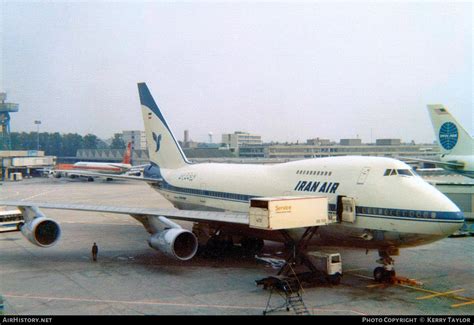
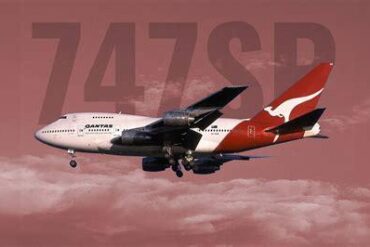
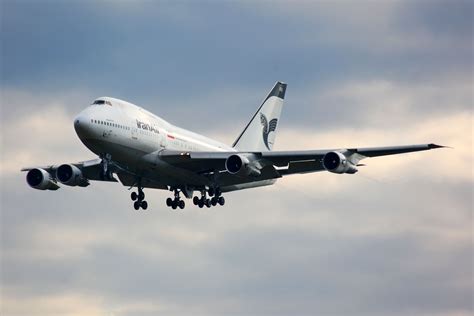
The transformation was dramatic. Boeing removed substantial sections of the fuselage both ahead of and behind the wings, shortening the aircraft by roughly 47 feet (14.3 meters) compared with the 747-200. This significantly reduced structural weight while preserving the aircraft’s enormous fuel capacity.
The reduced length created new aerodynamic challenges. Engineers enlarged the vertical stabilizer by approximately five feet to restore directional stability, while redesigning portions of the wing’s trailing-edge flap system for improved cruise performance.
The result looked unusual.
The shortened fuselage gave the aircraft a compact appearance, earning it an instantly recognizable profile among aviation enthusiasts. Yet beneath that distinctive silhouette was one of the most capable long-range airliners of its generation.
With a service ceiling exceeding 45,000 feet and a range approaching 5,830 nautical miles, the aircraft could connect cities separated by enormous distances without intermediate fuel stops—a revolutionary capability during the late 1970s.
Despite these advantages, the aircraft served a relatively narrow market. Airlines valued its exceptional range, but relatively few routes justified the reduced seating capacity.
Ultimately, Boeing manufactured only 45 examples, making the 747SP one of the rarest production variants of the famous Jumbo Jet family.
Why Iran Air Chose The Boeing 747SP
During the 1970s, Iran Air, then officially known as the Iran National Airlines Corporation, was rapidly expanding its international network.
The airline sought aircraft capable of connecting Tehran directly with major cities across Europe and North America without technical fuel stops. These long-distance services represented both commercial opportunities and symbols of national prestige.
The Boeing 747SP perfectly matched those ambitions.
Iran Air became one of the aircraft’s launch customers in 1976, introducing the type to support its growing international operations.
The SP’s greatest achievement was enabling nonstop flights between Tehran and New York, a route that had previously required refueling stops. Eliminating these intermediate landings dramatically reduced travel time while improving passenger convenience and operational efficiency.
At a time when nonstop intercontinental travel remained relatively rare, these flights demonstrated the remarkable capabilities of Boeing’s specialized design.
Passengers appreciated the combination of the spacious Jumbo Jet cabin with direct long-haul service, while the airline gained an important competitive advantage over regional rivals.
Throughout the late 1970s, the 747SP became one of the most recognizable aircraft within Iran Air’s fleet and a symbol of the carrier’s international ambitions.
The Aircraft That Arrived Just Before Aviation Changed
Ironically, the Boeing 747SP entered service just before the commercial aviation industry underwent one of its biggest technological transformations.
During the late 1970s and throughout the 1980s, aircraft manufacturers dramatically improved engine efficiency.
The arrival of increasingly capable twin-engine widebody aircraft fundamentally altered airline economics.
Aircraft such as the Boeing 767, followed later by the Boeing 777, demonstrated that two highly efficient engines could safely perform routes previously reserved for four-engine aircraft.
These new aircraft consumed significantly less fuel while requiring fewer engines to inspect, repair, and overhaul.
The economic advantages quickly became overwhelming.
Although the 747SP offered impressive range, it still relied on four Pratt & Whitney JT9D turbofan engines, each requiring extensive maintenance and consuming substantial amounts of fuel.
The aircraft also carried considerably fewer passengers than a standard 747 despite burning nearly comparable quantities of fuel.
As fuel prices increased and operational efficiency became increasingly important, airlines found it difficult to justify operating the specialized variant.
By the late 1980s, Boeing introduced another major competitor—the 747-400.
Featuring improved aerodynamics, winglets, upgraded engines, and greater passenger capacity, the new Jumbo Jet largely eliminated the need for the SP’s specialized role.
Most airlines rapidly retired their fleets.
Some aircraft found second careers transporting heads of state, while others entered military, research, or governmental service.
Commercial passenger operations steadily disappeared.
Except in one country.
International Sanctions Changed Everything
While airlines across Europe, North America, Asia, and Australia modernized their fleets, Iran Air encountered an entirely different reality.
Following political changes and subsequent international sanctions, Iran faced increasing restrictions affecting aircraft purchases, spare parts, and maintenance support.
Fleet modernization effectively stalled.
Aircraft that would normally have been replaced after twenty or thirty years instead remained in active service because suitable replacements simply could not be obtained.
This circumstance transformed the Boeing 747SP from an aging airliner into an operational necessity.
Instead of retiring the aircraft alongside other global operators, Iran Air continued relying upon it for long-range international services.
The airline’s modernization plans suffered another major setback when a proposed $16.5 billion agreement intended to purchase dozens of modern Boeing aircraft—including 737 MAX 8s, 777-300ERs, and 777-9s—failed to materialize after renewed sanctions halted deliveries.
Without access to replacement aircraft, Iran Air had little choice but to continue maintaining its existing fleet.
The airline’s average fleet age steadily increased, with many aircraft remaining operational far longer than airlines elsewhere would consider economically practical.
Rather than measuring success through operating costs alone, aircraft availability became the overriding priority.
Engineering Ingenuity Kept The Fleet Flying
Maintaining any aging aircraft presents considerable challenges.
Maintaining one without reliable manufacturer support is considerably more difficult.
Iran Air’s engineers developed remarkable expertise in extending the service life of aircraft that many believed had reached the end of their operational usefulness years earlier.
The airline established maintenance practices emphasizing component inspection, refurbishment, repair, and careful inventory management.
As replacement parts became increasingly scarce, engineers adopted a strategy familiar in aviation but rarely applied so extensively.
Aircraft no longer suitable for passenger service became valuable sources of spare components.
Instead of immediately scrapping retired airframes, technicians carefully removed usable systems that could support the remaining operational aircraft.
This approach became essential for preserving the final Boeing 747SP.
EP-IAC Became The World’s Final Passenger Boeing 747SP
Among Iran Air’s original Boeing 747SP fleet, one aircraft achieved historic significance.
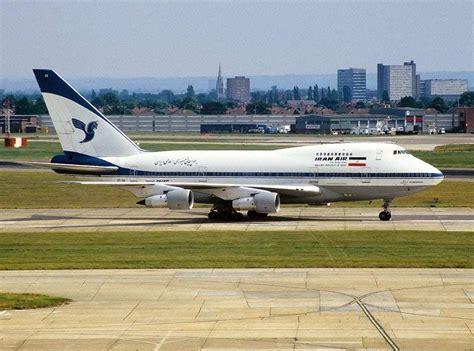
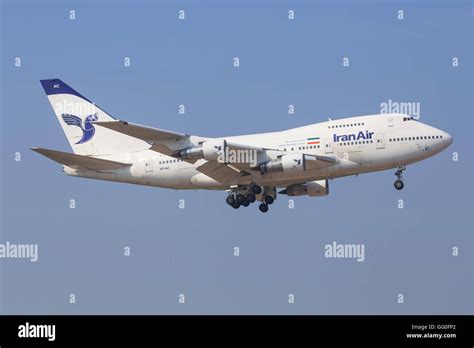
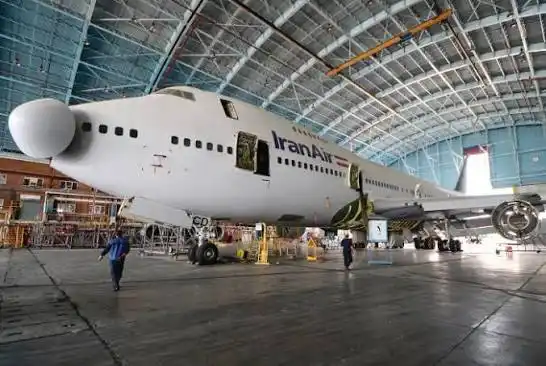
Registered as EP-IAC, it eventually became the final active commercial passenger Boeing 747SP anywhere in the world.
Three sister aircraft—EP-IAA, EP-IAB, and EP-IAD—gradually left passenger service.
Rather than being discarded immediately, these aircraft served a critical purpose.
Their avionics, hydraulic systems, landing gear assemblies, flight instruments, structural components, and numerous other parts were carefully removed and inspected before supporting EP-IAC’s continued operation.
This systematic process effectively transformed multiple retired aircraft into one continuously airworthy flagship.
Every successful departure represented thousands of hours of maintenance performed under uniquely challenging conditions.
Ground crews developed extraordinary familiarity with the aging aircraft’s systems, often manufacturing solutions or adapting maintenance procedures within strict operational limitations.
Their work allowed EP-IAC to remain commercially viable years after every other passenger-operated 747SP had disappeared from scheduled airline service.
Why The Boeing 747SP Never Became A Commercial Success
Despite its legendary status today, the Boeing 747SP never achieved widespread commercial popularity.
Its capabilities were genuinely remarkable, but market conditions evolved too quickly.
Airlines discovered that many long-haul routes eventually generated enough demand to justify larger aircraft.
Meanwhile, technological progress reduced the importance of four-engine designs.
The SP therefore occupied an awkward middle ground.
It possessed exceptional range but relatively limited seating capacity.
Its operating costs remained similar to those of larger four-engine aircraft while generating less passenger revenue.
As a result, airlines gradually concluded that newer aircraft provided better financial returns.
Even respected operators including Pan Am, TWA, and Qantas eventually retired the type.
Some carriers utilized the aircraft for demanding routes from airports with operational limitations, but such specialized missions became increasingly rare.
The aviation industry simply evolved beyond the market niche the SP had originally been designed to serve.
Its retirement reflected changing economics rather than engineering shortcomings.
The Final Commercial Flight Closed An Extraordinary Chapter
Although passenger operations effectively ended in 2016, the Boeing 747SP’s final movement occurred during May 2018.
EP-IAC completed a repositioning flight from Imam Khomeini International Airport to Mehrabad International Airport in Tehran.
The short flight officially concluded the commercial history of the Boeing 747SP.
With that final journey, more than four decades of continuous airline service came to an end.
For aviation enthusiasts, it marked the disappearance of one of the most distinctive silhouettes ever created by Boeing.
Unlike many aircraft retired because they became unsafe, the 747SP left commercial service because economics, technology, and global politics had finally converged.
Its operational life had extended far beyond what virtually anyone anticipated during the 1970s.
The Boeing 747SP’s Lasting Legacy
Today, only a handful of Boeing 747SP aircraft remain active worldwide, primarily serving governmental, research, or specialized transport missions.
None continue operating scheduled commercial passenger services.
Nevertheless, the aircraft’s influence remains significant.
The 747SP proved that airlines could successfully operate ultra-long-haul nonstop routes decades before today’s advanced twin-engine aircraft became commonplace.
Its engineering lessons contributed to the industry’s understanding of long-range aerodynamics, structural optimization, and fuel efficiency.
Modern aircraft such as the Boeing 787 Dreamliner and Airbus A350 now routinely perform flights exceeding fifteen hours while consuming dramatically less fuel than their four-engine predecessors.
These aircraft represent the technological evolution that ultimately replaced the SP, but they also build upon concepts pioneered by Boeing’s specialized Jumbo Jet.
Perhaps the aircraft’s greatest legacy lies in demonstrating that aviation innovation often emerges through specialization.
The Boeing 747SP was never intended to become the highest-selling Jumbo Jet.
Instead, it solved a specific operational challenge at precisely the right moment in aviation history.
For Iran Air, however, the aircraft became something even more significant.
It evolved from a cutting-edge flagship into an indispensable national asset, surviving decades through determination, engineering expertise, and extraordinary maintenance practices.
Its continued operation under exceptionally difficult circumstances turned the world’s rarest commercial Jumbo Jet into one of aviation’s most compelling survival stories.
Long after other airlines had retired their fleets, Iran Air’s EP-IAC carried the honor of being the last commercial Boeing 747SP ever to transport passengers. That achievement permanently secured both the aircraft and the airline a unique place in commercial aviation history, ensuring that the stubby, unmistakable silhouette of the 747SP will remain one of the most celebrated symbols of long-range flight innovation for generations to come.