The Airbus A380 changed commercial aviation forever. When the world’s largest passenger aircraft entered service, it represented the ultimate vision of long-haul travel: enormous capacity, a full-length upper deck, luxurious cabins, and the ability to move hundreds of passengers between the world’s busiest airports in a single flight.
However, the era of the four-engine superjumbo is slowly coming to an end. Airbus ended A380 production in 2021, and many airlines that once operated the aircraft have retired their fleets due to rising maintenance expenses, fuel costs, and changing passenger demand patterns. Although some carriers, especially Emirates, continue to invest heavily in keeping their A380 fleets active, the industry has accepted that a true replacement will eventually be needed.
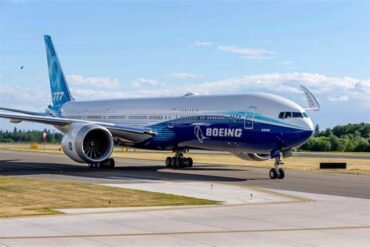
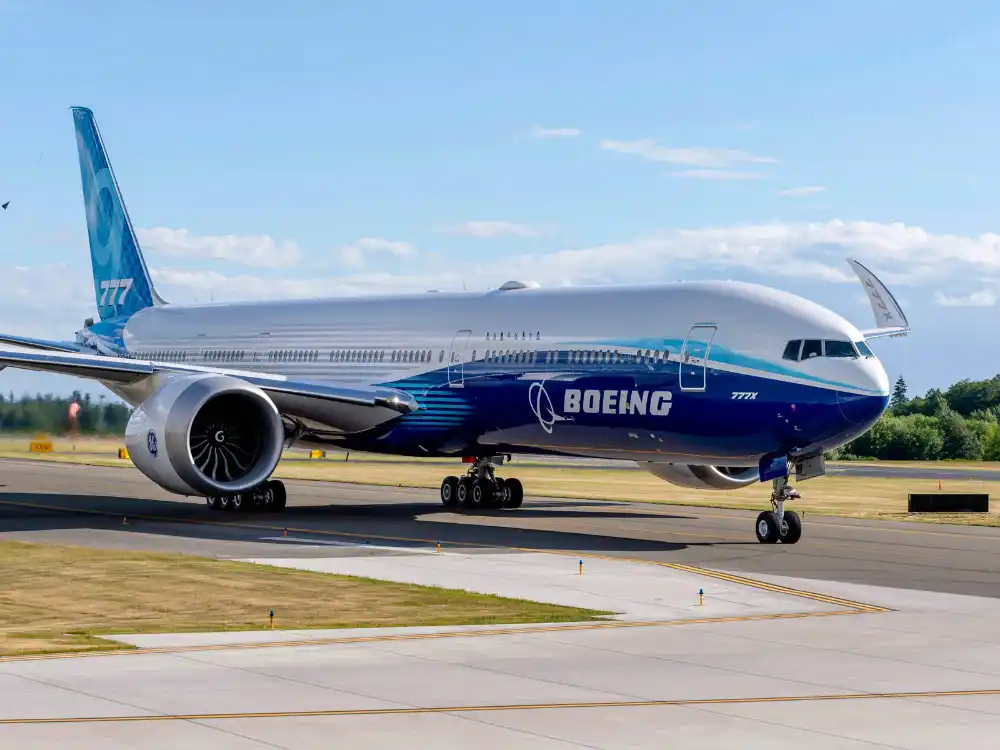
The aircraft most likely to take over the role of the Airbus A380 on high-capacity long-haul routes is not another giant double-decker aircraft. Instead, the future belongs to the Boeing 777X, a next-generation twin-engine widebody designed around efficiency, flexibility, and lower operating costs.
Why the Airbus A380 Is Difficult to Replace
Replacing the Airbus A380 is one of the biggest challenges facing the commercial aviation industry because the aircraft was built around a unique idea: maximum passenger volume between major global hubs.
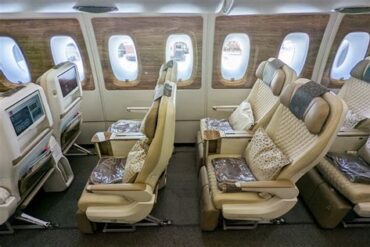
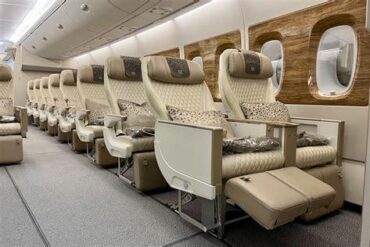
The A380 could carry between 500 and 600 passengers in typical airline configurations, while an all-economy layout could theoretically exceed 800 seats. Its two-level cabin created an experience unlike any other commercial aircraft, allowing airlines to install premium suites, onboard lounges, bars, and even shower facilities.
Airlines such as Emirates, Singapore Airlines, and Qatar Airways transformed the A380 from a transportation machine into a symbol of luxury aviation. The aircraft became a marketing tool as much as a passenger aircraft, attracting travelers who specifically wanted to experience flying on the world’s largest jet.
However, the same characteristics that made the A380 impressive also created major challenges. Four engines require more maintenance, consume more fuel, and create higher operating expenses compared with modern twin-engine aircraft. As airlines moved toward more flexible networks with increased point-to-point flying, the economics of operating extremely large aircraft became increasingly difficult.
The COVID-19 pandemic accelerated this trend. Passenger demand collapsed, and airlines quickly retired older, less efficient aircraft. The A380, along with other four-engine aircraft such as the Boeing 747 and Airbus A340, became especially vulnerable because airlines could no longer justify operating aircraft that required consistently high passenger loads.
The Boeing 777X Emerges as the A380 Successor
The Boeing 777X represents a completely different philosophy from the A380. Instead of maximizing capacity through size, Boeing focused on achieving a balance between passenger numbers, efficiency, and operational flexibility.
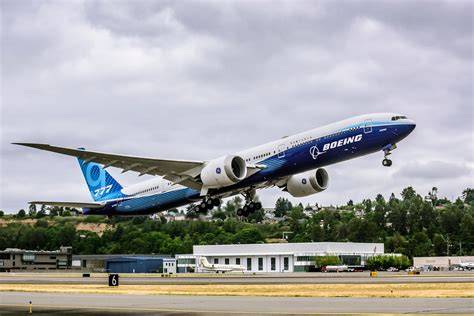
The aircraft family includes the 777-8 and 777-9, with the larger 777-9 positioned as the successor to the largest long-range passenger aircraft currently in service. Although it cannot match the A380’s enormous seating capacity, it comes close enough for many airlines while offering significantly lower operating costs.
The Boeing 777-9 is expected to seat approximately 400 to 425 passengers in a typical airline configuration. That represents a substantial reduction compared with an A380, but airlines increasingly recognize that a completely full superjumbo is not always the most profitable solution.
A 777X flying with 85% passenger occupancy can often outperform a larger aircraft operating with lower load factors. The ability to match capacity with actual demand has become one of the most important factors in airline fleet planning.
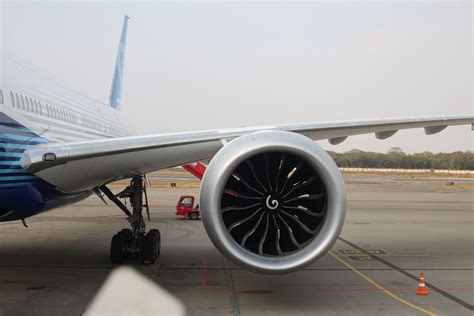
The aircraft’s two-engine configuration is central to this advantage. Instead of four engines, the 777X uses two enormous GE9X turbofan engines, which are among the most powerful commercial aircraft engines ever developed.
Two Engines That Challenge Four-Engine Aircraft
The engineering behind the GE9X engine demonstrates how modern aviation technology has changed the definition of a large aircraft.
The Airbus A380 uses four engines, including the Engine Alliance GP7200 and Rolls-Royce Trent 900, producing roughly 70,000 to 81,500 pounds of thrust each. The Boeing 777X’s GE9X engines produce more than 100,000 pounds of thrust, with testing achieving even higher figures.
This means the 777X can generate enormous power while relying on only two engines. The result is lower fuel consumption, reduced maintenance requirements, and improved reliability.
Modern airlines are increasingly prioritizing efficiency because fuel remains one of their largest expenses. Even a small improvement in fuel burn can translate into millions of dollars in annual savings across a fleet.
Environmental considerations also play a major role. Aviation regulators and governments are pushing airlines toward lower emissions, making fuel-efficient aircraft more attractive. The 777X benefits from advanced engines, improved aerodynamics, and a lightweight composite wing structure.
The aircraft’s folding wingtips are another technological innovation. The 777X features the largest composite wing ever built for a commercial aircraft, but folding tips allow it to operate at airports designed for existing Boeing 777 aircraft.
This provides airlines with a major advantage: they can operate a larger aircraft without requiring completely new airport infrastructure.
A New Era of High-Capacity Long-Haul Travel
Although the Boeing 777X will never replace every aspect of the Airbus A380 experience, it represents the direction the aviation industry is moving.
The future of high-capacity routes is unlikely to depend on enormous aircraft carrying the maximum possible number of passengers. Instead, airlines are looking for aircraft that can provide high capacity while maintaining profitability across different markets.
The 777X fits this strategy perfectly. It can serve major international routes between cities such as Dubai, London, New York, Singapore, Tokyo, and Sydney, while also offering the flexibility to operate routes where an A380 would be too large.
For airlines, flexibility has become just as important as capacity.