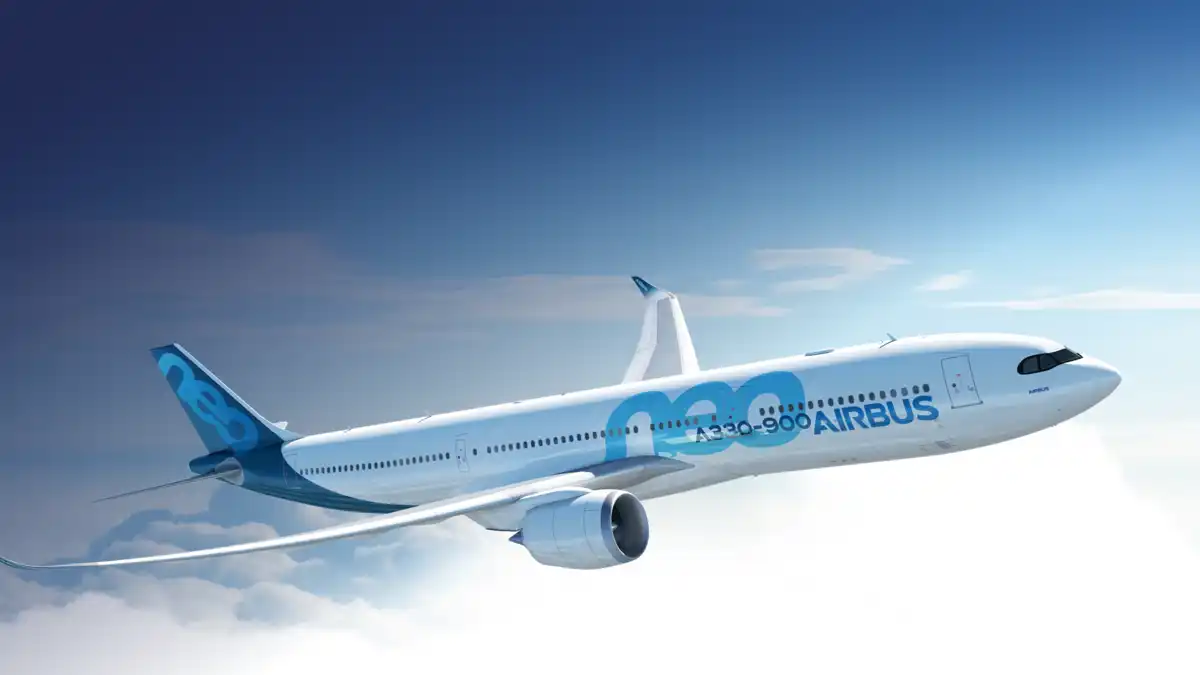
The aviation world has long associated massive passenger capacity with four engines, two full decks, and unmistakable sky-dominating size. Yet modern aircraft design and airline strategy are rewriting that assumption in surprisingly practical ways. The Airbus A330-900neo, particularly in its ultra-dense configuration flown by Cebu Pacific, demonstrates how intelligent cabin planning can push a twin-engine aircraft into passenger capacity territory once reserved for superjumbos. Rather than relying on sheer physical scale, this aircraft leverages space efficiency, seat engineering, and route economics to deliver passenger volumes that begin to brush against real-world Airbus A380 operations.
Widebody aircraft have traditionally balanced passenger comfort, cargo capability, and operational range. The A330neo family, however, shows how flexible a proven airframe can become when paired with modern materials and advanced cabin products. Cebu Pacific’s configuration strips away the traditional hierarchy of cabins and focuses entirely on maximum passenger throughput, creating an aircraft optimized for markets where ticket price and availability matter more than onboard luxury. In doing so, it challenges long-standing assumptions about what determines a high-capacity commercial aircraft.
The result is an aircraft that is structurally smaller than the A380 yet operationally competitive on certain metrics. While it cannot match the absolute theoretical limits of the superjumbo, it competes remarkably well against real-world airline seating layouts. This difference between theoretical maximum capacity and actual airline usage is where the story becomes genuinely fascinating.
The Evolution Of High-Density Widebody Strategy
The shift toward high-density widebody aircraft is deeply tied to changing airline economics. Fuel efficiency improvements, advanced engine technology, and digital booking platforms have all pushed airlines toward maximizing the number of passengers per flight. The A330-900neo, powered by Rolls-Royce Trent 7000 engines, offers lower fuel burn per seat than older widebodies, allowing airlines to stretch profit margins even further when seats are densely packed.
Cebu Pacific’s approach is not accidental experimentation but rather a calculated extension of the low-cost carrier philosophy into long-haul and high-demand regional markets. By removing premium cabins entirely, the airline transforms the aircraft into a high-capacity transport platform. This decision reduces complexity in catering, crew service structure, and cabin layout maintenance, creating measurable cost advantages that scale across every flight cycle.
This strategy is particularly effective in regions with heavy leisure travel and labor migration traffic. Markets connecting Southeast Asia, the Middle East, and parts of Australia see sustained high passenger demand with relatively low premium cabin demand. The aircraft becomes less of a luxury transport experience and more of a high-efficiency mobility system, similar in concept to high-speed rail but operating across oceans.
Cebu Pacific And The Industrialization Of Passenger Volume
Founded in 1996, Cebu Pacific transformed the Philippine aviation market by aggressively pushing low fares and high aircraft utilization. Operating from hubs in Manila and Cebu, the airline built its reputation by connecting an archipelago nation where air travel is often the most practical transportation method. Over time, the carrier expanded internationally while keeping its core principle intact: maximize seat availability while keeping operating costs tightly controlled.
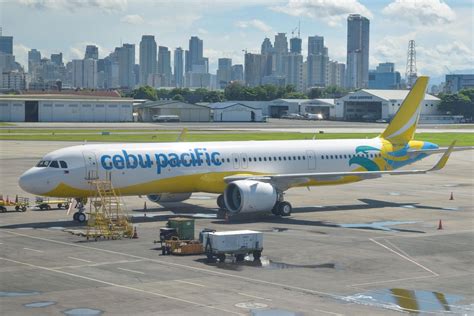
Its fleet philosophy revolves around Airbus aircraft families, creating training, maintenance, and parts commonality advantages. The airline’s use of ATR turboprops for regional routes, A320-family narrowbodies for domestic trunk routes, and A330 widebodies for long-haul and high-demand sectors creates a layered network optimized for volume rather than segmentation by class tier.
The airline’s digital-first sales approach also supports this model. By encouraging early bookings and offering frequent promotional fares, Cebu Pacific maintains high load factors, ensuring that its dense cabin configurations translate into real economic advantage rather than theoretical capacity.
Inside The 459-Seat A330-900neo Cabin Configuration
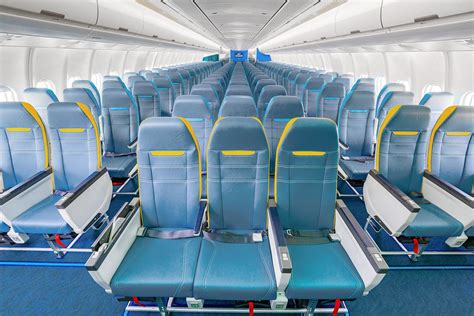
The most striking technical decision inside Cebu Pacific’s A330neo is the adoption of a 9-abreast 3-3-3 seating layout, replacing the historically common 2-4-2 arrangement. This change alone significantly increases seat count while maintaining regulatory compliance with evacuation and safety standards. Combined with slimline seat technology and reduced seat pitch, the cabin transforms into one of the highest-density widebody interiors ever certified.
Slimline seats use thinner structural frames and advanced cushioning materials to maintain acceptable comfort while freeing precious centimeters of cabin space. When multiplied across dozens of seat rows, these small dimensional changes generate massive passenger gains. The removal of business and premium economy cabins further eliminates structural dividers, galleys dedicated to premium service, and additional lavatory spacing requirements.
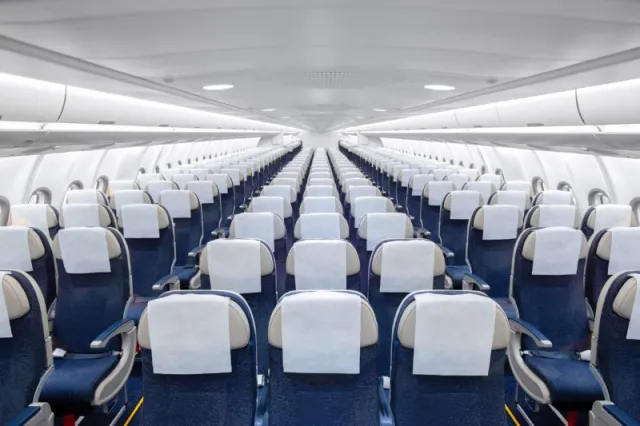
This configuration produces approximately 459 passenger seats, placing the aircraft among the highest-capacity twin-engine jets in service. The achievement is not just about squeezing more seats in; it reflects the convergence of material science, ergonomic design, and regulatory engineering.
Why Airlines Pursue Extreme Seat Density
Operating cost per seat remains one of the most important metrics in airline profitability. Fuel, crew salaries, airport fees, and maintenance costs are largely fixed per flight rather than per passenger. Increasing seat count effectively spreads these costs across more travelers, lowering ticket prices while preserving profit margins.
High-density aircraft also improve slot efficiency at congested airports. Cities like Manila face intense slot competition, making it more efficient to move 450 passengers on one flight rather than splitting them across multiple smaller aircraft. This improves schedule stability, reduces ground handling complexity, and maximizes aircraft utilization hours per day.
From a systems perspective, this turns aircraft into high-volume transport nodes within a larger network optimization strategy. Airlines effectively trade individual passenger space for network-wide cost efficiency and availability reliability.
Real-World Capacity Versus The Airbus A380
The Airbus A380 remains unmatched in maximum theoretical capacity, capable of exceeding 800 passengers in extreme all-economy layouts. However, real-world airline operations rarely approach these limits. Airlines instead balance capacity with brand identity, premium revenue streams, and passenger comfort expectations.
Emirates operates some of the highest-capacity A380s in service, with around 615 seats in certain configurations. Many other carriers operate between 470 and 510 seats, including Singapore Airlines, Lufthansa, British Airways, and Qantas. These figures create an unexpected overlap zone where a highly dense A330 begins approaching operational passenger numbers of a superjumbo.
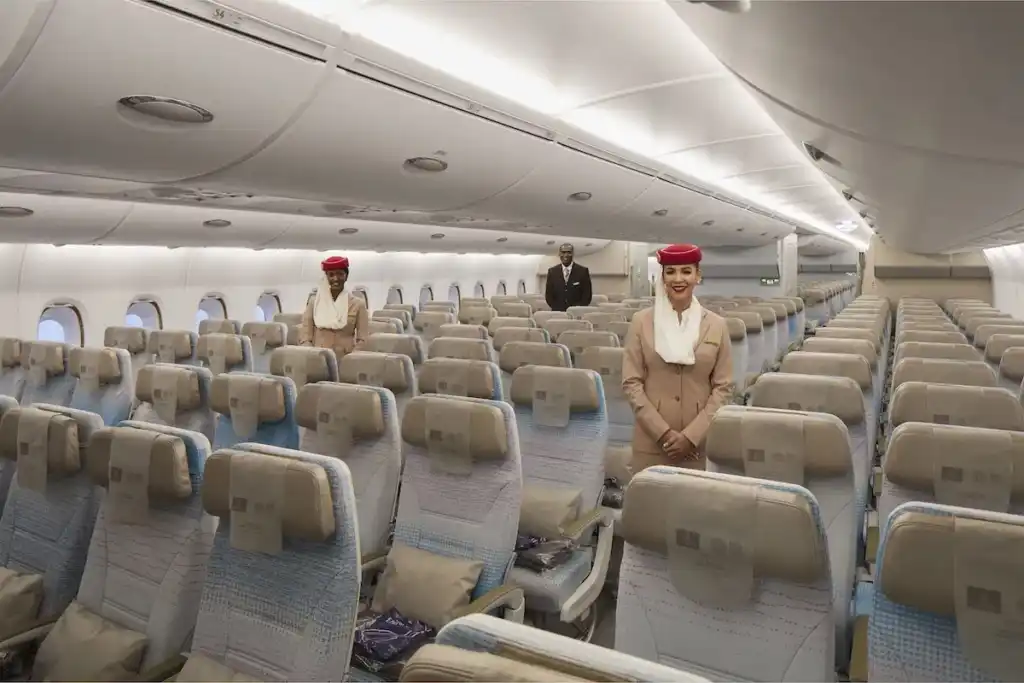
This comparison highlights an important aviation truth: aircraft size does not directly equal passenger count. Cabin layout philosophy can dramatically shift real-world performance metrics.
Extending The High-Density Philosophy Across The Fleet
Cebu Pacific applies similar thinking to its narrowbody fleet. Its A320 aircraft typically seat around 180 passengers, higher than many full-service carriers. The airline’s A321 aircraft can reach roughly 230 to 236 seats, positioning them near the maximum practical density for single-aisle jets.
Even regional turboprops follow this philosophy. ATR 72 aircraft often operate near maximum certified seating, supporting short-haul domestic connectivity while maintaining low per-passenger costs. The consistency of this strategy simplifies training, maintenance planning, and route forecasting.
This fleet-wide approach creates a unified cost structure where each aircraft type contributes to a broader high-volume transportation ecosystem rather than serving specialized passenger segments.
Other Airlines Experimenting With High-Density Widebodies
Cebu Pacific is not alone in exploring extreme passenger density. All Nippon Airways operates Boeing 787-10 aircraft with up to 429 seats on high-demand domestic Japanese routes. These aircraft function almost like oversized commuter aircraft, moving massive numbers of passengers efficiently between major population centers.
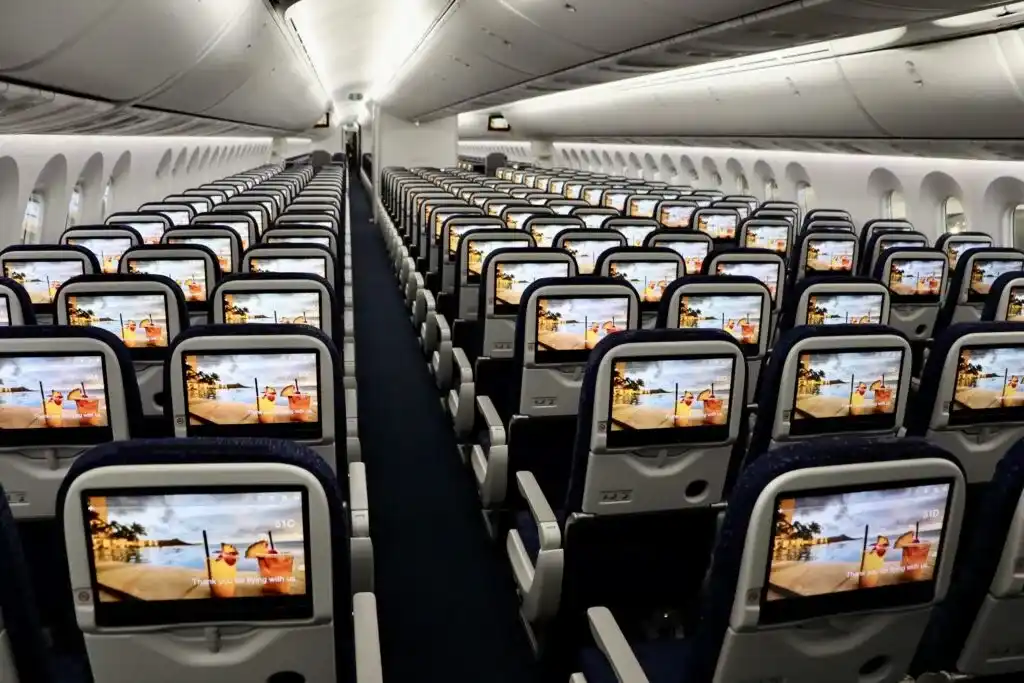
Low-cost long-haul carriers like AirAsia X have historically pushed dense A330 configurations to maintain competitive pricing on leisure-heavy routes. Meanwhile, some full-service carriers deploy economy-heavy layouts on specific high-demand routes where premium demand is lower but passenger volume remains strong.
These examples reinforce a broader industry trend: capacity optimization is becoming as important as range and speed in aircraft deployment strategy.
The Future Of High-Capacity Twin-Engine Widebodies
Future cabin innovation will likely push capacity even further without requiring larger aircraft. Advances in seat materials, thinner insulation panels, optimized galley placement, and digital cabin monitoring could free additional usable cabin space. Emergency evacuation modeling software also continues improving, allowing regulators and manufacturers to safely approve higher seat densities.
Sustainability pressures will also push airlines toward maximizing passengers per flight. Moving more people using fewer aircraft cycles reduces emissions per traveler, aligning economic incentives with environmental goals. The twin-engine efficiency advantage over four-engine aircraft will likely reinforce this trend.
The A330-900neo stands as a bridge between traditional widebody design and future high-efficiency transport platforms. It shows that innovation does not always require building bigger aircraft; sometimes it requires rethinking how existing space is used.
Redefining What “Big Aircraft” Really Means
The success of high-density A330 operations forces a reconsideration of what defines a large passenger aircraft. Instead of focusing purely on physical size, the industry increasingly measures effectiveness in terms of passengers transported per flight hour, per kilogram of fuel burned, and per airport slot used.
This shift reflects broader transportation trends across multiple industries. Efficiency, scalability, and flexibility increasingly outweigh raw size as primary design drivers. In aviation, this means aircraft like the A330-900neo can deliver operational impact far beyond what their physical dimensions might suggest.
The story of this aircraft is ultimately about optimization. Through intelligent engineering, strategic airline planning, and evolving passenger market realities, a twin-engine widebody has carved out a place surprisingly close to the operational capacity of one of aviation’s most iconic superjumbos. The result is a powerful reminder that in modern aviation, design philosophy can rival physical scale, and sometimes, clever geometry can move nearly as many people as sheer size.