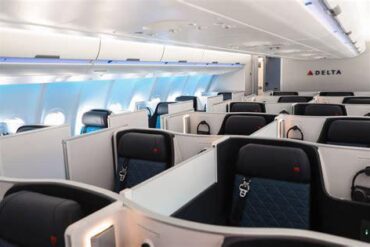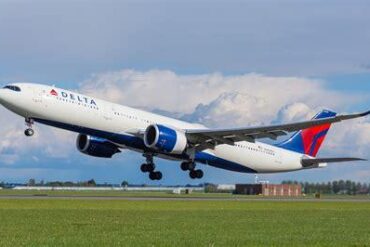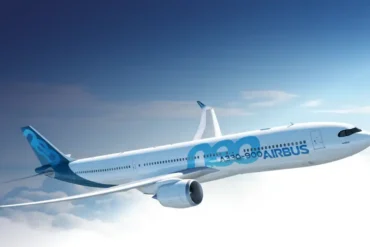
Delta Air Lines is signaling a decisive shift toward high-yield travel, and its latest reported move could redefine premium transatlantic flying. Fresh insights suggest the carrier is preparing a premium-heavy Airbus A330-900neo configuration for routes to London Heathrow, a market long synonymous with corporate demand and lucrative business traffic. While the airline has not formally confirmed the exact cabin layout, the strategy aligns seamlessly with its broader pivot toward premium revenue dominance and margin expansion.
The timing is far from coincidental. During its recent earnings call, Delta repeatedly emphasized the accelerating role of premium products, underscoring how premium cabins and loyalty programs are outpacing overall revenue growth. The airline’s messaging was consistent and deliberate: the future of profitability lies not in filling more seats, but in selling better seats at higher yields.
This philosophy is already reshaping Delta’s fleet decisions. As older aircraft with modest premium ratios are phased out, newer jets—especially the Airbus A330-900neo and A350-900—are being introduced with significantly larger premium cabins. The reported London-focused configuration may represent the most ambitious realization of that strategy yet.
Why London Is the Perfect Stage for Delta’s Premium Expansion
London Heathrow is not just another long-haul destination—it is one of the most competitive and profitable aviation markets in the world. With deep corporate demand, financial sector traffic, and high-end leisure travelers, it offers an ideal environment for premium-heavy aircraft deployment.
Delta already operates flights to Heathrow from multiple U.S. hubs, including Atlanta, New York JFK, Seattle, and Detroit. Many of these routes are currently served by the A330-900neo, making the transition to a reconfigured, high-premium variant operationally seamless. The consistency of aircraft type allows Delta to scale its strategy without introducing additional complexity.
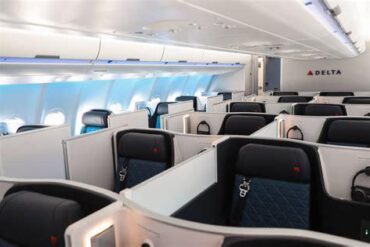
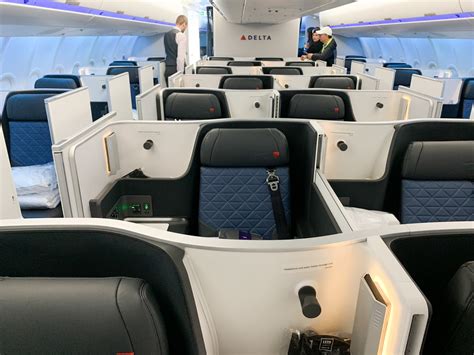
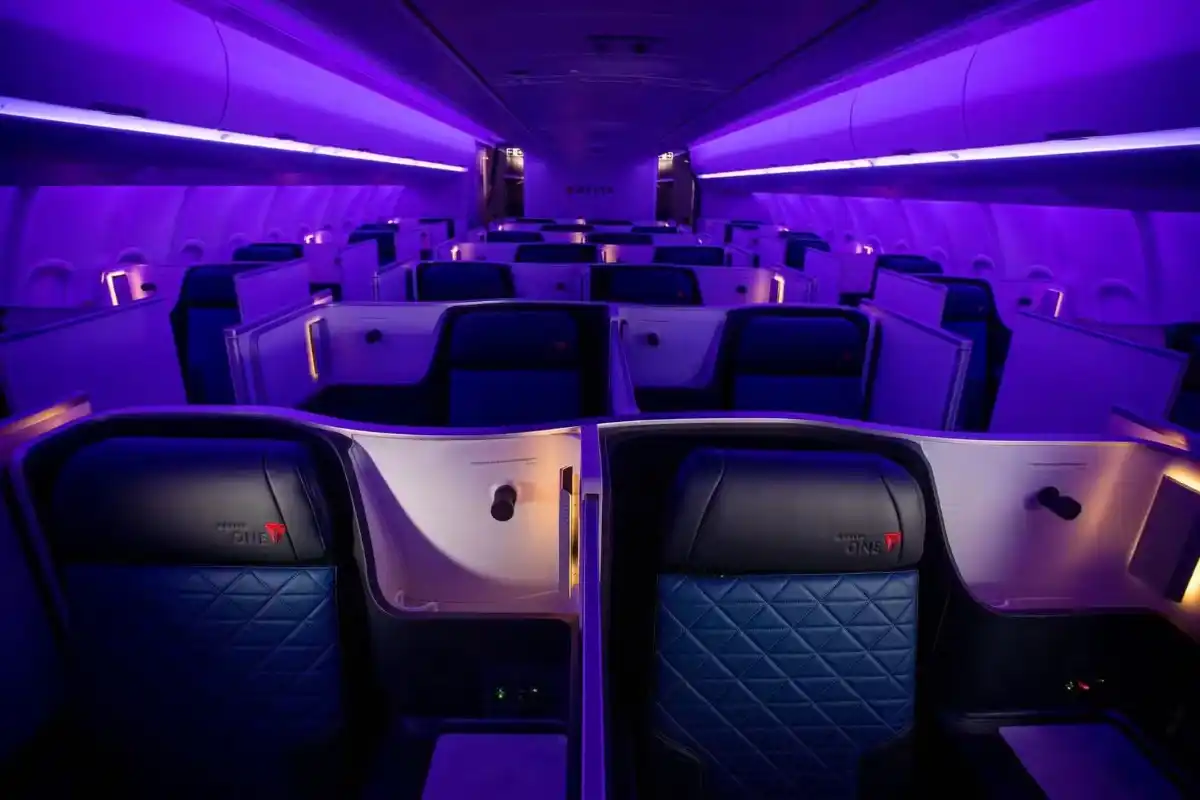
What makes this development particularly compelling is the reported scale of the shift. Industry sources indicate that the new configuration could feature more than 50 Delta One business class seats and push the overall premium share—including Premium Select and Comfort+—to over 60% of the cabin. That would represent a dramatic departure from the current layout, where premium seating accounts for roughly 40%.
Such a transformation would effectively reposition the aircraft from a general-purpose widebody into a precision-engineered premium revenue generator, tailored specifically for high-demand corridors like the North Atlantic.
From 40% to 60%: A Radical Cabin Transformation
Delta’s existing Airbus A330-900neo configuration accommodates 281 passengers across four cabins, including 29 Delta One seats and 28 Premium Select seats. While already competitive, this layout still reflects a relatively balanced mix between economy and premium offerings.
The proposed configuration, however, tells a very different story. By increasing Delta One capacity to more than 50 seats and expanding other premium sections, the airline would significantly reduce the number of standard economy seats. The result is a lower total passenger count but substantially higher revenue potential per flight.
This is not simply a matter of adding more business class seats—it is a structural redesign of the aircraft’s economic model. Fewer passengers, higher fares, and stronger margins form the core of this approach. It also reflects a growing industry realization: on key long-haul routes, especially those tied to global business hubs, premium demand is both resilient and scalable.
Fleet Renewal as a Profit Engine
Delta’s leadership has made it clear that fleet renewal is not just about efficiency—it is about unlocking new revenue streams. New-generation aircraft like the A330-900neo deliver lower fuel burn and reduced operating costs, but their true advantage lies in how they can be configured.
By increasing the proportion of premium seating, Delta is effectively using its fleet as a tool for margin optimization. The gap between retiring aircraft (with roughly 30% premium seating) and incoming jets (approaching or exceeding 50%) highlights the scale of this shift.
This evolution also dovetails with broader improvements in Delta’s business performance. The airline recently reported record corporate sales and rising unit revenues across both domestic and international markets. These trends reinforce the idea that premium demand is not a niche—it is becoming the backbone of the airline’s financial strategy.
In this context, the rumored London deployment is less of an experiment and more of a logical next step in a carefully orchestrated transformation.
The New Premium Battlefield: Segmentation and Pricing Strategy
Expanding premium capacity is only one side of Delta’s strategy. Equally important is how those seats are sold. The airline is actively developing more sophisticated pricing models, aimed at capturing a broader spectrum of premium travelers.
This includes the introduction of segmented fare products within premium cabins, allowing Delta to offer stripped-down entry-level business class options alongside more flexible, fully featured fares. The goal is to attract customers who might previously have opted for premium economy, while still preserving upsell opportunities.
This approach mirrors moves by competitors such as United Airlines, which has already introduced multiple fare tiers within its Polaris business class product. By adopting a similar model, Delta is positioning itself to maximize revenue per seat through dynamic pricing and tailored offerings.
The implications are significant. A premium-heavy aircraft becomes even more powerful when combined with a layered pricing strategy, enabling the airline to fine-tune demand and extract maximum value from each cabin segment.
A Defining Moment for Transatlantic Aviation
If Delta proceeds with a 60% premium A330-900neo on London routes, it will mark a turning point not just for the airline, but for the broader industry. Such a configuration would set a new benchmark for premium density on long-haul aircraft, particularly in transatlantic markets.
It also raises important competitive questions. Rivals operating between the U.S. and London—already one of the most contested corridors globally—may be forced to rethink their own cabin strategies. The traditional balance between economy and premium could shift decisively toward the latter, especially as airlines chase higher margins in an increasingly cost-sensitive environment.
For passengers, the impact will be equally profound. Travelers can expect greater availability of premium seats, more nuanced pricing options, and potentially enhanced onboard experiences as airlines compete for high-value customers.
Delta’s reported plan is not just about one aircraft or one route. It is a clear signal of where the industry is heading—a future where premium travel is no longer a niche luxury, but a central pillar of airline economics.