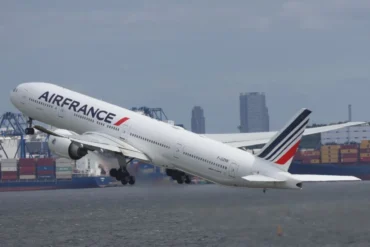
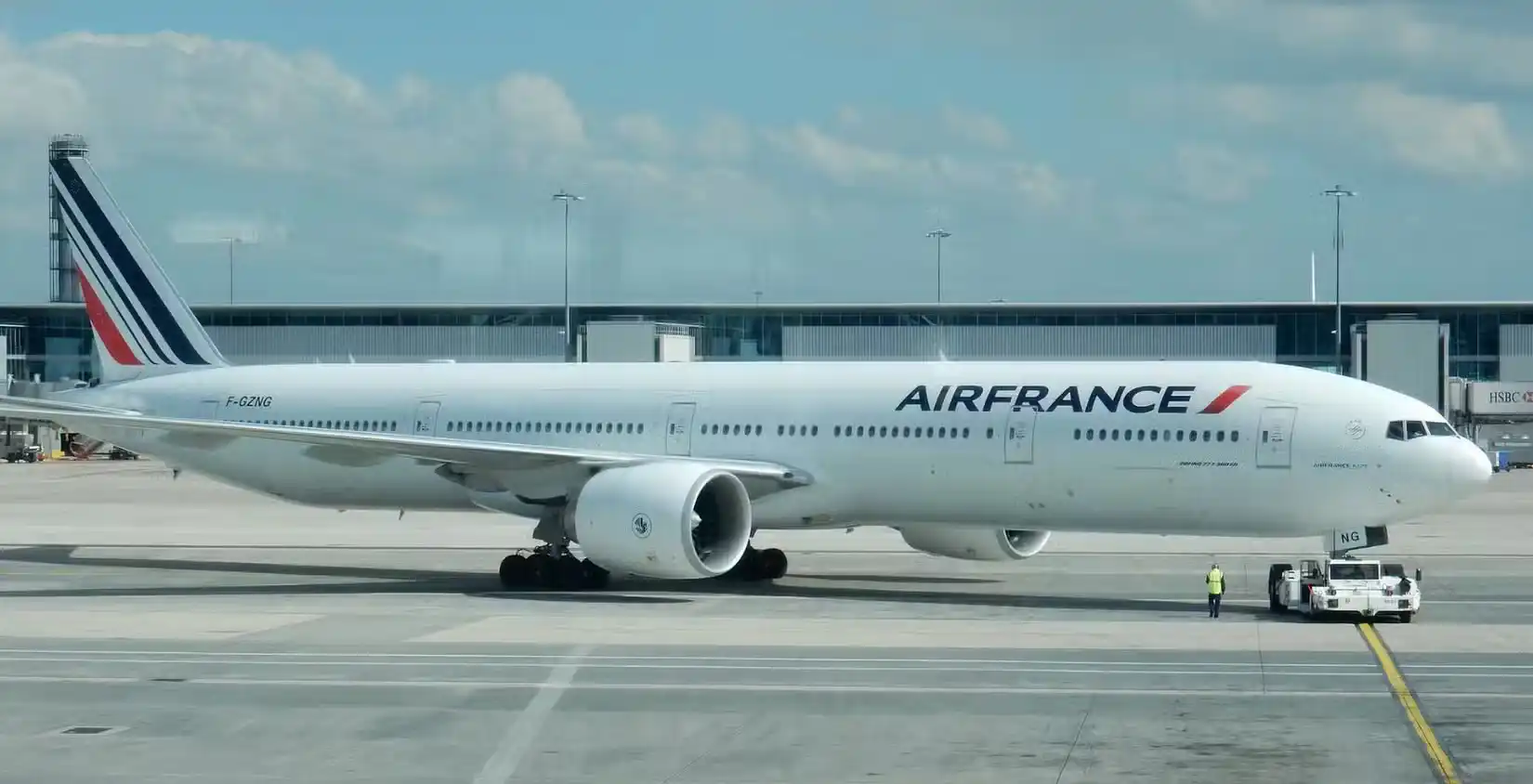
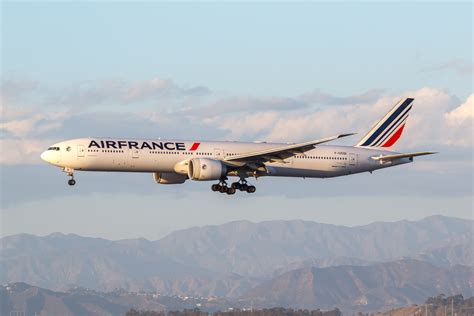
New York’s John F. Kennedy International Airport (JFK) has officially entered a new chapter in widebody aviation, welcoming the highest-capacity twin-engine aircraft ever to serve its bustling terminals. On June 16, 2025, Air France inaugurated operations of its 472-seat Boeing 777-300ER, a low-premium, high-density configuration aimed squarely at peak-season transatlantic demand. This move not only reaffirms JFK’s reputation as the foremost U.S. gateway for long-haul flights, but it also elevates the airport’s status in the hierarchy of ultra-high-capacity commercial aviation.
A New Capacity Benchmark for JFK’s Twinjet Operations
Air France’s introduction of the 472-seat 777-300ER represents a significant milestone for JFK, which already boasts the largest volume of widebody operations in the United States. Despite its global rank of 10th for widebody activity, JFK’s strategic importance for transatlantic routes cannot be overstated. Now, with the arrival of this aircraft variant—offering one of the highest seat counts of any twinjet globally—the airport is pushing the limits of what twin-engine aircraft can deliver in terms of passenger throughput.
This 777-300ER configuration, distinctively economy-heavy with reduced premium seating, was previously deployed by Air France primarily to Caribbean and Indian Ocean destinations. JFK is only the second U.S. airport to receive it, following limited service to Miami in 2023 and 2024. The debut in New York, however, signals a new strategic use of this aircraft to accommodate the summer travel surge between Paris and New York.
Flight Schedule: Designed for High Demand
Operating under flight numbers AF14/AF15, the 472-seat aircraft will only fly during the peak summer season, departing New York from mid-June through the end of August. This service will run four times weekly, supplementing Air France’s already dense JFK schedule.
- AF14 (CDG → JFK): Departs Paris Charles de Gaulle at 21:05, arrives at JFK at 23:15 (Mondays, Tuesdays, Thursdays, Saturdays)
- AF15 (JFK → CDG): Departs JFK at 01:40, arrives in Paris at 14:55 (Tuesdays, Wednesdays, Fridays, Sundays)
The return leg from JFK at 1:40 AM is among the latest long-haul departures from the airport, placing it in what travelers often consider the “dead-of-night” bracket—a necessary scheduling decision to optimize aircraft rotation and accommodate passenger connections on both sides.
Inside the 472-Seat Boeing 777-300ER: Efficiency Over Luxury
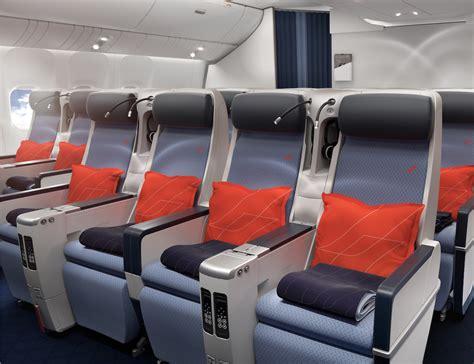
Air France’s ultra-high-capacity 777-300ER is a low-premium configuration that places emphasis on maximum economy seating rather than a diverse cabin product. The seating breakdown reflects this design philosophy:
- 14 seats in Premium Economy
- 458 seats in Economy
There are no First Class or Business Class cabins on this variant—an unusual but purposeful decision aimed at cost-conscious transatlantic leisure travelers, group bookings, and budget-oriented fliers who still prefer full-service carriers. This layout allows the airline to maximize revenue per flight during periods of high demand, especially on one of its busiest intercontinental city pairs.
JFK’s Role in Air France’s U.S. Network
JFK remains a cornerstone of Air France’s North American network, particularly during the July–August travel peak. The airline operates six to seven daily flights to JFK, totaling 46 weekly departures. When combined with Delta Air Lines, its SkyTeam alliance partner and transatlantic joint venture collaborator, this figure jumps to 67 weekly departures, making New York by far the most heavily served U.S. destination by the French flag carrier.
The service mix from JFK includes:
- 296-seat 777-300ER (high-premium)
- 312-seat 777-300ER (latest four-class configuration)
- 292-seat Airbus A350-900
- 472-seat 777-300ER (low-premium)
The diversity in configurations illustrates Air France’s strategy to segment the market by demand and cabin preference—offering everything from ultra-luxury La Première suites to mass-market economy.
A Tale of Two Triple Sevens: High Premium vs High Density
While the 472-seat 777 captures headlines for its sheer volume, its counterpart—the 312-seat four-class 777-300ER—is equally newsworthy. This newer version includes:
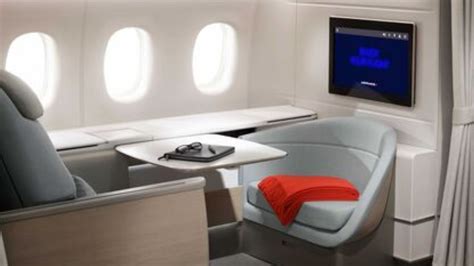
- 4 La Première First Class suites
- 60 Business Class seats
- 44 Premium Economy seats
- 204 Economy seats
This aircraft is purpose-built for premium-heavy markets, and its presence on the JFK route underscores the airport’s dual identity: a hub for both elite, high-yield passengers and price-sensitive mass travelers. The allocation of the 312-seat aircraft to JFK reflects Air France’s desire to maintain brand prestige and premium market share, while the 472-seat variant captures seasonal volume surges with unmatched efficiency.
JFK Among Giants: The Quadjet Context
Although this milestone centers on a twin-engine aircraft, JFK’s credentials in very high-capacity aviation are bolstered further by its extensive quadjet activity, especially the Airbus A380. While the 472-seat 777-300ER is now the largest twinjet at JFK, it is not the highest-capacity aircraft overall.
The A380 still reigns supreme:
- Emirates: Three daily A380 services from Dubai (some via Milan), with seat counts ranging from 484 to 519.
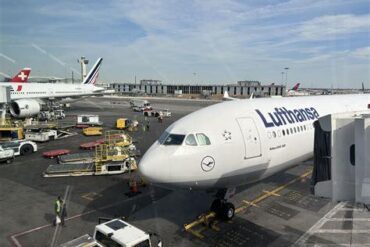
- Lufthansa: Daily A380 from Munich, configured with 509 seats.
- Asiana Airlines: Almost-daily A380 service from Seoul Incheon, featuring 495 seats.
Interestingly, Korean Air, also an A380 operator, is excluded from this club due to its more conservative 407-seat configuration—a reminder that capacity is not dictated by aircraft type alone, but also by airline business models and customer base profiles.
Engineering Power: What Makes the 777-300ER Capable of 472 Seats?
The Boeing 777-300ER remains one of the most powerful and capable twinjets in commercial aviation. With its GE90-115B engines, extended range, and enormous cargo capacity, the aircraft is widely used for both long-haul passenger and freight operations. The 472-seat layout doesn’t push the jet to its structural limits, but it does demand intelligent interior design:
- 10-abreast seating in economy class
- High-density galley placement and lavatory distribution
- Minimal premium configuration, reducing space loss to larger seat modules
- Efficient turnaround protocols to manage larger passenger volumes
Airlines like Air France make such configurations viable only on routes where load factors consistently exceed 90%, and where ticket prices can remain low enough to appeal to the leisure and VFR (visiting friends and relatives) segment, without cannibalizing premium revenue elsewhere.
Looking Ahead: Is Ultra-Dense the Future of Transatlantic Flying?
While not every airline will follow Air France’s high-density model, the successful deployment of such a configuration at a major U.S. gateway like JFK could spark broader adoption under the right conditions. Already, airlines such as Emirates, Turkish Airlines, and Singapore Airlines experiment with fleet versatility—shifting between premium and high-density setups depending on route economics.
In a world where aviation faces rising fuel costs, tightening margins, and evolving traveler expectations, the 472-seat twinjet is a symbol of hyper-efficiency without compromising safety or service quality. It’s also a reminder that strategic fleet deployment—matching the right aircraft to the right route at the right time—is still one of the most powerful tools in an airline’s arsenal.
Conclusion: JFK as the New Frontier for Twinjet Capacity
The arrival of Air France’s 472-seat Boeing 777-300ER at JFK is more than a seasonal adjustment. It is a strategic assertion that New York remains at the epicenter of global aviation, and that even the most capacity-driven equipment can find a place at its gates. For passengers, it means more availability and potentially lower fares. For airlines, it means leveraging every ounce of aircraft potential in the fight for transatlantic dominance.
As summer unfolds and thousands of travelers board the highest-capacity twinjet in the skies, JFK’s runways will once again serve as the proving ground for the future of high-volume international air travel.