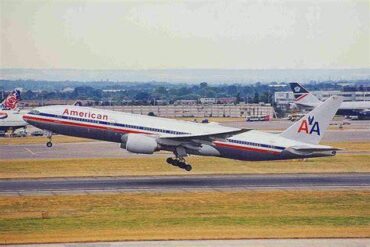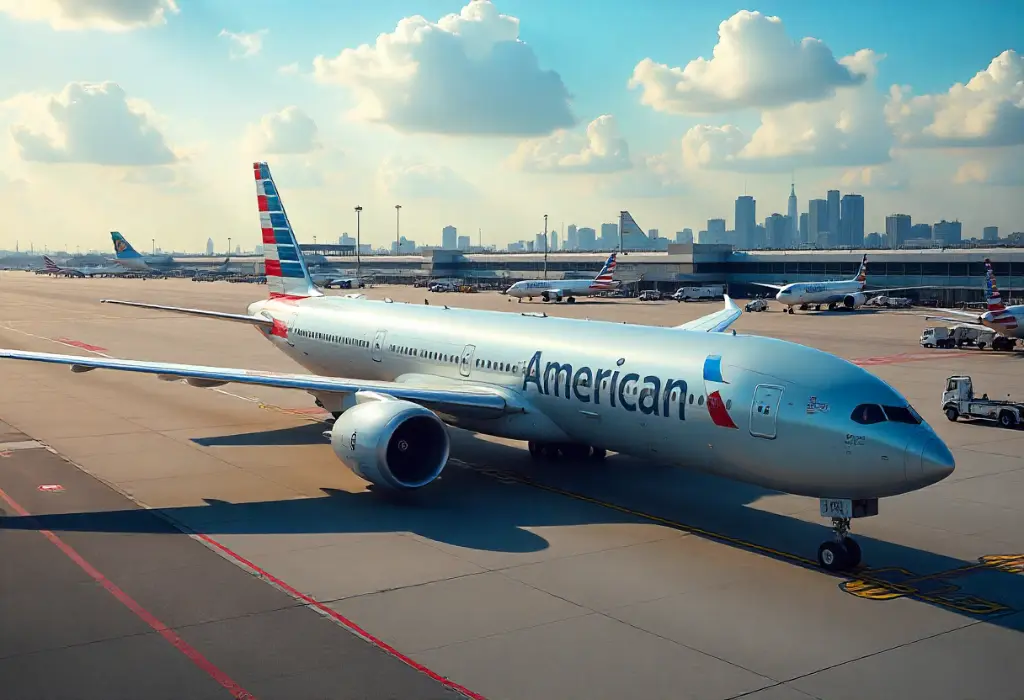
After a hiatus of more than four years, American Airlines is set to reintroduce its Boeing 777-200ER on the New York John F. Kennedy (JFK) to Los Angeles International Airport (LAX) route starting October 6. This marks a significant return for widebody service on one of the United States’ busiest and most lucrative domestic routes, with the last American Airlines twin-aisle flight on this corridor dating back to April 2021.
The move is part of American’s broader network strategy to enhance premium offerings on transcontinental flights, aligning its product more closely with competitors. The 273-seat Boeing 777-200ER will replace the Airbus A321T, which has been the sole aircraft type operating on this route since 2021. While the A321T was designed specifically for premium transcontinental travel, the 777 offers a substantially higher seating capacity and a vastly improved business class and premium economy experience.
Why This Move Matters for American Airlines
The JFK–LAX corridor is the top domestic route in the U.S. by revenue and passenger volume, making it a strategic battleground for airlines. Delta, United, JetBlue, and Alaska also compete on this route, with Delta having been the only carrier to regularly operate widebodies on it in recent years. By reintroducing the 777, American is directly addressing the market’s growing demand for more spacious and premium travel options.
Replacing the A321T with the 777 increases per-flight capacity by 171 seats—a jump from 102 to 273 seats, including:
- 37 lie-flat business class seats
- 24 premium economy seats
- 212 economy seats
This shift also expands cargo capacity, an important factor for transcontinental freight revenue. While the aircraft swap does mean the removal of the flagship first-class cabin found on the A321T, it provides a more competitive business-class product and introduces premium economy—absent from the A321T.
Updated Flight Schedules and Frequencies
In total, nine daily departures are scheduled between JFK and LAX during the upcoming winter season. The 777-200ER will primarily operate daytime flights in both directions, complementing the A321T flights still in service. According to the latest schedules, the 777 service is expected to continue until at least December 2, with potential extensions based on demand and performance.
Some of the key JFK–LAX 777-200ER flight times include:
- JFK to LAX: 08:00–11:40 (777-200ER)
- LAX to JFK: 12:45–20:58 (777-200ER)
This reintroduction of the 777 places American Airlines back in the widebody competition on this premium route alongside Delta, which continues to deploy its Boeing 767-300ERs.
Competitive Landscape: Widebody Dominance on Transcon Routes
With American’s return to widebody operations on JFK–LAX, 16 daily widebody flights will now operate between New York (JFK and Newark) and Los Angeles, provided by American, Delta, and United. These flights represent one-third of all NYC–LAX services, a significant increase compared to pre-pandemic levels.
For context:
- In November 2019, widebodies represented 22% of all NYC–LAX flights.
- In November 2024, they accounted for 37%, with today’s figure remaining slightly lower but still robust at 33%.
This renewed focus on widebody deployment highlights the evolving market demand for premium, high-capacity aircraft on long domestic routes. While narrowbody aircraft like the A321T excel at providing boutique transcon service, the increased seating, cargo, and cabin flexibility of widebodies make them indispensable for carriers competing in the ultra-premium market.
Passenger Experience: A Step Up in Comfort and Options
Switching from the A321T to the 777-200ER significantly enhances the passenger experience. While the A321T’s main selling point was its three-class boutique configuration, the 777 provides a more spacious cabin layout with advanced in-flight entertainment systems, improved seating comfort, and greater amenities across all classes.
Business Class
American’s 37-seat business class cabin features lie-flat seating with direct aisle access, a major upgrade over the A321T. The configuration is designed for transcontinental comfort, catering to premium travelers and corporate clients who dominate this route.
Premium Economy
The 24-seat premium economy cabin introduces a new mid-tier product for JFK–LAX passengers. This segment has been increasingly in demand as travelers seek more comfort than economy but at a lower price point than business class.
Economy
With 212 economy seats, the 777 substantially expands capacity, accommodating a broader range of travelers and reducing booking pressure on peak flights.
Impact on Cargo and Operational Efficiency
Beyond passenger service, the reintroduction of the 777 boosts belly cargo capacity, enabling American Airlines to capitalize on transcontinental freight opportunities. This has become particularly critical as cargo revenue remains a strong supplementary income stream for airlines post-pandemic.
From an operational perspective, the 777’s deployment allows American to maximize fleet utilization and streamline long-haul aircraft scheduling. It also creates more flexibility for redeploying narrowbodies like the A321T to other high-yield transcon or international routes.
A Glimpse at the Competitive Future
This move signals a potential phasing out of the A321T from the JFK–LAX route in favor of larger aircraft. While American has not confirmed the complete removal of the A321T, its gradual replacement by widebodies aligns with broader industry trends prioritizing higher-capacity, premium-heavy configurations.
Competitors like Delta and United are likely to monitor this shift closely. Delta continues to rely on its Boeing 767-300ER fleet, while United deploys the Boeing 787-9 and 787-10 from Newark, ensuring strong competition in both passenger and cargo markets.
Conclusion: A Strategic Return for American Airlines
The return of the Boeing 777-200ER to the JFK–LAX route is more than just an aircraft change—it represents a strategic repositioning by American Airlines in the highly competitive transcontinental market. With greater capacity, a superior business-class experience, and the introduction of premium economy, American is reaffirming its commitment to maintaining a leading presence on this crucial route.
As travel demand continues to evolve, the reintroduction of widebody service between New York and Los Angeles demonstrates American’s readiness to adapt its product offering, enhance its revenue streams, and compete head-on with other major carriers in one of the most important aviation corridors in the country.