
American Airlines, the world’s largest airline by fleet size and passenger volume, maintains a vast international network and a diverse fleet. Yet among its nearly 1,000 mainline aircraft, one stands out for its longevity and legacy: the Boeing 777-200ER. This long-range widebody, once a technological marvel of its time, remains in active operation more than two decades after its introduction. While newer, fuel-efficient models like the Boeing 787 Dreamliner and Airbus A350 are progressively shaping the future of American’s widebody strategy, the 777-200ER continues to shoulder a significant share of long-haul demand.
For avgeeks and seasoned travelers seeking to fly on American Airlines’ oldest widebody, there are still select hubs that regularly operate the 777-200ER. Spread across the United States, these six airports offer a glimpse into the aircraft’s enduring presence on premium and high-capacity international routes.
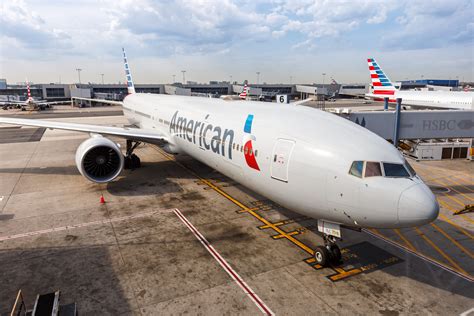
The Backbone of Legacy: Inside the Boeing 777-200ER Fleet
American Airlines currently owns 47 Boeing 777-200ER aircraft, a number that underscores the model’s critical role in the airline’s long-haul operations. While two of these jets are in maintenance and one in long-term storage, 44 remain actively flying, serving destinations across Europe, Asia, and the Americas.
The fleet was delivered between January 1999 and May 2006, with the earliest examples—tail numbers N770AN and N771AN—marking over 26 years of service. Despite their age, these aircraft remain robust workhorses, favored for their high-capacity configurations and operational flexibility. In total, the fleet’s average age is approximately 24.5 years, and though no firm retirement schedule has been confirmed, it’s evident that American will eventually phase out these aging jets in favor of next-generation widebodies.
Still, until that day comes, the 777-200ER remains indispensable. With the ability to haul significant payloads across oceans and continents, the aircraft remains deeply integrated into American Airlines’ international strategy—especially at these six key hubs.
Charlotte Douglas International Airport (CLT): The Southeastern Gateway

Charlotte Douglas International Airport is a rapidly growing stronghold in American’s network, especially for transatlantic connections. From CLT, the airline operates nine distinct routes using the 777-200ER, including eight direct flights to Europe and a daily flight to Miami for aircraft repositioning.
Among the European destinations served are:
- Athens (ATH)
- Paris (CDG)
- Dublin (DUB)
- Rome (FCO)
- Frankfurt (FRA)
- London Heathrow (LHR)
- Madrid (MAD)
- Munich (MUC)
Notably, London Heathrow receives a twice-daily 777-200ER service from Charlotte, underlining its status as a strategic business and leisure route. These transatlantic flights ensure that Charlotte remains a crucial player in American’s European network, and for travelers, it offers multiple options to board the legacy 777.
Dallas/Fort Worth International Airport (DFW): The Heart of the Network
American’s largest and most vital hub, Dallas/Fort Worth International Airport, unsurprisingly supports the densest concentration of 777-200ER flights. These aircraft are used to serve twelve destinations from DFW, ranging across Europe, Asia, and the United States.
Among the most prominent international destinations are:
- Barcelona (BCN)
- Paris (CDG)
- Dublin (DUB)
- Rome (FCO)
- Madrid (MAD)
- Venice (VCE)
- London Heathrow (LHR)
- Seoul Incheon (ICN)
These routes are augmented by daily services to Honolulu (HNL), Kahului (OGG), and Tokyo Narita (NRT), as well as twice-daily flights to Los Angeles (LAX).
The sheer breadth of routes from DFW showcases the 777-200ER’s continuing importance. With high volumes of passengers connecting through the Texas megahub, the aircraft’s capacity is fully leveraged to meet demand, especially on high-density transoceanic routes.

John F. Kennedy International Airport (JFK): Holding Ground in a Competitive Market
In the hyper-competitive New York market, American Airlines has scaled back its operations, yielding market share to Delta and United. Still, JFK remains a key hub for transatlantic flights, and the 777-200ER still serves a select group of long-haul routes.
American deploys the aircraft from JFK to:
- Athens (ATH)
- Paris (CDG)
- London Heathrow (LHR)
- Milan Malpensa (MXP)
- Buenos Aires (EZE)
Among these, the route to Buenos Aires is particularly notable. It remains the only year-round nonstop flight from the New York area to the Argentine capital, making it a critical connection point for South American travel. These routes reflect the strategic utilization of the 777 on premium international segments from JFK, even amid a reduced overall footprint in the region.
Miami International Airport (MIA): The Latin American Anchor

Known as the “Capital of Latin America,” Miami International Airport serves as American’s central base for operations into South and Central America. From MIA, the airline operates six key long-haul routes with the 777-200ER, three of which head to Latin American powerhouses:
- Cancun (CUN)
- Buenos Aires (EZE)
- Rio de Janeiro (GIG)
In addition, American uses the aircraft on transatlantic flights to:
- Madrid (MAD)
- Rome (FCO)
And for network integration, a daily flight to Charlotte (CLT) helps circulate the aircraft between hubs.
With over 180 monthly flights and more than 150 million available seat miles (ASMs) generated from Miami alone, it’s clear that the 777-200ER is still a cornerstone of American’s operations from this crucial Southern gateway.
Phoenix Sky Harbor (PHX) & Los Angeles International (LAX): One Flight Each, Big Impact

Though smaller in scale compared to other hubs, PHX and LAX still maintain daily 777-200ER flights to London Heathrow, one of American’s most vital international destinations and a central oneworld alliance hub. Each of these routes provides over 16,000 monthly seats, making them high-capacity links between the U.S. West and Europe.
While these hubs don’t support the same number of long-haul routes as DFW or MIA, their inclusion in the 777-200ER rotation emphasizes the aircraft’s wide network reach and transatlantic importance.
Why American Still Bets on the 777-200ER—For Now
Despite its age, the Boeing 777-200ER remains irreplaceable in many ways. It offers a large premium cabin layout, extensive belly cargo space, and reliable long-range performance. While the airline is undoubtedly preparing for its eventual retirement and replacement with more efficient models, the aircraft’s continued use at six major hubs shows just how essential it remains in today’s fleet planning.
More importantly, for passengers, the 777-200ER offers a classic widebody experience—and one that’s becoming increasingly rare. Its 2-5-2 economy seating layout, expansive business class cabin, and mature onboard service offerings combine for a comfortable and nostalgic ride.
For those who want to experience this aging workhorse before it vanishes from American’s schedule, visiting one of the six hubs—CLT, DFW, JFK, MIA, PHX, or LAX—is a must.
Looking Ahead: The Future of the 777-200ER in American’s Fleet
While the 777-200ER continues to fly, its retirement looms on the horizon. With Boeing 787-9s already heavily integrated into American’s fleet and further deliveries expected, a transition is inevitable. Still, until the last airframe is grounded, American will continue leveraging these jets where they’re most needed.
Until then, these six hubs represent the final chapter of an aircraft that once symbolized the future of international air travel—and that still, impressively, gets the job done.