The Boeing 747, a symbol of the golden age of air travel, is now a rare sight in global aviation. Its once-celebrated status as the “Queen of the Skies” is challenged by the rise of more fuel-efficient, twin-engine widebody aircraft. While most remaining 747 operations are long-haul, intercontinental flights, a select few shorter 747 routes still exist — offering a rare, accessible experience aboard this legendary aircraft.
Frankfurt To Newark – Lufthansa’s Shortest Transatlantic Jumbo Route
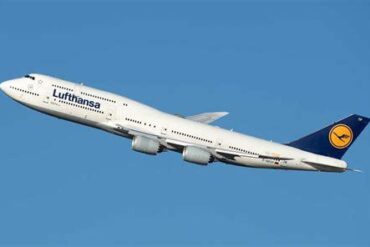
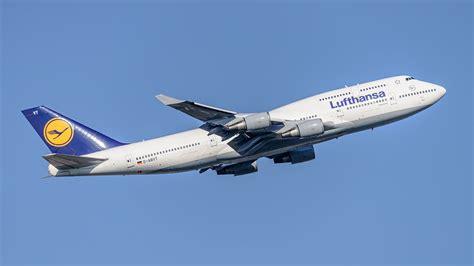
Lufthansa, the world’s largest passenger operator of the Boeing 747, maintains a regular summer service between Frankfurt and Newark Liberty International Airport aboard its modern 747-8i. At just 3,363 nautical miles (6,228 km), this flight is one of the shortest transatlantic Boeing 747 routes.
The 747-8i offers passengers a unique premium experience. It seats 364 passengers, including 8 first class suites, 80 business class flatbeds, 32 premium economy recliners, and 244 economy seats. This lower capacity compared to its predecessor, the 747-400, is intentional — Lufthansa prioritizes comfort and luxury, especially in premium classes.
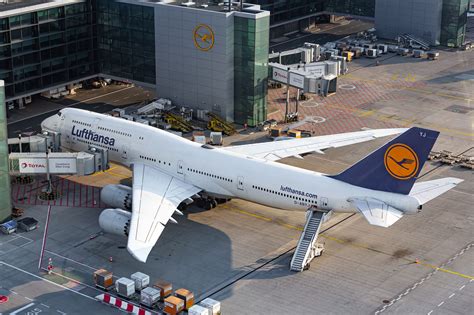
Lufthansa is also introducing its new ‘Allegris’ cabin retrofit. For now, only the main deck business class is being upgraded. The upper deck, economy, and other sections will receive attention later in the decade. This odd phased strategy reflects the airline’s focus on managing upgrades while minimizing aircraft downtime.
Frankfurt To New York JFK – The End Is Near For the 747-400
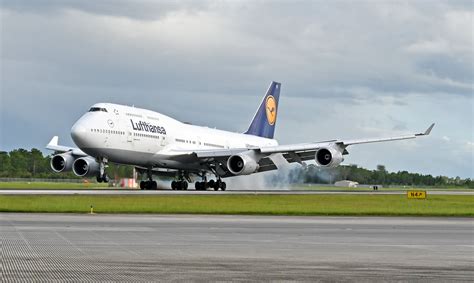
Another short but iconic route is Frankfurt to New York’s JFK, coming in at 3,350.8 nautical miles (6,205.3 km). This summer, Flight LH400 will be operated by the Boeing 747-400, Lufthansa’s older jumbo jet.
With 371 seats in a three-class configuration, the 747-400 lacks the modern amenities found in newer aircraft. It features 67 seven-abreast business class seats, 32 premium economy, and 272 economy seats. Notably, there’s no first class.
This route is one of the last bastions for the 747-400 in Lufthansa’s fleet. The airline plans to retire these aircraft by 2028, replacing them with more modern planes like the Boeing 777-9 and Airbus A350-1000.
Competition is intense. Leisure airline Condor flies the same route using A330-900s, offering surprisingly competitive business class suites. Singapore Airlines also operates a fifth-freedom route here, using a Boeing 777-300ER.
Frankfurt To Boston – Two Daily Flights, One Iconic Aircraft
Frankfurt to Boston Logan International Airport is another relatively short 747 flight at 3,189 nautical miles (5,906 km). Though Boston is not a Star Alliance hub, Lufthansa operates two daily flights: one with an A340-300 and one with the 747-400.
Lufthansa’s high-capacity 747-400 handles routes with strong demand but lower premium traffic. Its configuration — 371 seats, no first class — reflects this strategy. Interestingly, these aircraft were once part of a fleet of 30, all powered by General Electric CF6 engines. Most were retired long ago, with a few temporarily parked during the COVID-19 pandemic.
The Boston route remains critical due to business, academic, and tourism ties between Germany and the U.S. Northeast. The summer months see especially strong demand, justifying the use of such a large, iconic aircraft.
Beijing To Shenzhen – Air China’s Domestic Power Move
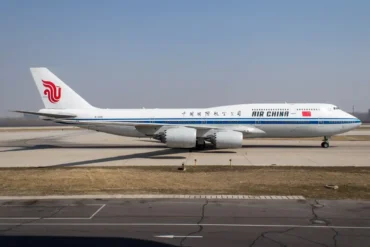
Shifting to Asia, Air China’s Beijing to Shenzhen route is the shortest international or domestic 747 route operated this summer, at 1,053 nautical miles (1,950.5 km). Despite its short distance, this is one of the busiest trunk routes in China.
Shenzhen, part of the Pearl River Delta Megapolis, is a major financial and tech hub. Air China flies up to 15 daily services between Beijing Capital and Shenzhen, deploying a diverse mix of widebody aircraft, including the 747-8.
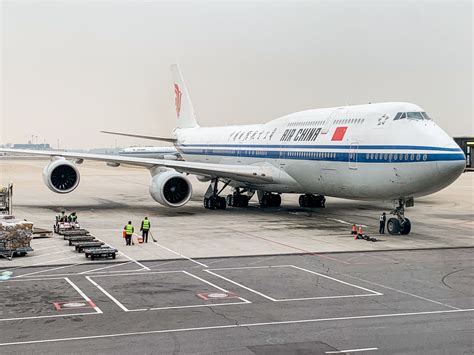
Although the 747 is a rare sight on this route compared to A330s, A350s, and 777s, it provides significant passenger and cargo capacity. With seating for 365 passengers across four cabins, Air China uses the aircraft’s capability to capitalize on heavy travel demand — even for under-three-hour flights.
Beijing To Guangzhou – Heavy Metal On a Short Hop
Only slightly shorter than the Shenzhen service, Air China also operates the 747 between Beijing and Guangzhou, a 1,012.4 NM (1,875 km) domestic route. With up to 13 daily flights, it’s another example of China’s high-frequency, widebody-intensive domestic operations.
Both 747-400s and 747-8s are scheduled here, mixed in with A330s, 777s, 787s, and A350s. The route’s demand justifies this inconsistency. Sometimes multiple daily services see the 747 deployed at peak hours, depending on demand surges and cargo needs.
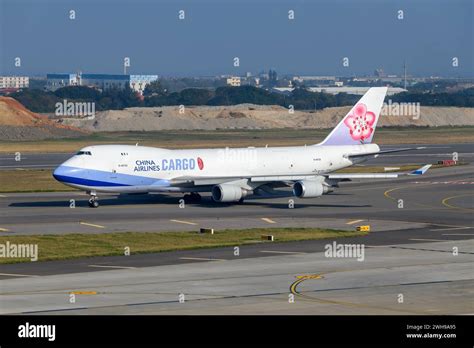
Guangzhou is China’s busiest airport and second-largest cargo hub. The route typically takes about three hours, yet the aircraft used are the same models tasked with flying transpacific or Europe-bound long-hauls.
Moscow To Sochi – Russia’s Leisure Travel on a Jumbo Scale
Perhaps the most unexpected 747 route this summer is within Russia, from Moscow to Sochi, at just 759.5 nautical miles (1,406.6 km). Operated by Rossiya Airlines, a subsidiary of Aeroflot, this domestic route utilizes the Boeing 747-400 in a high-density configuration.
Rossiya configures its jumbos to hold 522 passengers — 12 in angled-flat business seats on the upper deck and 510 in economy. The upper deck also includes 27 economy seats. Entertainment screens are available throughout, making it a relatively comfortable ride despite the short duration.
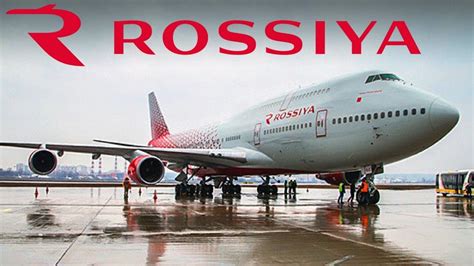
Due to ongoing international sanctions, Russian airlines are largely grounded from international routes. This has forced carriers like Rossiya to redeploy large aircraft on domestic leisure routes, particularly to popular holiday cities like Sochi.
Beijing To Shanghai – The World’s Shortest Boeing 747 Route
At just 597.6 nautical miles (1,073.4 km), Beijing to Shanghai is the shortest Boeing 747 route flying anywhere on Earth this summer. Air China dominates this corridor, focusing operations on Shanghai Hongqiao Airport, with over a dozen daily services.
Though short, this route is immensely important. The Beijing–Shanghai air corridor is China’s busiest, due to business, tourism, and family travel. Unlike international hubs, Hongqiao serves more domestic routes and is favored for its proximity to central Shanghai.
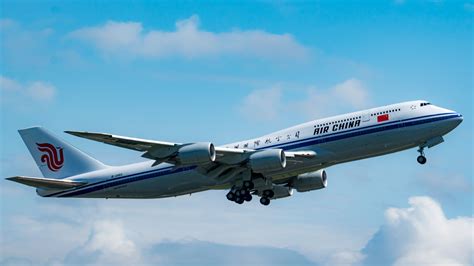
Air China’s 747-400s carry 344 passengers, including 10 first class suites, 42 business flatbeds, and 292 economy seats. The newer 747-8s bump capacity slightly to 365 seats and add premium economy recliners. Even with fast high-speed rail competition, these flights remain in demand — particularly for cargo and official travel.
Conclusion: A Legacy Fading, But Not Forgotten
While the Boeing 747 may no longer dominate the skies as it once did, its presence on a select few shorter routes offers aviation enthusiasts and nostalgic travelers a final chance to experience the grandeur of the jumbo jet. From transatlantic crossings to domestic routes within China and Russia, the 747 continues to serve where demand, legacy, and capacity intersect. Each of these flights, some barely over an hour in duration, is a poignant reminder of an era where flying was as much about the journey as the destination.