The Boeing 777 has long been associated with transcontinental travel, intercontinental networks, and globe-spanning performance. Yet in 2025, a curious trend has captured the attention of aviation analysts: some of the world’s shortest commercial flights are being operated by this widebody heavyweight. From 50-mile Caribbean hops to brisk Middle Eastern feeder runs, the 777 is proving it’s more than just a marathon machine.
These deployments reveal more than scheduling quirks—they expose evolving strategies in fleet management, hub optimization, and route economics. The following analysis dives deep into the shortest Boeing 777 routes scheduled this year, why they exist, and what they say about the future of aviation.
The Shortest Boeing 777 Routes in 2025
Among the surprising entries in 2025’s global flight schedules are short-haul missions by the Boeing 777, with routes ranging from under 60 nautical miles to just over 320. While these sectors are dramatically shorter than the aircraft’s typical long-haul operations, they exist for good reason—and are operated by some of the world’s most prominent carriers.
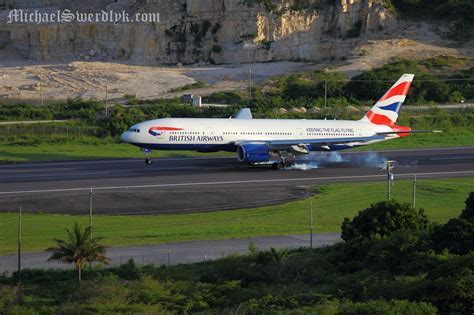
- British Airways continues to operate two of the shortest regularly scheduled 777 flights:
- St. Kitts (SKB) to Antigua (ANU): Just 54.7 nautical miles (101 km), this route is the shortest scheduled Boeing 777 flight in the world.
- St. Lucia (UVF) to Grenada (GND): Slightly longer at 102.5 nautical miles (190 km), this route is similarly tied to transatlantic services.
- Qatar Airways maintains a trio of short regional connections using the 777-300ER:
- Doha (DOH) – Bahrain (BAH): 79.1 nm (147 km)
- Doha – Dammam (DMM): 121.7 nm (225 km)
- Doha – Abu Dhabi (AUH): 173.8 nm (322 km)
- Biman Bangladesh Airlines operates:
- Sylhet (ZYL) to Dhaka (DAC): 104.3 nm (193 km)
- Dhaka to Chittagong (CGP): 123.4 nm (229 km)
- Air Austral flies between Réunion (RUN) and Mauritius (MRU) over 124.3 nm (230 km).
- China Eastern Airlines runs a limited service between Shanghai (PVG) and Nanjing (NKG) (154.8 nm / 287 km).
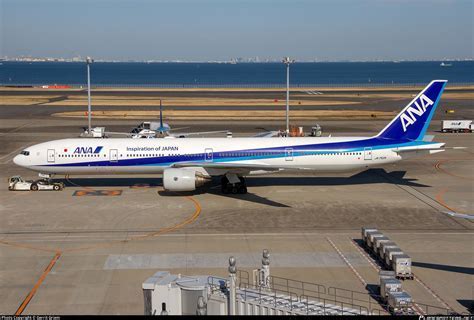
- All Nippon Airways covers Komatsu (KMQ) to Tokyo Haneda (HND) in 170.3 nm (315 km).
These flights may seem anomalous, but each serves a specific strategic or operational purpose.

Why Use the Boeing 777 for Short Flights?
Using a long-haul widebody jet on routes shorter than 200 miles might seem economically unsound at first glance. However, airlines have several justifiable reasons for doing so.
1. Fleet Utilization and Availability
Sometimes, an airport hub may have surplus widebody aircraft available, while narrowbodies are committed elsewhere. Instead of letting a 777 sit idle, airlines redeploy it for short hops, especially when tight turnarounds and crew cycles allow it.
2. Hub-and-Spoke Passenger Consolidation
Major carriers like Qatar Airways operate in a hub-and-spoke model where short flights feed passengers into larger international banks. A 777’s capacity proves valuable here, funneling hundreds of travelers into onward long-haul departures without needing multiple smaller aircraft.
3. Slot Constraints at Busy Airports
In slot-restricted environments like Tokyo Haneda or Doha, one flight using a 777 can transport more passengers per slot, maximizing revenue per movement and complying with airport limitations.
4. Crew Training and Rotation
Short sectors are also used to maintain crew proficiency, especially after extended groundings or lulls in activity. These flights are ideal for line checks, cabin crew familiarization, and pilot currency maintenance.
5. Cargo Uplift and Operational Leverage
Even on short routes, the 777’s cargo capacity remains an asset. Airlines may use these flights to carry priority goods or e-commerce packages between high-volume regional points.

Operational Economics: When Short Beats Long
Normally, the Boeing 777 is praised for its range and payload capabilities. The 777-300ER, for example, can travel up to 7,370 nautical miles (13,650 km) with more than 350 passengers. But short flights are another story.
These routes consume proportionally more fuel per mile due to frequent climb and descent phases, which are inherently inefficient. Still, with lighter loads and reduced tanking, the economics can balance out when:
- Long-haul flights are delayed or rescheduled
- There’s a demand surge due to religious events (e.g., Hajj traffic)
- Regional demand spikes temporarily
Moreover, aircraft cycles—defined as takeoffs and landings—add wear to airframes faster than cruising hours. So repeated short missions increase maintenance needs faster, and reduce time between checks.
Airlines’ Perspective on Short-Haul 777 Deployments
Executives and fleet managers often stress that 777s on short-haul routes are rarely a “first choice,” but rather a strategic response to unpredictable demand, crew rostering needs, or infrastructure constraints. British Airways’ Caribbean triangle flights exemplify this well—there’s no easy way to reposition passengers without keeping the same aircraft in play across the islands.
For Qatar Airways, tight turnaround schedules in the Gulf benefit from the 777’s speedy boarding systems and large capacity. It’s more efficient to send a single 777 instead of coordinating two or three A320s in rapid succession.
The 777’s True Calling: Long-Haul Dominance
Make no mistake: the Boeing 777 is built for long-distance performance. Its twin GE90 engines, massive fuel tanks, and robust airframe are designed to dominate routes such as:
- New York (JFK) – Tokyo (NRT): ~5,885 nm
- London (LHR) – Singapore (SIN): ~5,920 nm
- Dubai (DXB) – Los Angeles (LAX): ~7,246 nm
It carries vast payloads, handles diverse climate zones, and executes 16-hour sectors with unmatched reliability. So when it shows up on a 60-minute leg, it’s akin to a Ferrari making a grocery run—capable, but far from optimized.
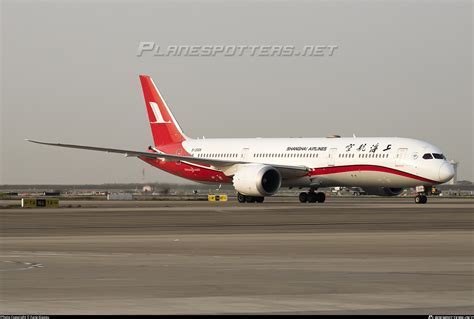
Challenges of Using the Boeing 777 for Short Flights
The trade-offs of short-haul 777 deployment are clear:
- Higher fuel burn per mile
- Increased maintenance cycles
- Longer ground handling times
- Environmental inefficiencies
Yet, for some airlines, these negatives are outweighed by schedule cohesion, slot optimization, and operational consistency.
The aircraft’s cabin offers a superior experience for passengers even on brief journeys. Premium travelers enjoy full-size lie-flat beds and superior entertainment options—elements absent on regional jets or narrowbodies.
Looking Ahead: Will This Continue?
As newer, more efficient aircraft like the Boeing 787 Dreamliner and the 777X phase into active fleets, these short-haul 777 services may become rarer. However, until airlines fully optimize their networks post-COVID, we’ll continue to see opportunistic deployments—especially in markets with:
- High cargo demand
- Limited aircraft choices
- Slot or infrastructure constraints
Ultimately, the occasional sight of a Boeing 777 flying a sub-100-mile route is a testament to its adaptability, not misuse.

Conclusion
The Boeing 777’s presence on some of the world’s shortest scheduled commercial routes is not an accident or an inefficiency—it’s a deliberate strategy born of necessity, logistics, and flexibility. In a world where airline operations must react swiftly to changing market forces, the ability to deploy a long-haul aircraft like the 777 on short regional missions is a strength, not a flaw.
While its natural domain remains the skies between continents, the 777’s unexpected detours into short-haul territory offer a rare look at how modern aviation maximizes assets in dynamic environments. Whether cruising over oceans or island-hopping in the Caribbean, the Boeing 777 continues to defy expectations—one nautical mile at a time.