The dawn of the widebody era began with the introduction of the Boeing 747 in the late 1960s, transforming the architecture of commercial aviation and redefining global connectivity. Among the legendary successors that followed, the Boeing 777-200LR etched its place in history as one of the longest-range commercial aircraft ever built. Its incredible range and engineering prowess served global carriers well for nearly two decades. However, the relentless evolution of aviation technology has now ushered in the beginning of the end for this iconic aircraft.
The Rise And Rule Of The Boeing 777-200LR
Launched during the golden age of aviation innovation in the mid-2000s, the Boeing 777-200LR stood as a testament to the industry’s commitment to pushing boundaries. Powered exclusively by the General Electric GE90 engines, each generating over 115,000 pounds of thrust, the 777-200LR was a marvel of aerodynamics and raw power. With a maximum takeoff weight of 766,000 pounds, a cruising speed of 511 knots, and a stunning range of 8,555 nautical miles, it became the go-to aircraft for ultra-long-haul flights.
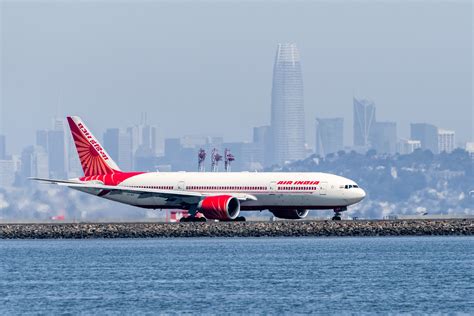
The aircraft’s use of composite materials, a supercritical wing design swept back at 31.6 degrees, and fly-by-wire digital controls set it apart as a technological pioneer. Airlines favored the 777-200LR not just for its range but for its flexibility, accommodating over 300 passengers in a two- or three-class configuration with unparalleled reliability. The 777-200LR’s capabilities reached their zenith in 2005 when it set a world record for the longest nonstop commercial flight, covering over 11,000 miles from Hong Kong to London—eastward over the Pacific.
Operators Holding On—But Not For Long
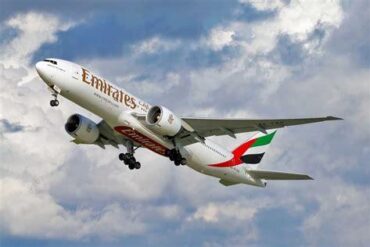
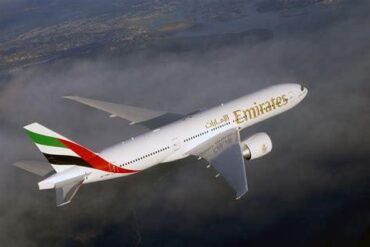
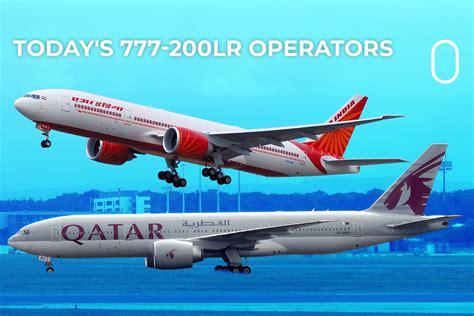
Despite being nearly two decades old, 35 Boeing 777-200LRs still operate today, proving the aircraft’s enduring appeal. Leading the list is Emirates, operating 10 aircraft configured with 302 seats across two classes. Qatar Airways, Air Canada, Ethiopian Airlines, and Air India also retain the aircraft, leveraging its long-range economics. Yet, as the aircraft approach the upper limits of their operational lifespan, airlines are compelled to look toward modern replacements offering superior fuel efficiency, lower emissions, and advanced cabin technologies.
The Dreamliner Revolution: Boeing 787 Series
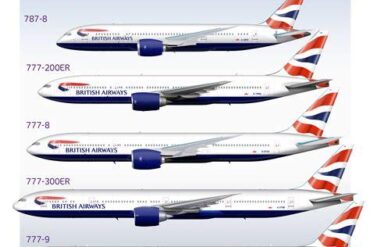
Boeing’s answer to modern market demands came in the form of the 787 Dreamliner. Introduced in 2011, the Dreamliner was designed to complement and eventually supersede older widebody models like the 777-200LR. Its hallmark is its advanced composite fuselage structure, comprising 80% composite material by volume, drastically reducing weight and improving fuel efficiency. The Dreamliner also boasts next-gen flight systems, smoother ride technologies, and pressurization improvements for passenger comfort.
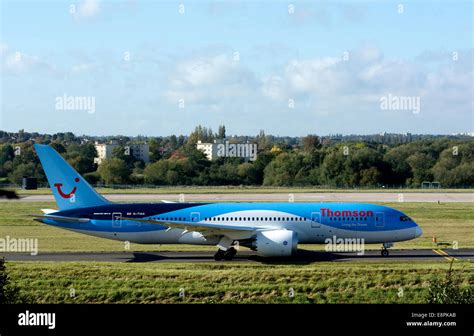
Equipped with either the GEnx or Rolls-Royce Trent 1000 engines, the aircraft delivers stellar performance across its variants. The 787-8 offers a range of 8,000 nautical miles, closely rivalling the 777-200LR, while the larger 787-9 extends it to 8,500 nautical miles. Though the 787-10 offers lower range at 7,500 nautical miles, it provides unmatched seating capacity. The Dreamliner’s combination of reduced operating costs, long-range capability, and versatility across markets makes it the logical successor in many airline fleets.
Boeing’s Future Flagship: The 777X Series
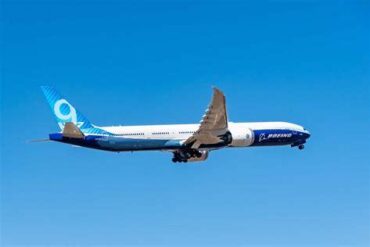
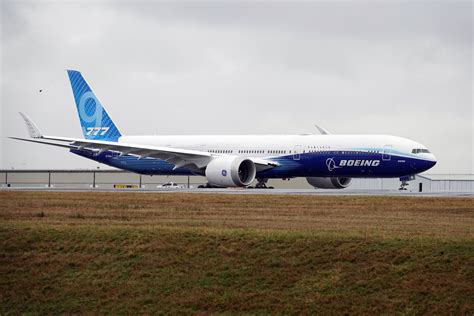
For carriers seeking not just replacement but expansion of long-haul capability, Boeing’s 777X series emerges as a powerful alternative. Designed to outclass the Airbus A350 and rejuvenate the 777 family, the 777X program introduces folding wingtips and a carbon fiber-reinforced plastic wing, improving aerodynamic efficiency without sacrificing gate compatibility. The aircraft will be powered by the GE9X, the most fuel-efficient jet engine ever built for commercial use.
The 777-8, a more direct successor to the 777-200LR, is designed for ultra-long-range missions with a range of 8,745 nautical miles—surpassing its predecessor. Its sibling, the 777-9, is built for capacity, offering over 400 seats with slightly lower range. While certification has been delayed, Boeing is now aiming for a 2027 entry into service. Major orders from Emirates, Qatar Airways, Lufthansa, and Singapore Airlines signal industry confidence in the 777X’s potential.
Airbus A350: The European Contender
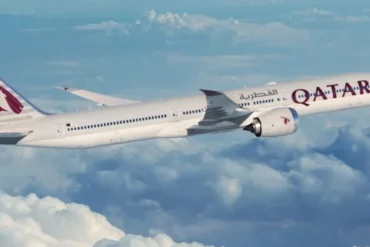
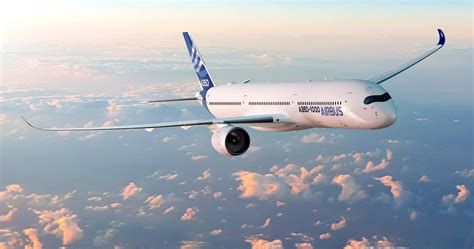
Airbus, not to be outdone, developed its own response to Boeing’s widebody dominance—the Airbus A350. Developed in the mid-2000s as a direct competitor to the 787 and 777 families, the A350 entered service in 2015 with Qatar Airways. With a fuselage and wings composed of 70% advanced materials including carbon composites, titanium, and modern aluminum alloys, the A350 delivers extraordinary fuel efficiency and operational cost reductions.
Powered by the Rolls-Royce Trent XWB, the A350-900 offers a range of 8,500 nautical miles, while the stretched A350-1000 reaches 9,000 nautical miles, beating even the 777-200LR. Its wider cabin, quiet operation, and ultra-long-haul reliability have earned it widespread adoption by Singapore Airlines, Delta, Air France, and Cathay Pacific. With nearly 700 units produced, the A350 has cemented itself as a preferred aircraft for the future of global travel.
The 777-200LR Legacy and Its Replacement Landscape
The Boeing 777-200LR will be remembered as a breakthrough in ultra-long-haul travel. However, with technological advancements accelerating, the market now demands greater efficiency, environmental responsibility, and modern passenger amenities. Aircraft like the Boeing 787 Dreamliner, Boeing 777X, and Airbus A350 represent the future—each surpassing the 777-200LR in performance, cost metrics, and passenger experience.
While no single aircraft may fully replicate the niche the 777-200LR once filled, the next generation of widebody airliners collectively raises the bar. As aviation looks toward a more sustainable, connected, and efficient future, the aircraft replacing the 777-200LR are not just successors—they are game changers.