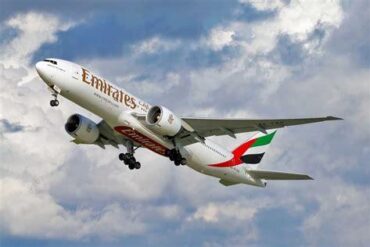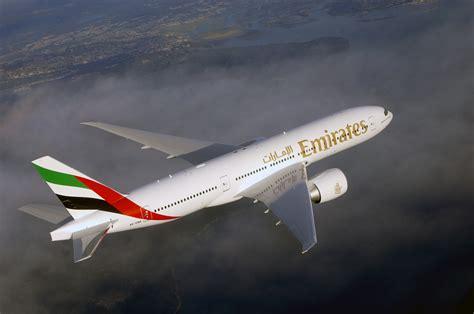
Dubai-based aviation giant Emirates is making a calculated shift in its United States network strategy by announcing the deployment of its Boeing 777-200LR on the Dubai-Seattle route beginning in March 2026. This decision marks a significant operational realignment for one of the world’s most expansive long-haul carriers, spotlighting changing demand patterns, strategic capacity management, and evolving passenger trends in transcontinental travel.
A Downgauge With Strategic Underpinnings
Emirates’ transition from the larger Boeing 777-300ER to the smaller 777-200LR on the Seattle route signals more than just an aircraft switch — it reflects a thoughtful recalibration of resources. The change, scheduled to take effect on March 29, 2026, aligns with the start of the IATA northern summer season. This aircraft substitution will reduce available summer seat capacity by approximately 8%, from 137,600 to 126,840 round-trip seats, effectively streamlining supply with actual demand.
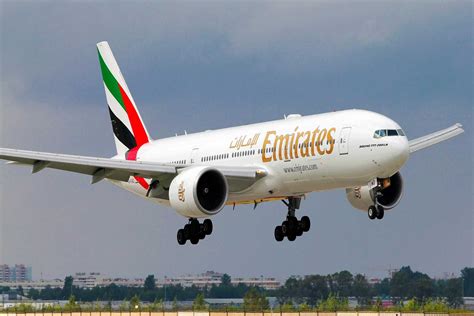
This move also eliminates first-class service on the route — a notable shift for a premium-heavy airline. The removal of the first-class cabin subtracts 3,360 high-yield seats from the seasonal schedule. However, the loss may not be as detrimental as it seems. Cirium data reveals that first-class seats were not consistently offered between 2012 and the pandemic period, underscoring a historic pattern of flexibility based on profitability and load factors.
Emirates and Seattle: A 14-Year Transpacific Relationship
Since its inaugural Seattle service in March 2012, Emirates has leveraged both the 777-200LR and the 777-300ER to connect Dubai and the Pacific Northwest. The 777-200LR was prominently used between 2012 and 2018, and again from 2021 onward, revealing a consistent reliance on this ultra-long-range aircraft for thinner markets requiring endurance over size.
Seattle ranks as the 13th most-served 777-200LR destination in Emirates’ network, following global cities like Mumbai, Dallas, Barcelona, and Buenos Aires. In total, Emirates has scheduled 1,284 777-200LR departures to Seattle across its operational history — a testament to the aircraft’s importance within its fleet strategy.
Summer 2026: Daily Flights Return
While Emirates briefly scaled back to six weekly flights during Q1 2026, the carrier will restore daily frequency in the summer. The scheduled timings offer optimal connectivity for international travelers:
- Dubai to Seattle: 9:55 am – 1:25 pm (14h 30m)
- Seattle to Dubai: 5:15 pm – 6:30 pm next day (14h 15m)
These schedules maintain seamless links with key South Asian and African markets via Emirates’ Dubai hub, which remains a dominant transfer point for onward travel.
Falling Load Factors Prompt Efficiency Moves
Emirates’ decision appears tightly linked to declining passenger loads. Between January and September 2025, the carrier flew 141,200 round-trip passengers on the Seattle route. With a reported average seat load factor of just 73%, Emirates underperformed in filling available capacity. Some months dipped as low as 62%, far below industry standards for long-haul profitability.
This underutilization — compounded by the fixed operating costs of the 777-300ER — likely catalyzed the switch to the leaner 777-200LR. The carrier had experienced similar challenges during a brief period of double daily flights (2015–2017), when load factors dropped to 74%, compared to 92% during single-daily operations.
Indian Subcontinent Drives Majority of Traffic
Booking and traffic data underscore the Dubai-Seattle route’s reliance on connecting passengers. Approximately 75% of all travelers on this flight connect onward from Dubai, with India dominating the traffic mix. The most popular connecting routes include:
- Seattle to Delhi
- Seattle to Mumbai
- Seattle to Hyderabad
- Seattle to Bengaluru
- Seattle to Chennai
Also ranking high were segments to East Africa and Southern Asia, including Addis Ababa, Nairobi, Johannesburg, and Kochi. These routes highlight Emirates’ central role in linking the US West Coast with South Asian and African diasporas.
Operational Impact: Beyond Seattle
The decision to reduce capacity in Seattle comes even as Emirates adds a new weekly 777-300ER service to Orlando, suggesting that its US network is undergoing a targeted rebalancing rather than a retrenchment. Emirates has not announced any new US routes for 2026 as of yet, but this tactical equipment adjustment could signal future shifts as the airline evaluates route economics and global demand recovery post-pandemic.
The Future of the 777-200LR in Emirates’ Arsenal
Despite being the smallest Boeing widebody in Emirates’ long-haul fleet, the 777-200LR continues to play a vital role. With a 302-seat configuration (including business and economy), it is well-suited for ultra-long-haul routes with fluctuating demand. The Seattle leg, at over 14 hours each way, will now become Emirates’ longest nonstop 777-200LR route, overtaking the Barcelona–Mexico City fifth freedom flight.
This realignment reiterates Emirates’ fleet flexibility, enabling it to preserve route viability while navigating economic and operational headwinds. Although the 777-200LR lacks the prestige of the A380 or the capacity of the 777-300ER, its endurance and efficiency make it an indispensable workhorse in Emirates’ intercontinental playbook.
Conclusion: Leaner, Smarter, Still Global
Emirates’ 2026 strategy for Seattle exemplifies its evolving approach to network optimization. By deploying the Boeing 777-200LR, the airline acknowledges regional passenger dynamics, cost efficiencies, and the importance of maintaining global reach without overextending resources. While the shift removes premium cabin luxury from the Seattle skies, it reinforces a long-term commitment to the market — just in a more calibrated and sustainable format.
As aviation continues to rebound, Emirates is showing that adaptability — not just ambition — will define the next generation of global air travel.