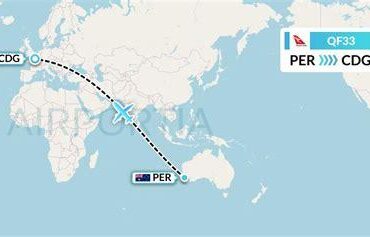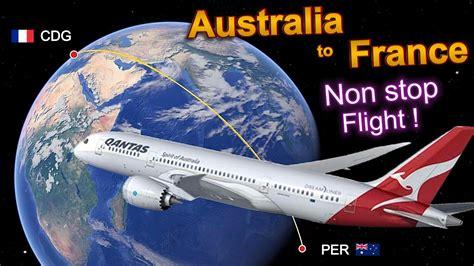
Qantas has initiated a significant restructuring of its European network, marking a pivotal shift in how Australia connects with the continent. The airline’s decision to discontinue its nonstop Perth–Paris service—once celebrated as a milestone in ultra-long-haul travel—signals a broader recalibration driven by operational realities and evolving global conditions. In its place, Qantas is pivoting toward a one-stop routing via Singapore, a move that blends efficiency with expanded connectivity.
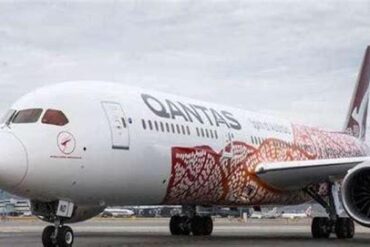
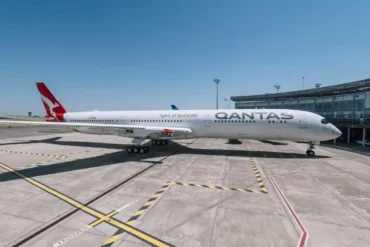
The Perth–Paris route, launched in 2024 to coincide with the Paris Summer Olympics, quickly became a symbol of modern aviation ambition. Operated by the Boeing 787-9 Dreamliner, the service offered travelers a rare direct link between Australia and France, cutting travel time and eliminating the need for layovers. Despite its appeal, the route operated at a modest frequency of three weekly flights, reflecting the delicate balance between demand and operational constraints.
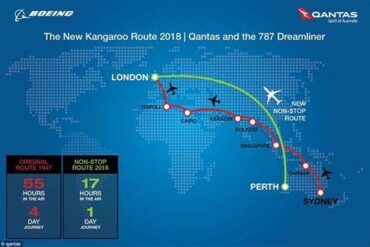
That balance has now shifted. With geopolitical tensions in the Middle East continuing to disrupt flight paths and impose operational limitations, Qantas has opted for a more flexible and scalable model. The rerouting of its Perth–London flights via Singapore set a precedent, and Paris has now followed suit as part of a wider network optimization strategy.
Why Qantas Is Replacing Nonstop Flights with Singapore Stopovers
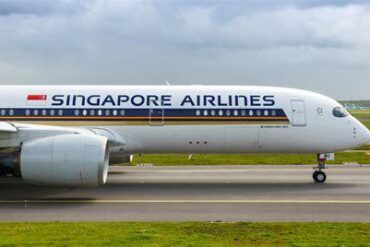
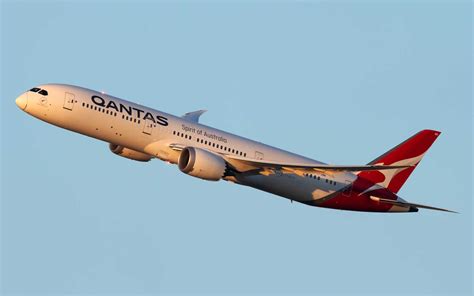
At the core of this decision lies a practical advantage: payload efficiency. By introducing a stop in Singapore Changi Airport (SIN), aircraft can carry over 60 additional passengers per flight, thanks to reduced fuel weight constraints. This seemingly technical adjustment translates directly into improved revenue potential and more competitive seat availability.
The revised routing also allows Qantas to increase overall frequency. Instead of three nonstop flights per week from Perth, passengers will now benefit from five weekly services to Paris, albeit with a stopover. This not only enhances scheduling flexibility but also integrates Paris more seamlessly into Qantas’ broader Asian and European network.
Singapore’s role as a strategic hub cannot be overstated. It enables Qantas to funnel passengers from multiple Australian cities—Sydney, Melbourne, Brisbane, and Perth—into a centralized gateway, maximizing load factors and network efficiency. The shift effectively transforms Singapore into a linchpin of Qantas’ long-haul operations.
Perth’s Changing Role in Qantas’ International Strategy
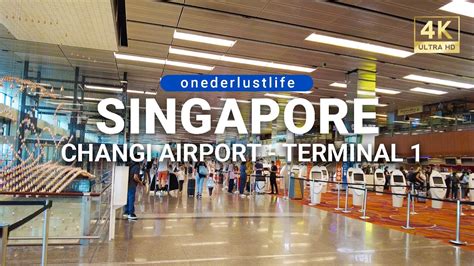
While Perth loses its status as the origin point for nonstop Paris flights, it remains integral to Qantas’ evolving network. The airline plans to increase flights between Perth and Singapore, ensuring that Western Australia continues to serve as a key feeder market into international routes.
Simultaneously, Qantas is reallocating aircraft to optimize profitability. Widebody jets, previously used on domestic transcontinental routes, are being redirected toward international services where demand—and margins—are stronger. In their place, narrow-body aircraft will take over domestic duties, reflecting a sharper focus on capacity management.
This shift underscores a broader industry trend: airlines are prioritizing route flexibility and aircraft utilization over the prestige of ultra-long-haul nonstop services. While the latter remains attractive from a branding perspective, it often comes with operational compromises that are increasingly difficult to justify.
Sydney Emerges as the Primary Gateway to Paris
Another notable change is the relocation of Paris-bound services to Sydney Kingsford Smith Airport (SYD). By anchoring flights in its largest hub, Qantas gains access to a deeper passenger pool and stronger connecting traffic. The Sydney–Singapore–Paris routing effectively replaces the Perth-origin model, aligning capacity with demand patterns.
For travelers, this means more options—but also a shift in journey dynamics. The convenience of a nonstop flight is replaced by the predictability and connectivity of a major hub, where onward flights and alliance partnerships expand travel possibilities.
Rome Gains Momentum as Paris Pauses
Interestingly, while Paris loses its nonstop link, Rome is gaining prominence within Qantas’ European portfolio. The airline plans to increase its Perth–Rome service from four weekly flights to daily operations during the summer season. For now, this route remains nonstop, offering a rare direct connection between Australia and continental Europe.
However, the sustainability of this service remains under scrutiny. Much like Paris, Rome’s viability depends on airspace conditions and geopolitical stability, factors that continue to shape airline decision-making in real time.
Broader Network Adjustments and Fleet Realignment
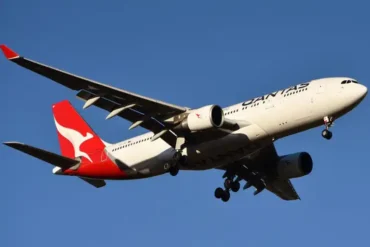
Beyond Europe, Qantas is making strategic fleet adjustments to support its international ambitions. The Airbus A330 is being reassigned from domestic routes to operate flights between Brisbane and Los Angeles, replacing the 787 on that sector. While this change maintains capacity, it removes the premium economy cabin, subtly altering the onboard experience for long-haul passengers.
Meanwhile, Qantas’ low-cost subsidiary Jetstar Airways is expanding aggressively, launching new routes from Denpasar, Melbourne, and Perth, as well as introducing direct services from the Sunshine Coast and Newcastle. These additions highlight a dual strategy: premium optimization through Qantas and volume expansion via Jetstar.
A Temporary Farewell, Not a Final Goodbye
Despite the immediate impact, the end of the Perth–Paris nonstop route may not be permanent. Industry observers widely view this as a tactical pause rather than a strategic retreat. As conditions stabilize and new-generation aircraft enter service, the possibility of reinstating ultra-long-haul routes remains firmly on the table.
For now, Qantas is choosing resilience over romance—prioritizing network strength, operational flexibility, and passenger volume over the allure of record-breaking nonstop flights. It’s a pragmatic move in a volatile aviation landscape, even if it means saying a temporary “au revoir” to one of its most ambitious routes.