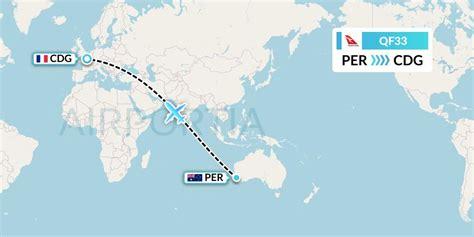
A Paris-bound Qantas flight QF33 made an extraordinary U-turn back to Perth Airport after nearly 15 hours in the air, following a sudden and unprecedented closure of Middle East airspace triggered by escalating military tensions. The incident, which unfolded on June 23–24, 2025, highlights the fragile state of international aviation in times of geopolitical instability.
Qantas Dreamliner’s Long Haul Cut Short Mid-Flight
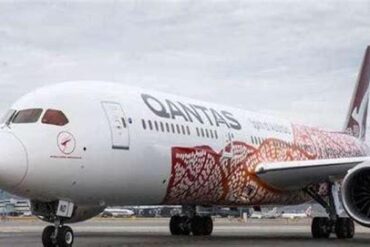
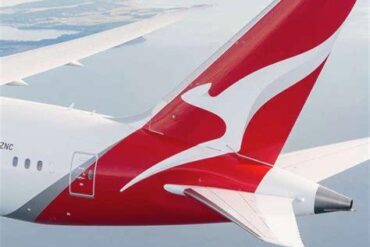
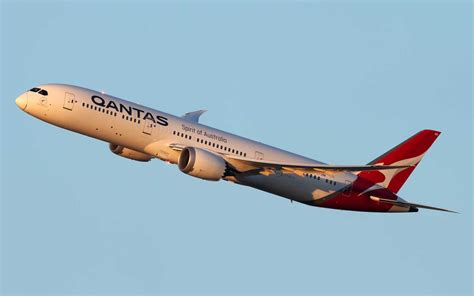
Qantas flight QF33, operated by a Boeing 787-9 Dreamliner (registration VH-ZNM), took off from Perth Airport at 20:01 AWST on Monday with the intention of reaching Charles de Gaulle Airport in Paris in approximately 17 hours. For the first segment of the journey, the aircraft climbed to 38,000 feet and proceeded smoothly over the Indian Ocean.
However, as it approached Indian airspace, a wave of breaking news reports revealed Iranian missile strikes targeting U.S. military infrastructure at Al Udeid Air Base in Qatar. In rapid response, both Qatar and the United Arab Emirates sealed off their airspace, effectively severing a vital aviation artery connecting Asia-Pacific to Europe.
The closure created an impassable blockade, leaving the pilots with few safe alternatives. After extensive coordination with air traffic control and airline operations, the decision was made to reverse course and head back to Western Australia, marking one of the most costly and unexpected flight disruptions in recent Qantas history.
A Round Trip to Nowhere: Return to Perth
When QF33 finally touched down at Perth Airport’s Runway 21 at 13:08 AWST, passengers had endured a grueling 17 hours and 7 minutes in the air—a near full-length intercontinental flight—only to find themselves back at square one. The journey had effectively become a massive loop over the Indian Ocean, with no destination reached.
For the 200+ passengers onboard, the emotional toll was stark. Many had planned special events, tight connections, and business meetings across Europe. One traveler, who was headed to a family wedding in France, expressed frustration: “We could’ve been halfway across Europe by now, but instead, we’re right back in Perth, completely exhausted.”
Inside the terminal, Qantas ground staff worked swiftly to arrange accommodations, meal vouchers, and rebooking assistance. Despite their efforts, many travelers faced delays of 24 to 48 hours before alternative flights could be confirmed, particularly with Paris-bound services strained by route congestion.
Airspace Shutdown: The Catalyst
The root cause of the diversion was the abrupt closure of Middle East airspace, a consequence of intensifying geopolitical instability. According to defense analysts, Iran’s missile launches toward U.S. targets prompted not only a security lockdown across Qatar and UAE skies but also a rapid escalation of tension in the broader Persian Gulf region.
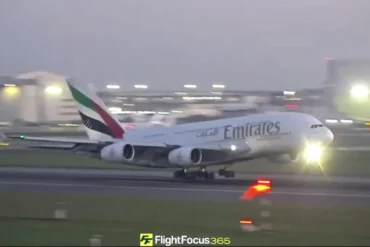
For international carriers, including Qantas, Emirates, Qatar Airways, and Etihad, the decision by authorities to shut down airspace without prior warning left dozens of aircraft in mid-air limbo. Many were rerouted, but in QF33’s case, the safest option was to return home.
The disruption represents more than just a detour—it underscores the real-time vulnerabilities airlines face when flying through volatile regions, even when no direct threat to aviation is apparent.
Strategic Aviation Impact: Route Realignments Ahead
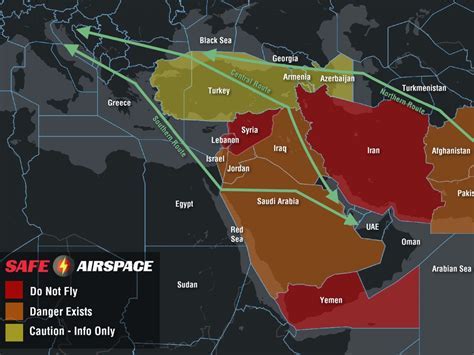
QF33’s mid-air return illustrates the operational and financial impact that sudden airspace closures can impose on long-haul services. The Middle East air corridor, stretching across the Arabian Peninsula, serves as a critical bridge for flights between Australia, Southeast Asia, and Europe.
With UAE and Qatari airspace now off-limits, carriers are being forced to consider alternative routing:
- Over southern India and the Arabian Sea, bypassing the Gulf entirely
- Through northern Central Asia and Russia’s southern airspace, with implications for fuel consumption and flight legality under current geopolitical sanctions
- Via South Africa, adding several hours of flight time
Each of these alternatives increases flight duration, fuel costs, crew scheduling complexity, and airfare prices. Airlines must rework their global networks almost overnight—an enormously complex task.
Aviation Industry Reacts: Challenges Mount
The aviation industry at large is now bracing for significant logistical challenges. In the immediate aftermath, carriers across Asia-Pacific have begun issuing route change notices, and some have temporarily suspended flights to Europe pending safer options.
Airlines including Singapore Airlines, Cathay Pacific, and Malaysia Airlines are also affected, given their reliance on Middle Eastern transit zones. Codeshare agreements and alliance schedules are being upended, creating a cascade of disruption.
For Qantas, the QF33 incident is a wake-up call. While the airline has traditionally routed its Europe-bound flights via Singapore or Darwin, this direct Perth–Paris service—marketed as a luxury non-stop—now raises questions about the viability of such routes during global crises.
Government and International Aviation Authority Response
In response to the escalating crisis, ICAO (International Civil Aviation Organization) and IATA (International Air Transport Association) are reportedly working with member states to reassess global flight risk zones and improve real-time conflict notifications for airlines.
Australian authorities, including the Civil Aviation Safety Authority (CASA), are closely monitoring developments and providing flight risk assessments to domestic carriers. Foreign Affairs departments in both Australia and France are also in talks to support stranded travelers and prevent recurrence.
The need for automated airspace conflict alerts, geopolitical flight mapping, and pilot rerouting protocols is now more urgent than ever.
Economic Consequences and Tourism Fallout
The economic impact of QF33’s reversal extends well beyond the airline itself. Australia’s outbound tourism market will feel the blow as confidence in long-haul European travel dips. For France, the loss of inbound travelers—particularly high-spending Australians during the northern summer—translates to a multi-million euro setback.
Hospitality operators, tour agencies, and event organizers face sudden cancellations. In Perth alone, hotels experienced a surge of unexpected overnight stays from QF33 passengers, while local car rental firms and restaurants scrambled to accommodate the influx.
This single event may serve as a litmus test for how the tourism sector handles volatile disruptions amid tight booking schedules and international coordination dependencies.
Rising Passenger Anxiety and Safety Concerns
Passengers are now more aware than ever that even non-combatant commercial flights can be deeply affected by military activity and regional hostilities. While QF33 was never in physical danger, the psychological impact of being turned around due to a missile threat halfway through a journey is not trivial.
Travel anxiety—already heightened by post-pandemic uncertainty—is expected to grow. Many are now questioning whether direct intercontinental flights over conflict-prone zones are worth the risk.
Airlines must invest in transparent communication, real-time rerouting tools, and traveler support systems to rebuild passenger trust.
What Comes Next: A New Era of Flight Planning
The unexpected return of QF33 to Perth may be viewed in hindsight as a pivotal moment for global aviation strategy. It emphasizes the need for flexible routing capabilities, dynamic geopolitical risk assessment, and contingency planning that accounts for the modern world’s unpredictability.
Qantas and other carriers will likely accelerate efforts to expand route resilience, including:
- Deploying more AI-driven flight planning software
- Establishing alternative fuel stop partnerships in India, Central Asia, and Africa
- Creating modular crew rotations to handle ultra-long reroutes
In this environment, air travel is no longer just about comfort and efficiency—it’s about resilience, adaptability, and trust.
Conclusion: The Sky is Not Immune to Ground Conflicts
Qantas flight QF33’s return to Perth after 15 hours in the sky is not just a rare operational anomaly—it is a reflection of how global instability now commands the skies. From fuel strategy to passenger welfare, every aspect of flight is affected when nations clash.
As military tensions rise, air travel enters a new phase of uncertainty. The QF33 story reminds us that while we may engineer the most sophisticated aircraft and precise schedules, we remain tethered to the turbulence of the world below.
For the hundreds of passengers aboard QF33, the journey was a loop. For aviation, it’s a turning point.