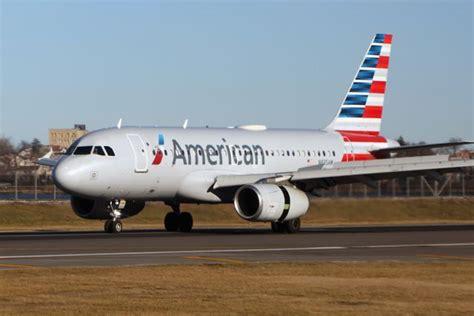
American Airlines Flight AAL44, a scheduled transatlantic service from New York JFK to Paris Charles de Gaulle (CDG), was abruptly forced to return to its point of origin on July 2, 2025, following a critical malfunction in the aircraft’s air-conditioning system. The Boeing 777-223(ER), bearing registration N766AN, had already crossed into Canadian airspace and was cruising over Nova Scotia when the flight crew made the decision to turn back due to a developing issue that posed potential safety concerns for passengers and crew onboard.
Critical Failure Over the Atlantic Forces Sudden Reversal
The wide-body jet had departed John F. Kennedy International Airport at 6:23 PM, almost an hour after its scheduled departure time of 5:30 PM. Initial delays meant passengers were already behind schedule, but hopes were high that the long-haul journey to France would proceed without disruption. However, three hours into the flight, while cruising at 37,000 feet with a ground speed of approximately 510 knots, a malfunction in the aircraft’s right air-conditioning pack triggered a cascade of precautionary procedures.
The air-conditioning system on a Boeing 777 is not merely a comfort mechanism; it plays a vital role in pressurizing the cabin and ensuring a stable, breathable atmosphere for all onboard. In long-haul operations, where flight durations often exceed seven hours and cabin conditions must remain carefully controlled, such a malfunction can escalate quickly into a safety risk.
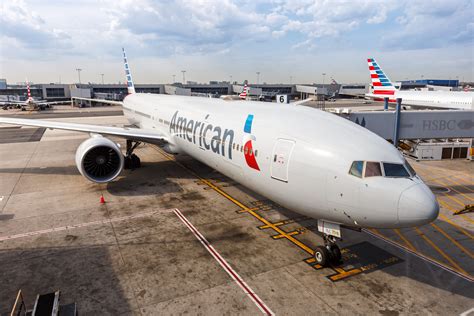
Given the failure involved one of two packs responsible for air management, continuing toward Paris would have exposed passengers to increasingly unstable environmental conditions. The crew opted instead to initiate a controlled U-turn and head back to New York, prioritizing safety over schedule.
Safe Return and Immediate Ground Response
The aircraft touched down at JFK at approximately 9:06 PM, making for a round-trip journey of nearly four hours without ever crossing the Atlantic Ocean. Flight tracking data from Flightradar24 visually documented the aircraft’s arcing path away from the coast and back toward the East Coast, highlighting the decisive reversal made above Nova Scotia.
Though inconvenient for passengers, the return to JFK reflected sound airmanship and strict adherence to safety protocols. Upon landing, the aircraft was directed immediately to a remote gate where technical crews began diagnostics on the affected air-conditioning pack.
Passengers were kept informed throughout the return journey and were offered rebooking options, accommodations, and assistance upon landing. However, the psychological and logistical toll of being returned to point of departure after three hours in the air was unavoidable. Travelers—many of whom were connecting to further destinations across Europe—now faced cascading delays, missed events, and revised itineraries.
Previous Delays and Timeline Breakdown
Prior to the mid-flight diversion, AAL44 had already encountered multiple delays. While the flight was scheduled to depart at 5:30 PM, it only began pushing back from the gate at 5:25 PM—leaving little margin for error—before finally departing the runway nearly an hour later.
As the flight advanced toward Europe, updated estimates showed a revised arrival time of 10:53 PM local time in Paris, but the route was soon interrupted by the technical fault. What began as a routine evening departure eventually ended with a late-evening return to the same tarmac where the journey had started.
A Pattern of In-Flight Diversions Raises Questions
The incident aboard Flight AAL44 is the second notable in-flight diversion involving American Airlines’ Boeing 777-200ER fleet in a matter of weeks. A separate incident involving Flight AA333, operating from Athens International Airport (ATH) to JFK, resulted in an emergency diversion to Bangor International Airport (BGR) after an engine shutdown caused by a fuel imbalance.
That flight was cruising at 38,000 feet when the flight crew, monitoring fuel distribution to its Rolls-Royce Trent 800 engines, discovered irregularities. After executing standard in-flight checklists and attempting to balance the system, the crew made the decision to shut down the right engine as a precaution. With only one engine operational, the aircraft safely diverted to Bangor and landed on Runway 16 without incident.
Post-landing analysis revealed the cause: a fractured fuel tube in the affected engine. This component failure had disrupted fuel flow and introduced the imbalance that necessitated the emergency measures. Technicians from the Canadian Transportation Safety Board (TSB) and American’s maintenance crews replaced the faulty part and cleared the aircraft for service after a detailed safety inspection.
Technical Complexity and Safety Culture in Focus
The twin incidents involving Flights AAL44 and AA333 are not indicative of a systemic failure, but they do shine a spotlight on the challenges of long-haul aircraft maintenance and the intense vigilance required from both flight crews and ground personnel. The Boeing 777 platform, particularly the -200ER variant, has been in service for over two decades and remains a backbone of American Airlines’ international operations.
Air-conditioning pack failures, while not inherently catastrophic, become far more concerning when they occur over oceanic sectors where emergency landing options are sparse. The proactive decision to return to JFK rather than continue over the Atlantic was consistent with FAA and IATA operational standards, ensuring that the aircraft remained within range of qualified diversion airports should further issues develop.
In both the AAL44 and AA333 cases, the actions of the flight deck crew adhered closely to emergency response protocols. From the moment anomalies were detected, each crew initiated controlled and transparent communications with air traffic control, maintained stable aircraft configurations, and executed precision landings under non-standard conditions.
Passenger Experience and Rebooking Logistics
Passengers onboard Flight AAL44 faced the frustrating reality of long-haul travel disruptions. Rebookings for the Paris-bound travelers were arranged, although limited seat availability on short notice—especially during peak summer travel season—meant many were booked on alternative carriers or faced overnight stays in New York.
American Airlines issued a formal apology, noting that all affected customers would be eligible for trip compensation, hotel accommodations, and meals, with some customers also offered travel vouchers for future use. A dedicated customer support team was deployed at JFK to facilitate the rebooking process and manage logistical concerns, from luggage retrieval to onward connections.
Though these measures reflect industry-standard practice, they also underscore how airline reputation hinges on the handling of such incidents. For legacy carriers like American Airlines, prompt and well-coordinated disruption management is not merely a service expectation—it’s a competitive differentiator.
Regulatory Scrutiny and the Maintenance Pipeline
Events such as these routinely trigger internal investigations and may also draw scrutiny from the Federal Aviation Administration (FAA), particularly when multiple incidents involving similar aircraft models occur in proximity. While no injuries or mechanical failures resulted in structural damage in either case, the FAA will likely seek detailed maintenance logs, component lifecycles, and engineering assessments of fleet health.
In recent years, emphasis on predictive maintenance tools—using real-time telemetry from aircraft systems—has been growing. By identifying components likely to fail before they do, airlines can preemptively swap out critical parts. Whether the air-conditioning pack on Flight AAL44 showed signs of impending failure before takeoff remains unclear, but this incident may catalyze increased use of such diagnostic frameworks moving forward.
Broader Implications for Transatlantic Operations
With summer 2025 seeing record travel demand, particularly on transatlantic routes, aircraft like the Boeing 777 are being pushed to their utilization limits. Any systemic strain—whether mechanical, logistical, or operational—has outsized ripple effects across interconnected hub airports.
American Airlines continues to invest in fleet modernization, including the gradual integration of newer long-haul aircraft such as the Boeing 787 Dreamliner, which features enhanced onboard diagnostics and greater fuel efficiency. However, the 777 remains deeply embedded in the airline’s international strategy and will likely see continued service for years to come.
Conclusion: Safety-First Philosophy Prevails
Despite the disruption, Flight AAL44’s return to JFK exemplified the airline’s unwavering prioritization of passenger safety. The prompt response, accurate diagnosis, and controlled diversion were all hallmarks of a robust safety culture backed by decades of operational experience.
The simultaneous handling of Flight AA333’s engine incident only further highlights American Airlines’ capacity to navigate complex in-flight emergencies with calm, precision, and efficiency. While frustrating for travelers, such incidents reveal the inner workings of airline safety architecture, reminding the flying public of the layers of diligence behind every flight.
In an industry where flawless execution is the expectation, the true measure of an airline’s excellence lies not in avoiding problems altogether, but in how effectively it reacts when problems arise. For American Airlines, the events of early July have tested—and reaffirmed—that standard.