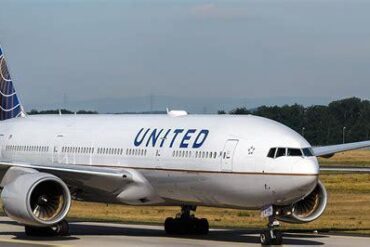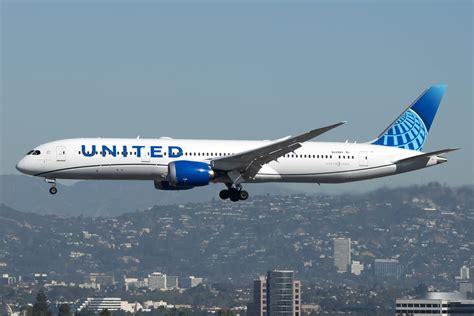
On the evening of July 7, 2025, United Airlines Flight UA82, operating a Boeing 787-9 Dreamliner en route from Newark Liberty International Airport (EWR) to Delhi Indira Gandhi International Airport (DEL), was forced to execute a high-stakes emergency landing due to a critical electronics cooling system failure. The incident unfolded just 45 minutes after takeoff as the aircraft cruised at 33,000 feet over the Atlantic, prompting swift action from the crew and placing renewed scrutiny on the integrity of US–India aviation corridors.
Emergency Mid-Flight Decision Over the Atlantic
Flight UA82 departed from Newark at 9:30 p.m. local time, scheduled to reach Delhi the following day. However, at cruising altitude and maintaining approximately 500 knots, flight sensors alerted the cockpit to a system anomaly in the EE cooling system — responsible for regulating temperatures in the aircraft’s critical electronics and avionics compartments. Within minutes, the crew initiated emergency protocols, broadcasting a mayday declaration and reversing course back toward Newark.
By 11:15 p.m., the Dreamliner, registration number N23983, had touched down safely at its departure airport. Emergency services and ground personnel coordinated efforts seamlessly. All passengers and crew were evacuated via Terminal C with no injuries reported. The incident spotlighted the effectiveness of real-time diagnostics and in-flight crew readiness in managing potentially catastrophic scenarios.
Root Cause: Failure in Electronics Cooling System
Automated system diagnostics transmitted around 01:46 UTC pinpointed a critical fault in Cooling System #1, identified by fault code CL M PL DB 21 EE COOLING OPS (1). This system plays a vital role in preventing overheating in avionics equipment. A compromised cooling system can cause cascading system failures — including degraded autopilot function, display shutdowns, and communication blackout — making its integrity paramount.
The Fault Reporting Code (FRC 202) indicated a possible issue within the electronics bay. The report was automatically relayed to United’s maintenance center, where technicians began analysis even before the plane landed. Immediate deactivation of affected systems and reduced load strategies were applied mid-air, enabling the safe return.
Aircraft Profile: Boeing 787-9 Dreamliner N23983
The aircraft in question — tail number N23983 — is a 4.8-year-old Boeing 787-9 Dreamliner, part of United Airlines’ long-haul fleet. Equipped with dual GEnX engines, the aircraft is designed for intercontinental routes such as the EWR–DEL corridor. Notably, the Dreamliner’s modular avionics architecture includes built-in redundancies and secondary cooling channels.
While the electronics cooling fault could have had grave consequences on a less advanced platform, the 787’s layered safety mechanisms and real-time performance alerts allowed the crew to make decisive, well-informed choices. The Dreamliner’s performance during this emergency underscores why it remains a workhorse for long-haul operations.
A Pattern of Precautionary Diversions
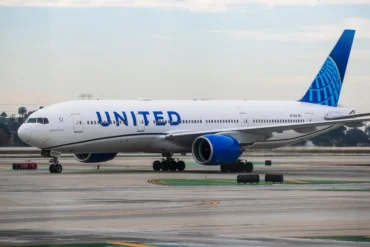
This marks the second such emergency landing for United Airlines in 2025. On April 28, Flight UA1321, a Boeing 777-200, also returned to Newark after a mechanical issue emerged 45 minutes into a domestic flight to Los Angeles. The aircraft circled in a holding pattern over New Jersey while crew assessed onboard diagnostics, ultimately returning safely.
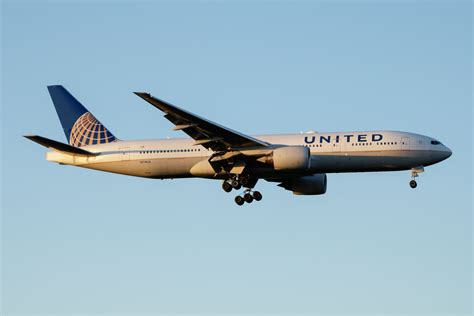
In March 2024, Flight UA830 — a Sydney to San Francisco Boeing 777-300ER — aborted climb and returned to Sydney Kingsford Smith Airport after detecting irregularities in its hydraulic system. These recurring mid-air safety alerts demonstrate both the value of in-flight telemetry and the importance of well-trained flight crews.
United Airlines’ Response and Passenger Handling
United Airlines responded swiftly following the July 7 incident. In a press release, the airline confirmed that Flight UA82’s diversion was prompted by technical irregularities in the EE cooling system, reaffirming its stance that “passenger safety is non-negotiable.”
Affected passengers were accommodated in local hotels with meal vouchers and transport provided. United also deployed a replacement aircraft within hours to complete the Delhi-bound journey, minimizing disruption. Ground maintenance teams conducted a comprehensive inspection of N23983 before returning it to operational status, aligning with FAA-certified protocols.
Aviation Experts Weigh In
Industry analysts view this event as an example of “textbook response to critical systems failure.” According to aviation engineer Michael K. Trent, “The system alert cascade functioned as intended, and the crew made a risk-mitigated U-turn with the confidence provided by real-time maintenance feeds.”
Experts add that the Boeing 787’s triple-redundant systems afford pilots time to evaluate and act. Moreover, in modern aviation, alerts such as the one received on UA82 are not indications of impending disaster, but rather markers of early-detection systems working correctly.
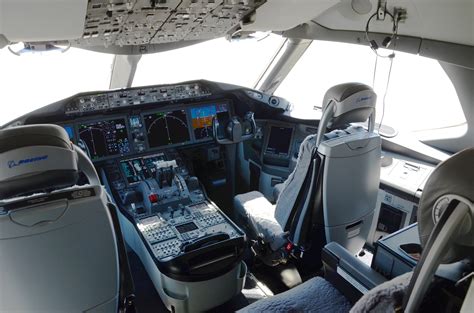
The EE cooling system, though often overlooked by the public, is essential to the aircraft’s brain — safeguarding navigational logic boards, flight computers, and automated controls from thermal damage. Its failure compels a return to base regardless of passenger discomfort or route inconvenience.
Repercussions for US–India Aviation Traffic
With the US–India corridor being one of the busiest transcontinental air routes, disruptions like this impact scheduling, aircraft rotations, and passenger confidence. Delhi and Mumbai are major Asian entry points, and Newark remains a vital hub for United’s international operations. While the safety-first policy is respected, such events place added strain on logistics.
Aviation economists predict no long-term damage to United’s India service. However, it may influence short-term route performance reviews, prompting software updates and fleetwide system checks, particularly for aircraft flying over the polar route, where diversion options are limited.
Reinforcing the Safety Culture
Despite the drama, Flight UA82’s return to Newark represents a case study in aviation excellence. The quick action of the pilots, cooperation of air traffic control, precision of automated diagnostics, and robust ground support worked in unison to eliminate risk.
The passengers’ safe evacuation and the absence of injury also illustrate how the airline industry has matured from reactive to proactively prepared operations. Airlines are now expected to not only avoid tragedy but manage expectation and logistics mid-crisis — something United did with notable success.
While the occurrence disrupted plans and schedules, it served a broader purpose: reinforcing the importance of rigorous safety audits, continued crew simulation training, and adoption of predictive maintenance systems.
Conclusion: A Wake-Up Call for Continuous Improvement
As aviation returns to pre-pandemic levels, high-stakes moments like United Flight UA82’s emergency return are stark reminders that complex machines fly in complex environments. Mechanical faults, while statistically rare, demand perfect coordination, system foresight, and institutional readiness.
United’s handling of the situation — from the aircrew’s judgment to the technical response and passenger rebooking — reaffirmed confidence in the aviation sector’s layered safety culture. For passengers flying transcontinental in the modern era, the incident serves not as a cause for alarm, but as evidence of how far aviation has progressed in its mission to make safety, not just a promise, but a lived reality.