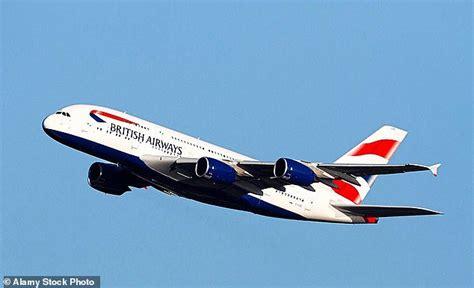
A British Airways Boeing 787-8 Dreamliner, operating as flight BA35 from London Heathrow to Chennai, was forced into a dramatic emergency turnaround just minutes after departure on Sunday, June 15, 2025, due to a serious mid-air flap system failure. The incident, which unfolded at cruising altitude shortly after takeoff, not only led to a rare fuel-dumping procedure over the English Channel but also prompted a comprehensive emergency response and raised significant concerns regarding aircraft safety and operational continuity on one of the UK’s busiest long-haul routes.
Emergency at 15,000 Feet: Flap System Failure Triggers Crisis
The aircraft, identified by registration G-ZBJG, had just departed from Runway 27R at Heathrow and was ascending as scheduled when the crew encountered a flap system anomaly—a critical aerodynamic component responsible for lift and stability during various phases of flight. As the Dreamliner reached approximately 15,000 feet, the failure compromised its climb configuration, requiring the pilots to level off and enter a holding pattern to troubleshoot.
Flap system failures are among the more serious in-flight issues, particularly for wide-body jets configured for long-haul operations. Without functioning flaps, the aircraft’s ability to manage aerodynamic load during landing is severely hindered, making continued flight—and especially a landing at destination—potentially dangerous.
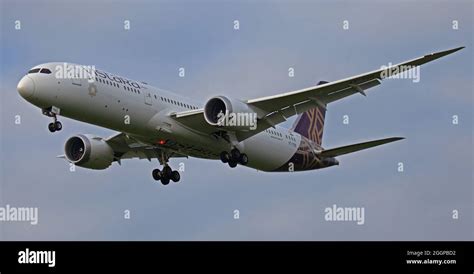
With a fully loaded aircraft—both in passengers and fuel—the crew was faced with a difficult but swift decision: to abort the journey and return to Heathrow. But doing so immediately wasn’t an option, as the aircraft exceeded safe landing weight thresholds.
Fuel Dumping Over the English Channel: A Rare but Critical Procedure
To reduce the aircraft’s weight to within acceptable landing parameters, the pilots initiated a fuel dump procedure—a controlled release of aviation fuel into the atmosphere, a last-resort measure used only in emergencies. Descending to 12,000 feet, the Dreamliner circled over the English Channel for approximately 30 minutes, shedding tens of thousands of pounds of jet fuel.
Though rarely executed, fuel dumping is strictly regulated to occur over non-populated areas or large bodies of water. Even then, the sight of a widebody aircraft jettisoning fuel at low altitude sent ripples across aviation forums, live flight trackers, and social media. Spectators along the southern coast of England documented the event, many unaware of the underlying emergency that necessitated the maneuver.
Tense Return and Safe Landing at Heathrow’s Runway 27L
After the fuel dump concluded, flight BA35 made its cautious return to Heathrow Airport, touching down safely on Runway 27L approximately 105 minutes after departure. Emergency vehicles were seen stationed along the runway, prepared for a possible brake fire, hydraulic failure, or other complications stemming from the abnormal flight.
Fortunately, the aircraft was able to taxi unassisted to Terminal 5, Stand C66, a promising sign that the situation was kept under full control by the flight deck. Nonetheless, British Airways immediately decommissioned the aircraft for a full inspection and began internal evaluations.
Disruptions Ripple Across the UK–India Air Corridor
The fallout from this incident was not limited to the affected passengers onboard. The London–Chennai route, a vital artery connecting the UK to southern India, was left in disarray. With peak summer travel underway, thousands of passengers were impacted by cascading delays and flight rescheduling.
British Airways was forced to reallocate aircraft resources, potentially rerouting passengers through alternate cities like Delhi, Mumbai, or third-party airline partners including Emirates and Qatar Airways. In an already competitive market where Indian diaspora, business travelers, and tourists vie for limited seats, any disruption to direct connectivity poses a severe challenge.
Passenger reactions were mixed. While many praised the flight crew’s professionalism, others questioned the reliability of newer aircraft models like the Boeing 787-8, citing similar mechanical problems in past cases involving electrical and hydraulic components.
Technical Spotlight: The Boeing 787 and Flap System Vulnerability
The Boeing 787 Dreamliner—a hallmark of modern aviation—has earned a reputation for efficiency and long-range capability. However, it has not been free from technical scrutiny. Past issues involving electrical panel failures, battery overheating, and software glitches have raised alarms across airlines globally.
In this case, the flap system—typically actuated by a combination of hydraulic and electrical systems—appears to have suffered a malfunction that rendered it unstable for high-altitude flight. The nature of the fault, whether mechanical wear, hydraulic leakage, or sensor error, remains under investigation.
British Airways has launched a full diagnostic review of aircraft G-ZBJG and may extend inspections fleet-wide if commonalities are found. Such reviews are routine following in-flight system failures, particularly for aircraft still considered relatively new in commercial service.
Operational Repercussions for British Airways
Beyond the technical diagnosis, this event poses broader challenges for British Airways. Maintaining passenger confidence amid mounting competition requires absolute operational reliability. The airline will now need to redistribute aircraft, potentially leasing from partners or increasing reliance on wet-leased jets to plug gaps in their India-bound services.
Operational teams also faced gate congestion at Heathrow due to the emergency return, causing knock-on effects for other long-haul flights, including those to New York, Singapore, and Hong Kong. Crew assignments, ground logistics, and passenger accommodations all required rapid reconfiguration.
Heathrow’s Emergency Preparedness Put to the Test
Heathrow Airport, the UK’s busiest, demonstrated its crisis management capabilities once again. Air traffic control efficiently coordinated airspace to facilitate the fuel dump, prioritized the aircraft’s return, and ensured a clear path for emergency response units.
Coordination between NATS (National Air Traffic Services), Heathrow Ops, and British Airways Ground Teams played a pivotal role in ensuring the emergency did not escalate into a full-blown aviation crisis. However, the incident also highlighted Heathrow’s limited operational bandwidth, where a single emergency can cause multiple schedule collapses.
A Wake-Up Call for the Global Aviation Sector
The British Airways Dreamliner incident serves as a stark reminder that no aircraft is immune to unexpected system failures. Despite the 787’s technological advances, complex machinery paired with high-frequency usage can still result in dangerous mid-air scenarios.
Airlines are now being urged to double down on preventative maintenance, particularly for systems involving flight control surfaces such as flaps, slats, and spoilers. Meanwhile, international regulators may revisit policies regarding fuel dumping transparency, urging airlines to better communicate such actions to the public to avoid undue panic.
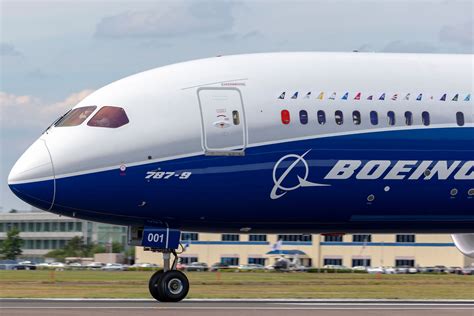
Passengers, too, are becoming more vigilant. Social media plays a growing role in real-time incident tracking, increasing scrutiny on airlines’ emergency preparedness, communication, and contingency handling.
Conclusion: Safety, Transparency, and Resilience Are Non-Negotiable
As British Airways continues to investigate the flap system failure aboard flight BA35, this episode reiterates a fundamental aviation truth: safety margins are built not just into hardware but also into crew training, ground support, and real-time decision-making.
With global travel rebounding, particularly across strategic corridors like UK–India, airlines must walk a fine line between efficiency and robustness. This incident, while ending without injuries, will be studied for months to come as stakeholders assess what went wrong—and more importantly, how to ensure it doesn’t happen again.