The idea of taking a shower thousands of feet above the ground sounds like something from a science-fiction movie rather than a normal commercial flight. Yet for a small number of first-class passengers, this experience became reality thanks to one aircraft: the Airbus A380. The world’s largest passenger aircraft created enough space, weight capacity, and design flexibility for airlines to introduce a feature that had almost disappeared from aviation history.
Today, only two airlines have offered true onboard shower facilities on scheduled commercial flights: Emirates and Etihad Airways. Both selected the Airbus A380 as the platform for this extraordinary luxury. While many aircraft have premium cabins, larger seats, private suites, and lounges, almost none have the physical capability to support a fully functioning shower at cruising altitude.
The reason is not simply about luxury. Behind the shower suites are complex decisions involving aircraft architecture, passenger capacity, fuel efficiency, weight management, and airline branding strategies. The Airbus A380 happened to be one of the very few aircraft where all these factors aligned.
The Airbus A380 Brought Back The Era Of Luxury Air Travel
For much of aviation history, airlines experimented with unique passenger spaces. During the early decades of commercial flight, particularly in the era of large airships, travelers could enjoy unusual amenities such as dining rooms, sleeping areas, and even shower facilities. However, as commercial aviation became more competitive, airlines gradually removed many non-seat features.
After deregulation in many markets, aircraft interiors became increasingly focused on maximizing revenue. Every square meter of cabin space had to generate income, and seats became the priority. Airlines invested heavily in better first-class seats, lie-flat beds, premium dining, and entertainment systems rather than physical spaces that did not directly sell tickets.
The arrival of the Airbus A380 changed that approach. With two full passenger decks and an enormous fuselage, the aircraft gave airlines opportunities that smaller wide-body jets could not provide. Instead of simply adding more seats, some operators used the extra space to create experiences.
The A380 became known not only as the largest passenger aircraft ever built but also as a symbol of premium aviation innovation. Airlines installed onboard lounges, social areas, and luxury suites. Among all these features, however, the onboard shower became the most famous and exclusive.
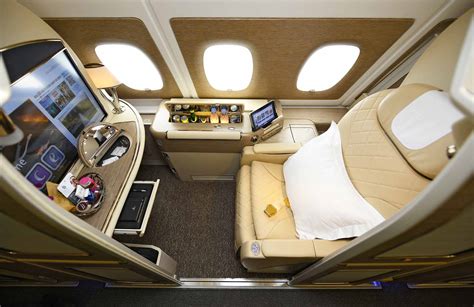
The reason this feature attracted so much attention was simple: almost nobody expected to see a bathroom with a shower inside a commercial airplane. A passenger could leave their seat, enter a private suite, take a warm shower, and return refreshed before landing.
For long-haul travelers crossing continents, this represented the ultimate form of comfort. A shower could transform a tiring overnight journey into something closer to a luxury hotel experience.
Emirates And Etihad Are The Only Airlines With A380 Shower Suites
The two airlines that made onboard showers famous are Emirates and Etihad Airways, both based in the United Arab Emirates. Their decisions were not accidental. Both carriers have built their identities around premium service, global connectivity, and creating memorable passenger experiences.
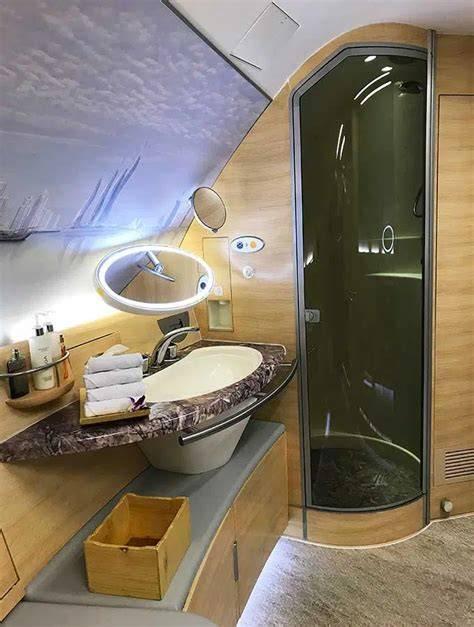
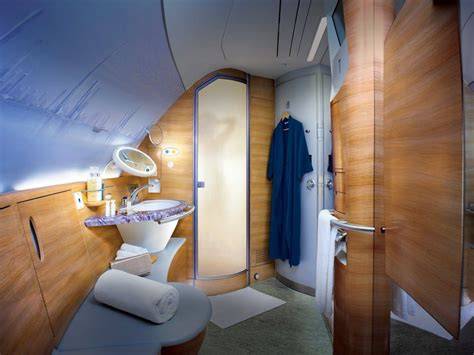
Emirates introduced the world’s first scheduled commercial aircraft shower suites when it launched its Airbus A380 operations in 2008. The airline installed two private shower suites on the upper deck for first-class passengers.
These suites are among the most luxurious bathrooms ever placed on a passenger aircraft. They include features such as:
- Heated floors
- Luxury toiletries
- Premium lighting
- Large mirrors
- Elegant interior finishes
- Separate shower areas
The suites are designed more like a boutique hotel bathroom than a traditional aircraft lavatory.
Etihad Airways followed in 2014 when it introduced its own A380 fleet. The airline took the concept even further by creating The Residence, an ultra-exclusive three-room private cabin featuring a living room, bedroom, and private shower suite.
While Emirates focused its shower experience on first-class passengers, Etihad integrated the shower into its highest level of luxury accommodation. The Residence became one of aviation’s most recognizable premium products.
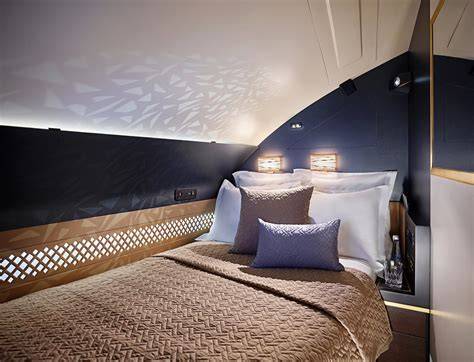
Although both airlines offer similar experiences, their designs are different. Emirates provides two large shower suites for first-class passengers, while Etihad’s first-class shower is smaller and its Residence shower offers a more private experience.
Passengers do not simply walk into these showers whenever they want. Because water is limited and the facilities require preparation, airlines manage usage through reservations. Typically, passengers receive a scheduled time slot and have only a few minutes of running water.
That limitation highlights an important reality: even on the world’s largest passenger aircraft, a shower is a carefully controlled luxury.
The A380’s Unique Interior Design Made The Shower Possible
The biggest reason passengers can shower in the sky on an Airbus A380 is the aircraft’s unusual interior layout.
Every aircraft has an area near the front of the fuselage where the structure begins narrowing toward the nose. Aviation designers often call this space the crown area. On most aircraft, this area is relatively limited. On the A380, however, it is significantly larger because of the aircraft’s massive double-deck design.
This space creates an opportunity. Since the crown area cannot easily be converted into standard passenger seats, airlines can use it for alternative facilities.
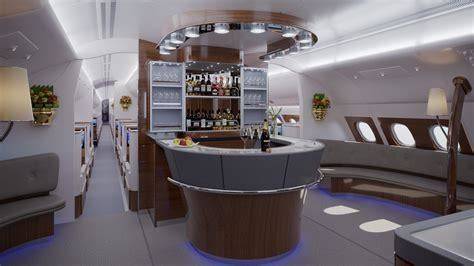
Different airlines have used this area in different ways. Some installed larger lavatories, storage areas, or lounges. Others created unique passenger spaces. Emirates and Etihad recognized that the unused area could become something more valuable: a premium experience that helped differentiate their brands.
A shower suite requires more space than a normal aircraft bathroom because it needs a dedicated shower area, water storage, drainage systems, and passenger movement space. On smaller aircraft such as the Boeing 777 or Airbus A350, that space would normally need to replace revenue-generating seats.
The A380 solved this problem because the shower could occupy an area that was already difficult to use for seating.
This was a rare combination of aircraft design and business strategy. The A380 did not simply have more space; it had the right type of space.
Why Other Aircraft Cannot Easily Add Passenger Showers
At first glance, installing a shower on another aircraft might seem possible. After all, modern wide-body aircraft such as the Boeing 777, Boeing 787, and Airbus A350 are large enough to carry hundreds of passengers.
However, size alone is not enough.
Aircraft designers must consider every kilogram added to the airplane. Water is heavy. A shower system requires additional tanks, plumbing, pumps, structural reinforcement, and waste management systems. All of this adds weight and increases operating costs.
On Emirates’ A380, the water needed for shower operations can add more than half a ton when fully loaded. The aircraft also carries additional equipment required to support the system.
For a smaller aircraft, that same weight penalty becomes much more significant. A Boeing 777 or Airbus A350 has less overall capacity and less room to absorb the impact.
The Airbus A380, with a maximum takeoff weight of approximately 575 tons, had a much larger margin. The added weight affected fuel consumption slightly, but it was a relatively small compromise compared with the aircraft’s enormous size.
Another issue is economics. Airlines make money from passenger seats. A shower does not generate direct revenue in the same way a first-class seat does. Only airlines with a strong premium strategy and enough aircraft capacity can justify sacrificing valuable cabin space.
This is why the onboard shower remained a rare exception rather than becoming a common airline feature.
The Shower Became A Powerful Marketing Tool For Emirates And Etihad
Although only a small number of passengers experience the A380 shower, millions of people know about it. That is exactly why Emirates and Etihad invested in the feature.
The shower is not just a bathroom. It is a symbol.
Both airlines use premium experiences to strengthen their global image and promote their home cities of Dubai and Abu Dhabi. Their aircraft serve as flying showcases, demonstrating luxury, innovation, and hospitality before passengers even arrive in the United Arab Emirates.
A unique feature like an onboard shower creates worldwide media attention. Even travelers who never purchase a first-class ticket become familiar with the airline because of these memorable innovations.
The same strategy applies to other A380 features, including onboard lounges and private suites. These amenities create a “halo effect” around the entire airline. A passenger flying economy class may still associate the brand with luxury because of what exists at the top of the cabin.
The shower is therefore not simply an expensive feature. It is part of a broader brand strategy.
Will The Airbus A380 Remain The Only Aircraft With A Shower?
The future of onboard showers is uncertain because the aircraft industry is moving toward smaller, more efficient long-range aircraft.
Many airlines are retiring large four-engine aircraft because twin-engine jets offer better fuel efficiency and lower operating costs. Aircraft such as the Boeing 777X and Airbus A350 are becoming the new generation of long-haul aircraft.
For Emirates, this creates a challenge. The airline built much of its premium reputation around its massive A380 fleet, including its shower suites and onboard lounges.
Future aircraft will introduce new luxury features, including improved first-class suites and social spaces. However, recreating the A380 experience will be difficult without the same amount of interior volume.
Emirates has explored possibilities such as larger aircraft variants and more advanced first-class concepts, but fitting a full shower into a smaller aircraft remains complicated.
The A380’s unique combination of size, capacity, and unused interior space made it the perfect candidate. Once the aircraft eventually disappears from commercial service, the era of scheduled commercial flight showers may disappear with it.
The ability to shower in the sky on an Airbus A380 represents a rare moment when engineering, luxury, and airline ambition came together. It is a reminder that aviation is not only about moving people faster; sometimes, it is about creating experiences that passengers never forget.