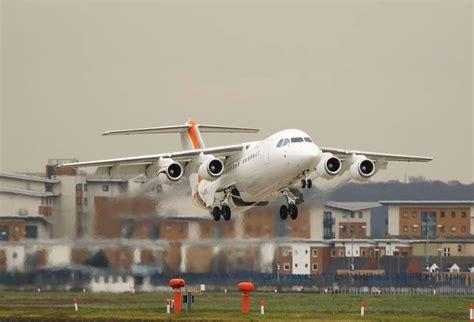
The British Aerospace BAe-146 remains one of the most distinctive commercial aircraft ever developed. While nearly every modern regional jet relies on two engines for efficiency and simplicity, the BAe-146 broke convention with four turbofan engines mounted beneath its high wing. Decades after its introduction, aviation enthusiasts and industry professionals continue to ask the same question: Why did British Aerospace build the BAe-146 with four engines?
The answer lies not in marketing gimmicks or engineering extravagance, but in the unique operational challenges of the late 1970s and early 1980s. British Aerospace was not attempting to build the fastest, largest, or most economical regional jet. Instead, it sought to create an aircraft capable of operating from airports where other jets simply could not. The BAe-146 was engineered around difficult runways, strict noise regulations, steep approaches, and demanding airline requirements. Its four-engine configuration became the foundation that enabled those ambitions.
Unlike many aircraft whose unusual characteristics eventually proved unnecessary, the BAe-146’s design choices reflected the realities of its era. Understanding those realities explains why one of the world’s quietest regional airliners also became one of its most unconventional.
The Aviation Industry That Created the BAe-146
To understand the BAe-146, it is necessary to revisit the commercial aviation landscape of the early 1970s. Regional airlines faced a significant gap between small turboprop aircraft and larger jetliners. Turboprops offered excellent short-runway performance but lacked the speed and passenger appeal of jets. Meanwhile, larger aircraft such as the Boeing 737 and Douglas DC-9 required longer runways and generated substantially more noise.
British manufacturer Hawker Siddeley believed airlines needed a completely different aircraft—one capable of combining jet comfort with turboprop versatility. The company launched the HS.146 program in 1973, envisioning an aircraft that could connect smaller cities while serving airports constrained by runway length, surrounding terrain, or strict environmental regulations.
This philosophy shaped every engineering decision. Rather than maximizing cruise speed or minimizing purchase cost, designers prioritized operational flexibility. The aircraft would eventually evolve into the BAe-146 after British Aerospace revived the program in 1978 following delays caused by the global oil crisis.
A Regional Jet Unlike Any Other
Production began in the early 1980s, with certification achieved in 1983. Over nearly two decades of manufacturing, more than 380 aircraft were delivered, making the BAe-146 the most successful British-built civilian jetliner program.
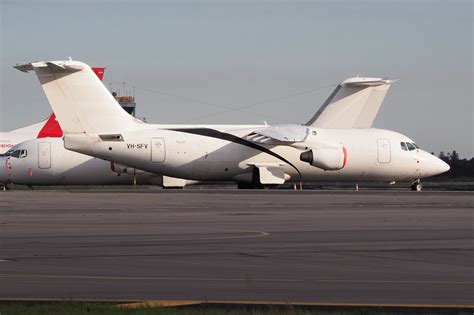
The family consisted of three primary passenger variants—the BAe 146-100, -200, and -300—which later evolved into the improved Avro RJ70, RJ85, and RJ100 series. Freight conversions, combi aircraft, executive transports, military variants, and specialized firefighting aircraft further demonstrated the platform’s remarkable adaptability.
Unlike conventional regional jets, the BAe-146 featured a high-mounted wing, T-tail, robust landing gear, spacious cabin, and four compact turbofan engines. Each element supported operations from airports where competing aircraft often struggled.
Why Four Engines Made Sense in the Early 1980s
Viewed through today’s aviation standards, installing four engines on a regional jet appears inefficient. Modern airlines generally avoid additional engines because they increase fuel burn, maintenance requirements, spare parts inventories, inspections, and overhaul expenses.
However, those assumptions overlook the technological limitations of the era.
The engines available during the BAe-146’s development simply did not provide enough thrust individually while maintaining the exceptionally low noise levels British Aerospace demanded. Rather than installing two larger, noisier engines, engineers selected four smaller Avco Lycoming ALF 502 geared turbofan engines.
Each engine produced relatively modest thrust, but together they generated the performance necessary for demanding airports while remaining remarkably quiet. Dividing total thrust across four powerplants also distributed weight more evenly along the wing, improving structural characteristics and reducing wing bending loads.
In other words, four engines were not added because more was better—they were added because they represented the most practical solution using the available engine technology.
The Importance of Quiet Operations
Perhaps the BAe-146’s greatest achievement was its extraordinarily low external noise.
Noise restrictions had become increasingly important across Europe. Airports surrounded by dense urban development faced growing political pressure to reduce aircraft noise. Several airports imposed strict operating limits that prevented many conventional jets from using their runways.
British Aerospace recognized an opportunity. By combining four relatively small high-bypass engines with extensive acoustic treatment and carefully engineered nacelles, the BAe-146 achieved one of the quietest noise signatures of any commercial jet of its generation.
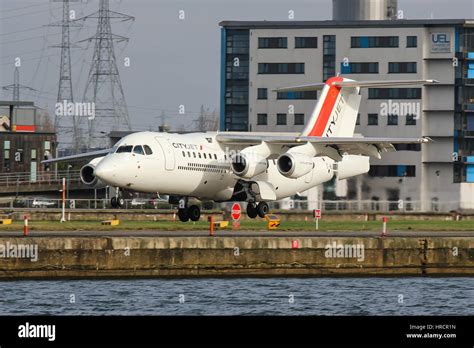
This characteristic opened airports that competitors found difficult to serve, particularly London City Airport, whose steep approaches, short runway, and strict noise requirements made aircraft selection exceptionally challenging.
For many years, the BAe-146 became almost synonymous with London City operations because few conventional airliners could match its combination of quietness and field performance.
Short Runways Demanded Exceptional Performance
Noise was only one part of the equation.
British Aerospace designed the aircraft to operate from short runways where larger aircraft faced severe payload restrictions. Achieving strong takeoff performance required substantial thrust, particularly on hot days or at airports located at higher elevations.
Four engines provided significant advantages during these demanding departures. Even if one engine failed during takeoff, the remaining three supplied sufficient thrust for safe continued flight. This redundancy increased operational confidence on challenging routes where margins could already be limited.
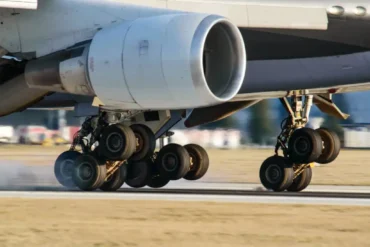
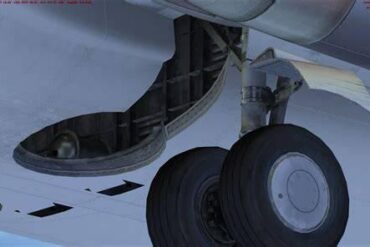
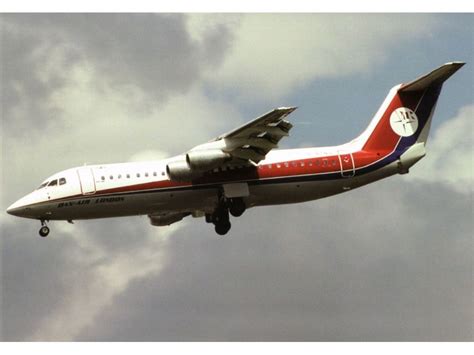
The aircraft also incorporated a rugged landing gear, powerful lift devices, effective spoilers, and a unique clamshell airbrake mounted at the rear fuselage. Unlike conventional thrust reversers, the airbrake allowed steep descents without excessive speed buildup while reducing mechanical complexity.
Together, these features transformed the BAe-146 into one of the most capable short-field jet aircraft ever produced.
Why British Aerospace Never Built a Twin-Engine Version
British Aerospace explored numerous development concepts during the aircraft’s life, including studies examining a twin-engine derivative.
On paper, eliminating two engines promised lower operating costs and reduced maintenance. In reality, the redesign would have required extensive structural modifications.
Larger engines would have demanded reinforced wings, redesigned pylons, altered systems, different center-of-gravity characteristics, modified aerodynamics, and fresh certification testing. More importantly, larger engines would likely have increased external noise—the very advantage that differentiated the BAe-146 from competing aircraft.
By preserving the four-engine arrangement, British Aerospace maintained the aircraft’s defining strengths instead of compromising them for marginal efficiency gains.
Engineering Beyond the Engines
Although the four engines dominate discussions, the BAe-146 incorporated numerous innovative engineering solutions.
Its uninterrupted high wing minimized interference drag while providing excellent ground clearance for engine installation. The fixed horizontal stabilizer reduced mechanical complexity compared with variable-incidence designs. Early aircraft used conventional flight controls, while later Avro RJ variants introduced increasingly sophisticated avionics.
The aircraft also became only the second commercial airliner after Concorde to adopt carbon brakes, reducing weight while improving braking performance. Its lightweight auxiliary power unit offered greater fuel efficiency than many contemporary designs, allowing independent operations at smaller airports with limited ground infrastructure.
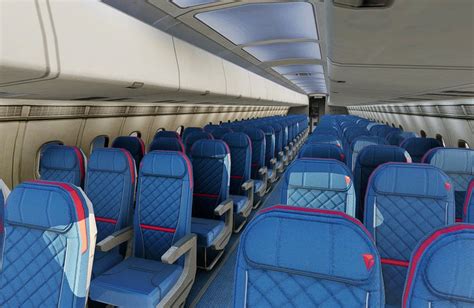
Passenger comfort also received careful attention. The unusually wide fuselage accommodated five-abreast seating comfortably and could even support six-abreast layouts for high-density operators. Airlines frequently reported profitable operations despite relatively modest passenger loads because the aircraft excelled on routes competitors could not efficiently serve.
The ALF 502 Engine: Brilliant but Imperfect
The Avco Lycoming ALF 502 represented one of the most unusual commercial turbofan engines ever installed on an airliner.
Derived from the T55 turboshaft powering the Boeing CH-47 Chinook helicopter, the engine employed a geared fan system that maintained lower fan rotational speeds while allowing the core to operate efficiently. This arrangement contributed significantly to the BAe-146’s remarkably low noise output.
The modular engine architecture also simplified certain maintenance tasks by allowing components to be replaced individually rather than removing complete engines.
However, the engine family experienced several reliability challenges during its early years. Electronic systems occasionally overheated, leading to automatic shutdowns without immediate restart capability. Ice accumulation also created operational concerns under specific atmospheric conditions.
British Aerospace and engine manufacturers gradually addressed many of these issues through service bulletins, hardware improvements, and revised operating procedures, although the ALF 502 never developed the reputation for reliability enjoyed by some competing powerplants.
Was Four Engines Ultimately a Mistake?
Critics often argue that the BAe-146’s greatest strength eventually became its greatest weakness.
During the 1990s and early 2000s, engine technology advanced dramatically. New-generation turbofans became significantly quieter while producing substantially greater thrust. Aircraft manufacturers could suddenly achieve the same operational performance using only two engines.
Regional jets such as the Bombardier CRJ family and Embraer ERJ series entered service with lower fuel consumption, fewer maintenance requirements, and simplified airline economics.
Under those new market conditions, operating four engines became increasingly difficult to justify financially. Fuel prices rose, environmental pressures intensified, and airlines focused more aggressively on minimizing operating costs.
Yet judging the BAe-146 solely through a modern lens ignores the environment for which it was designed. During its formative years, the aircraft successfully fulfilled missions that many competitors simply could not perform.
A Versatile Aircraft That Refused to Disappear
Even after passenger operators gradually retired the type, the BAe-146 found new life in specialized roles.
Freighter conversions proved highly successful thanks to the aircraft’s spacious fuselage and excellent short-field capabilities. Several operators continue using converted aircraft for cargo missions serving airports with limited infrastructure.
Perhaps even more remarkably, the BAe-146 became one of the world’s premier aerial firefighting platforms. Large retardant tanks installed within the fuselage transformed retired passenger aircraft into highly effective air tankers capable of operating from relatively short runways close to wildfire zones.
Military organizations, government agencies, research institutions, and executive operators have likewise appreciated the aircraft’s versatility, reliability, and ability to access challenging destinations.

The Lasting Legacy of the BAe-146’s Four Engines
The BAe-146 occupies a unique place in commercial aviation history because it represents an aircraft optimized for a very specific mission rather than the broadest possible market.
Its four-engine configuration was never intended to compete directly with larger twin-engine airliners. Instead, it enabled operations from airports constrained by short runways, steep approaches, urban noise limits, and demanding performance requirements. For airlines serving these specialized routes, the additional engines delivered operational flexibility that outweighed higher maintenance costs.
Technological progress eventually allowed twin-engine aircraft to accomplish many of the same missions more economically, reducing the BAe-146’s commercial appeal. Nevertheless, that evolution should not be mistaken for evidence that the original design philosophy was flawed. On the contrary, the aircraft demonstrated how carefully targeted engineering could solve real-world operational problems using the best technology available at the time.
Today, the BAe-146 continues to attract admiration not because it followed industry trends, but because it confidently ignored them. Its distinctive silhouette, whisper-quiet departures, exceptional short-field performance, and unmistakable quartet of engines remain enduring reminders that successful aircraft are not always those that conform to convention. Sometimes, the most effective engineering solution is also the most unconventional.