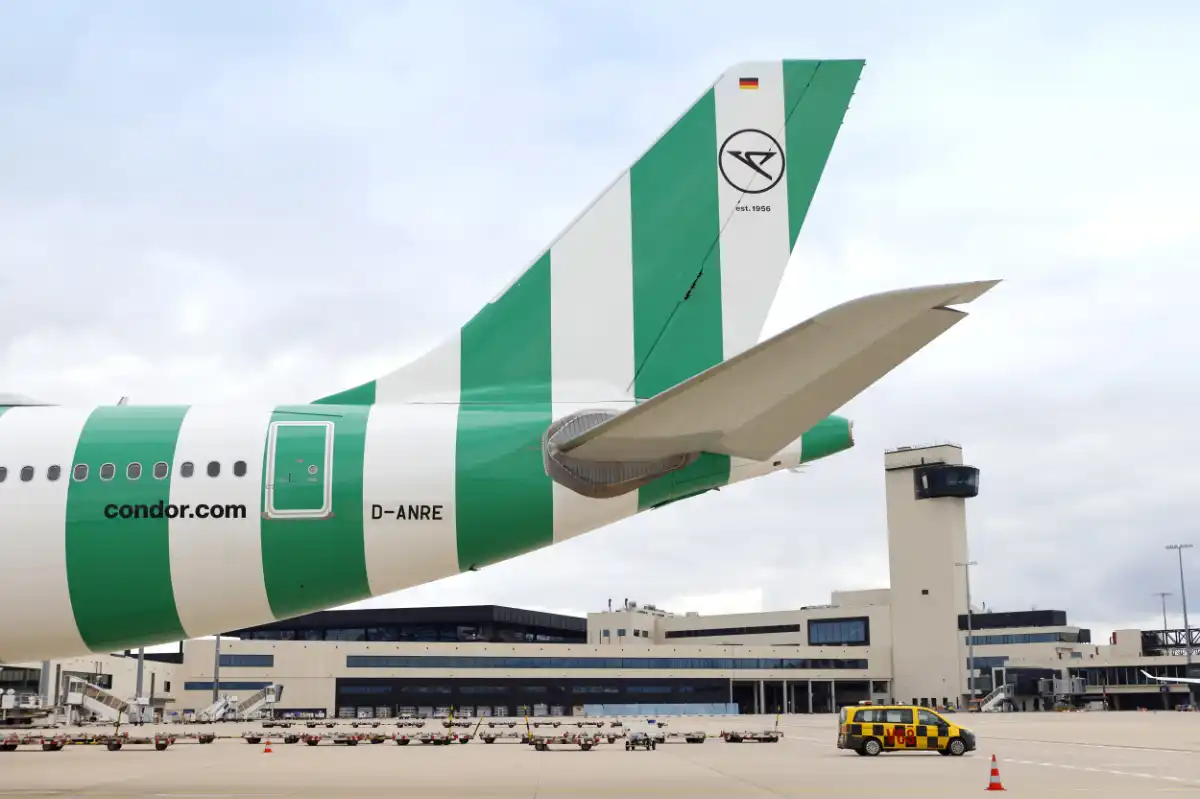
Condor is preparing for one of the most significant expansions of its North American network, announcing a new nonstop route between Frankfurt Airport (FRA) and Chicago O’Hare International Airport (ORD). The service will mark the leisure carrier’s first-ever operation to one of the world’s most important aviation hubs and represents another major step in Condor’s strategy to strengthen its independent long-haul network.
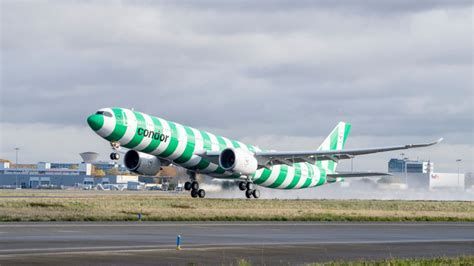
The new route is scheduled to begin on May 14, 2027, with Condor planning to operate the connection daily throughout the year. Flights will be operated exclusively by the airline’s modern Airbus A330-900neo fleet, its only widebody aircraft type currently serving long-haul markets.
The introduction of Chicago O’Hare is particularly notable because the airport represents a major gateway between Europe and the United States. Although Hartsfield-Jackson Atlanta International Airport remains the world’s busiest airport by passenger traffic, Chicago O’Hare is the busiest airport globally by number of flights, largely because of its extensive domestic network and high volume of regional jet operations.
Condor’s New Frankfurt to Chicago Route Adds Strategic U.S. Connectivity
According to the planned schedule, Condor’s Frankfurt–Chicago service will depart Germany in the afternoon and arrive in Illinois during the early evening. The outbound flight from Frankfurt will operate at 2:50 PM local time, arriving at Chicago O’Hare at 5:10 PM after a scheduled block time of approximately nine hours and 20 minutes.
The return flight will leave Chicago at 8:20 PM and arrive in Frankfurt at 11:50 AM the following day, with a flight time of around eight hours and 30 minutes. The daily operation means Condor will only need one aircraft rotation to maintain the route.
The aircraft assigned to the service will be the 310-seat Airbus A330-900neo, featuring a three-class cabin configuration. Condor’s A330-900 fleet includes 30 business class seats in a 1-2-1 layout, 64 premium economy seats arranged in a 2-4-2 configuration, and 216 economy seats also arranged in a 2-4-2 layout.
The aircraft’s combination of efficiency, range capability, and passenger capacity makes it suitable for Condor’s expanding transatlantic network. The airline currently operates 18 Airbus A330-900 aircraft, allowing it to gradually increase its presence across North America.
Breaking Into a Lufthansa and United Dominated Market
The Frankfurt–Chicago market is an interesting choice for Condor because the route is already served by major network carriers. Both Lufthansa and United Airlines operate nonstop flights between Frankfurt and Chicago, supported by their membership in the Star Alliance and their extensive transatlantic partnership.
The two airlines also operate under a joint venture arrangement, allowing them to coordinate schedules and pricing across many Europe–North America routes. This creates a highly integrated competitive environment where independent carriers like Condor face the challenge of attracting passengers without alliance connections.
However, Condor’s approach is different. Rather than competing solely on local Frankfurt–Chicago demand, the airline is building a broader network model that relies heavily on connecting passengers.
In recent years, Condor has expanded its short- and medium-haul European network from Frankfurt to destinations including Barcelona, Berlin, Budapest, Cairo, Hamburg, London Gatwick, Milan Malpensa, Munich, Paris Charles de Gaulle, Prague, Rome, Tel Aviv, Venice, Vienna, and Zurich. These routes are designed partly to provide additional feed for the airline’s long-haul flights.
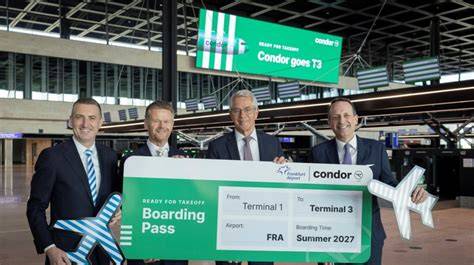
Condor’s Independent Growth Strategy After Lufthansa Separation
The Chicago announcement reflects a major shift in Condor’s business strategy. Historically, Condor had close ties with Lufthansa, including a period when it operated as a Lufthansa subsidiary. However, those relationships changed significantly over time.
In 2025, Condor lost the ability to rely on Lufthansa’s passenger feed, pushing the airline to develop a more independent network strategy. Instead of depending on another carrier’s hub structure, Condor has increasingly focused on creating its own connectivity system.
The new Chicago route fits directly into that strategy. By adding a major U.S. business and leisure destination, Condor can attract travelers from across Europe while also strengthening its reputation as a standalone transatlantic carrier.
Although direct Frankfurt–Chicago demand is relatively limited compared with larger U.S. markets, the route offers potential because Chicago serves as a major destination for tourism, business travel, and onward connections throughout the United States.
Condor Expands to 12 North American Routes From Frankfurt
When the Chicago service begins in 2027, Condor will operate one of its largest-ever North American networks. The airline is scheduled to offer 12 routes from Frankfurt to the United States and Canada, providing up to 69 weekly departures.
This will represent approximately 17% of all Frankfurt services to the two countries. Compared with June 2026, Condor’s North American schedule will grow by around 11%, while compared with pre-pandemic levels in June 2019, the airline’s offering will be approximately 30% larger.
Condor’s Canadian network will include flights to Calgary, Toronto, and Vancouver. Its U.S. network will feature nine destinations: Anchorage, Boston, Las Vegas, Los Angeles, New York JFK, Chicago O’Hare, Portland, San Francisco, and Seattle.
The expansion highlights Condor’s ambition to become one of Europe’s strongest independent leisure airlines. By combining long-range Airbus A330-900 operations with a growing European feeder network, the airline is positioning itself for continued growth across the Atlantic.
The launch of Frankfurt–Chicago will not simply add another destination to Condor’s schedule. It represents a broader transformation as the carrier moves away from historical partnerships and builds a more flexible, self-supported global network.