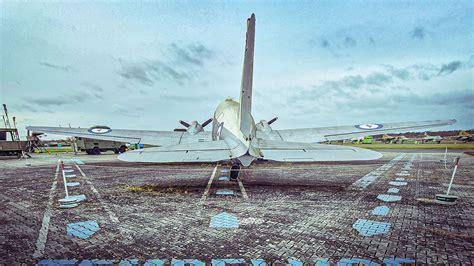
Berlin’s aviation story is unlike any other in Europe, shaped not by economics alone but by decades of war, division, and ultimately, reunification. At the height of its complexity, Berlin operated four distinct airports, each with a specialized role reflecting the fractured political geography of a city divided between East and West. Today, that sprawling network has been replaced by a single modern hub: Berlin Brandenburg Airport (BER). The evolution from four to one is not just a tale of infrastructure, but a window into Germany’s turbulent 20th-century history.
Tempelhof: Aviation’s Monument to Innovation and Resistance
Berlin’s Tempelhof Airport was more than just an airfield — it was one of the first examples of a major commercial terminal embedded within a city’s urban fabric. Opened in 1923 and later reimagined by the Nazi regime under Albert Speer, Tempelhof was designed to be both practical and imposing. Its massive hangars, sweeping terminal, and proximity to central Berlin set a precedent for what an airport could be: monumental, symbolic, and deeply connected to national identity.
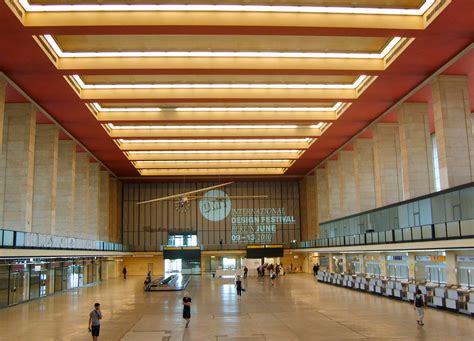
But Tempelhof’s most defining moment came not from architecture, but from defiance. In 1948, the Soviet Union blockaded West Berlin, cutting off land access. In response, American and British forces launched the Berlin Airlift, with Tempelhof as one of its beating hearts. For nearly a year, aircraft landed every few minutes, delivering essential supplies to sustain a city under siege. The airport became a beacon of Allied unity, a logistical marvel, and a lifeline for Berliners.
Despite its legend, Tempelhof couldn’t keep pace with modern air travel. Jet aircraft, stricter noise regulations, and spatial constraints in central Berlin rendered it obsolete. Despite public protest and a referendum effort, the airport closed to commercial flights in 2008. Today, its runways have become a vast public park — Tempelhofer Feld — and the terminal a site of exhibitions and cultural events, preserving its legacy in bricks and open skies.
Gatow: West Berlin’s Hidden Military Artery
Less known but equally pivotal was RAF Gatow, a military airfield in southwest Berlin originally constructed in 1935 for the Luftwaffe. Its transformation post-WWII into a British Royal Air Force base added another dimension to Berlin’s layered aviation map. Along with Tempelhof and Tegel, Gatow played a strategic role during the Airlift, particularly for British cargo operations.
Gatow never transitioned into civilian aviation; instead, it remained a key node in Allied military coordination throughout the Cold War. Heads of state, defense officials, and strategic personnel arrived through Gatow under tight Allied protocols. Yet, as the Cold War thawed and reunification took shape, Gatow’s purpose faded.
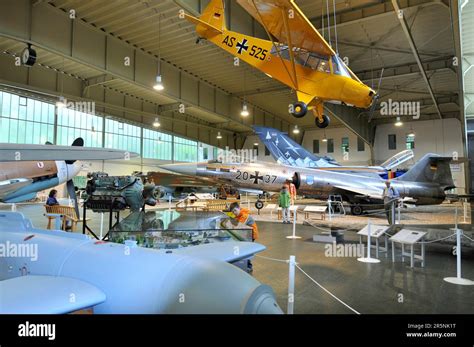
Flight operations ceased in 1994. But unlike many abandoned airfields, Gatow found new life through history. The Bundeswehr Military History Museum now occupies the site, featuring Cold War relics, NATO and Warsaw Pact aircraft, and exhibits on divided Germany’s aviation landscape. Entry is free, and the site is both a sobering and fascinating journey through the city’s militarized past.
Tegel: From Emergency Airstrip to Jet-Age Darling
Born of crisis and necessity, Berlin Tegel Airport (TXL) rose from the pressure of the Berlin Blockade. Constructed in just 90 days in 1948, it was a marvel of improvisation. Its longer runways were essential for accommodating cargo aircraft too large for Tempelhof. Initially makeshift, Tegel matured into the city’s primary commercial airport for West Berlin.
In 1974, Tegel opened its iconic hexagonal terminal — a modernist statement of passenger-first design. With parking spaces just steps from check-in and short walking distances from gate to curb, it epitomized convenience. Over the years, Tegel became home to Air Berlin and a wide array of domestic and European carriers, evolving into a symbol of West Berlin’s international openness during a time of physical and political separation.
Yet, Tegel’s success became its limitation. Built for smaller volumes, it struggled under modern passenger loads. Expansion was impossible due to surrounding development, and infrastructure aged poorly. By the 2010s, it was clear that a replacement was needed. When BER finally opened in 2020 — after a decade of delays — Tegel closed permanently, its final flights marked by emotional farewells.
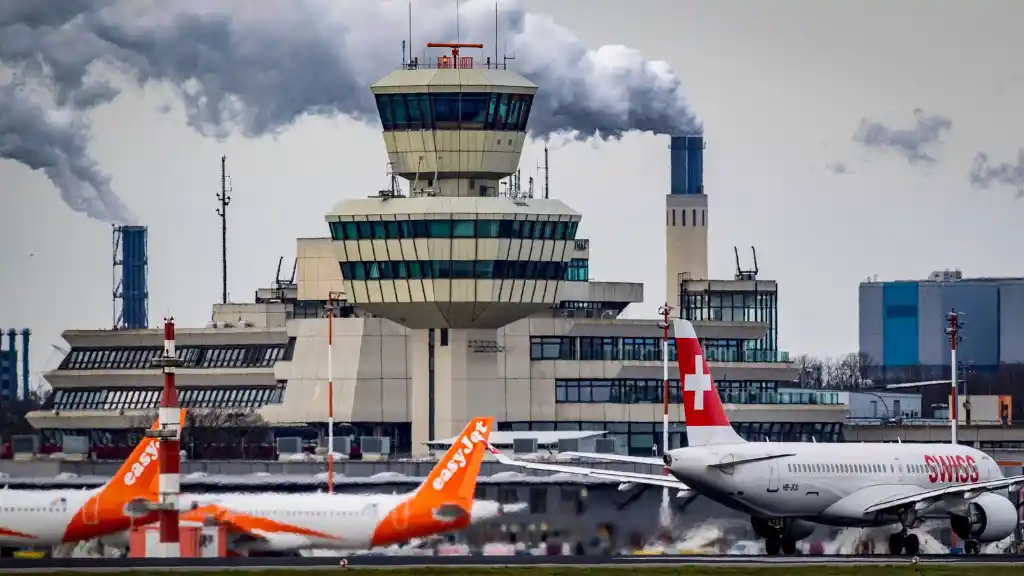
Today, the city is transforming the former TXL into a tech and innovation hub, known as the Berlin TXL Urban Tech Republic, a living experiment in repurposing aviation space for the future.
Schönefeld: East Berlin’s Aviation Anchor
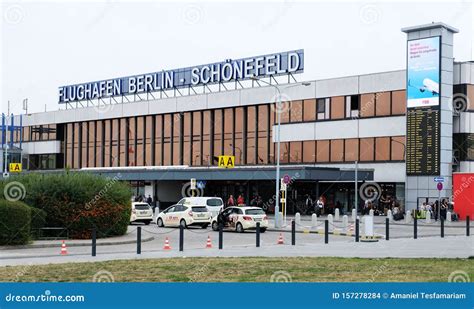
On the opposite side of the Iron Curtain stood Schönefeld Airport (SXF), East Berlin’s window to the world. Originating in 1934 near an aircraft manufacturing site, it gained prominence post-WWII under the German Democratic Republic. With limited access to Western aviation markets, the GDR used Schönefeld as its primary international gateway, served by Interflug — East Germany’s state airline.
While Schönefeld lacked the glamor or scale of Western airports, it had one major advantage: room to grow. Its position on the city’s outskirts allowed expansion when needed, though budgetary constraints meant upgrades were minimal. After reunification, the airport adapted by becoming a hub for low-cost carriers, particularly easyJet and Ryanair, offering Berliners cheap connections across Europe.
Still, Schönefeld’s infrastructure grew increasingly outdated. Its temporary structures became permanent fixtures, and amenities lagged behind rising passenger expectations. But its geographic potential and available land set the stage for its most significant transformation — the foundation of Berlin Brandenburg Airport.
Berlin Brandenburg: One Airport to Rule Them All
The consolidation of Berlin’s aviation under a single modern hub was driven by practicality. A fragmented airport system with overlapping functions made operations inefficient and traveler experiences inconsistent. Schönefeld offered the ideal location for expansion — a large site, no surrounding urban restrictions, and existing runway infrastructure.
Thus began the Berlin Brandenburg Airport (BER) project, envisioned to replace Tegel and absorb Schönefeld. Construction began in 2006 but soon descended into a saga of mismanagement. From fire protection failures to corruption investigations, BER’s 14-year delay became an international embarrassment, symbolic of German overengineering gone awry.
When it finally opened in October 2020, the world was in the grip of the COVID-19 pandemic. Flights were sparse, terminals eerily quiet. Yet the symbolic importance was undeniable. Berlin now had a single, unified, international gateway — a clean break from the legacy of division.
The Capabilities of BER: A Capital’s Gateway
Today, BER operates with the IATA code formerly assigned to all of Berlin: BER. It hosts over 60 airlines and connects to nearly 150 destinations worldwide. Lufthansa, easyJet, Ryanair, Turkish Airlines, and Qatar Airways anchor its schedule, with increasing long-haul capacity projected.
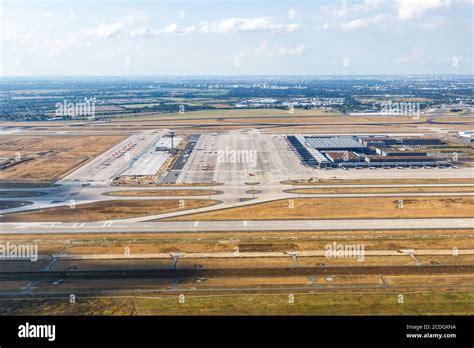
Key infrastructure at BER includes:
- Two parallel runways capable of handling large aircraft like the Airbus A380.
- Integrated high-speed rail links that connect directly to Berlin Hauptbahnhof in 30 minutes.
- Expansive terminal design for scalable growth, including Terminal 2 for low-cost carriers.
- Passenger-first amenities: shops, lounges, dining, and four-star Skytrax-rated services.
Perhaps most uniquely, BER also hosts the ILA Berlin Air Show, one of Europe’s largest aerospace exhibitions. Held biennially at the adjacent ExpoCenter Airport, ILA brings aircraft displays and technology demonstrations within walking distance of BER’s core operations, proving that an international airport can simultaneously serve travelers and innovators.
Why Only One Airport Survives Today
Berlin’s shift to a single airport is not merely a matter of modernization; it is the culmination of history, geopolitics, and urban development. Tempelhof, Gatow, and Tegel were all shaped by necessity: ideological showcase, military logistics, and Cold War survival. Each served a specific role in a divided city that no longer exists.
The move to consolidate air travel reflects a broader German philosophy of integration post-reunification. Centralized operations reduce noise in urban areas, simplify logistics for carriers, and provide travelers with a consistent experience. Moreover, a single hub strengthens Berlin’s position in the European aviation network, offering competitive services against cities like Vienna, Warsaw, and Copenhagen.
Still, the past is never far. Tempelhof’s runways now welcome joggers instead of jets. Tegel’s tower overlooks research labs instead of airliners. Gatow’s hangars display MiGs and Tornados to school groups. Berlin’s airfields may no longer roar, but they continue to echo.
Looking Ahead: BER’s Challenge and Promise
As BER matures, its success will hinge on three factors:
- Scalability: The airport must adapt to future demand without repeating past mistakes.
- Sustainability: Environmental concerns are growing, and BER must meet Europe’s green aviation goals.
- Strategic Positioning: While not yet a megahub, Berlin has the chance to become a gateway between East and West.
Berlin’s story from four airports to one is a rare case where aviation history, national identity, and urban evolution intersect. The capital may now have a single airport, but its aviation soul remains diverse, layered, and deeply storied — much like Berlin itself.