
Croatia Airlines has officially transformed its seasonal routes to Berlin and Barcelona into year-round services, marking a significant milestone in travel connectivity between Germany, Spain, and Croatia. This strategic shift not only enhances the accessibility of these two major European cities but also aligns with the airline’s overarching goal of establishing consistent travel options throughout the year, thereby reducing reliance on seasonal tourism.
The decision to operate three weekly flights on the Zagreb–Berlin and Zagreb–Barcelona routes starting from October 26, 2025, signifies a commitment to providing reliable travel solutions that cater to both leisure and business travelers. Historically, these routes were limited to the peak summer months, making this expansion a crucial step towards fostering stronger ties between Croatia and key economic hubs in Europe.
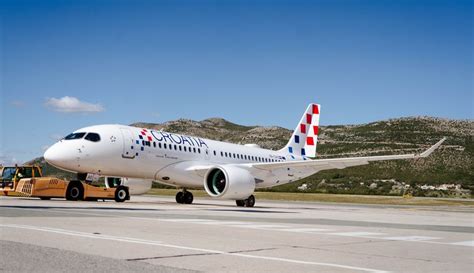
As Croatia Airlines embarks on this new chapter, it is also modernizing its fleet with the introduction of the Airbus A220 aircraft. This new addition promises enhanced operational efficiency and passenger comfort, positioning the airline as a leading player in regional mobility. With the transition to year-round operations, Croatia Airlines aims to reshape its winter schedule for 2025–2026, ensuring that travelers have access to a broad spectrum of destinations regardless of the season.
In addition to the upgrades to the Berlin and Barcelona routes, Croatia Airlines is also extending its Zagreb–Stockholm flights, which will continue through the winter months, offering three weekly flights until January 9, 2026. The Split–Istanbul route, which experienced positive passenger volumes during the summer, will also see an extension to accommodate festive travelers, resuming regular service on March 5, 2026, after a brief suspension.
However, not all news is favorable; the airline has announced a temporary suspension of the Dubrovnik–Frankfurt route from January 11 to March 8, 2026. This move is part of a broader strategy to optimize operations and reduce low-demand flights during the winter season. Interestingly, the Discover Airlines, a subsidiary of Lufthansa, plans to operate the same route year-round, reflecting a collaborative effort among Star Alliance partners to maintain connectivity in the region.
Domestically, Croatia Airlines is adjusting its Zagreb–Dubrovnik frequency, reducing the number of weekly flights from 22 to 20. This minor adjustment allows the airline to allocate resources more effectively to support its international growth while maintaining essential domestic connectivity.
The modernization of the fleet is another critical element of Croatia Airlines’ strategy. Recently, the airline welcomed its fifth Airbus A220, registered as 9A-CAN and named after the Croatian city of Osijek. This aircraft, along with others in the fleet, offers improved fuel efficiency, lower emissions, and enhanced passenger comfort, further solidifying the airline’s commitment to sustainable operations. The delivery of the A220s is part of a long-term renewal strategy that aims to expand the fleet to a total of 15 aircraft by 2027, comprising both A220-300s and A220-100s.
As part of its ongoing efforts to enhance connectivity, Croatia Airlines will introduce new seasonal flights from Zagreb to several prominent European cities, including Hamburg, Milan, Madrid, Bucharest, and Prague. These routes aim to solidify Croatia’s position as a vital transit point between southeastern and western Europe, catering to both leisure and business markets.
This latest round of changes illustrates Croatia Airlines’ commitment to balancing growth with operational efficiency. By transitioning from seasonal to year-round services, the airline is actively working to mitigate the impact of seasonal fluctuations and bolster Croatia’s tourism and business sectors throughout the year. Furthermore, the introduction of the A220 series not only minimizes operational costs and environmental footprint but also enhances the overall travel experience for passengers through improved cabin design and quieter engines.
Looking ahead, Croatia Airlines anticipates the arrival of two additional Airbus A220s by the end of 2025, further expanding its fleet and enhancing its route offerings across Europe. Despite the temporary suspension of select routes, the airline’s strategic adjustments are designed to ensure long-term stability and service improvements. Whether through the expansion of winter schedules, fleet modernization, or the introduction of new European connections, Croatia Airlines is well on its way to establishing a forward-looking vision for sustainable and high-quality air travel in the post-pandemic landscape.
As travelers seek reliable and convenient flight options, Croatia Airlines’ commitment to year-round connectivity between Germany and Spain not only enriches the travel experience but also reinforces the airline’s pivotal role in enhancing mobility across Europe. This ambitious initiative is poised to create a robust foundation for future growth and innovation in the airline industry.