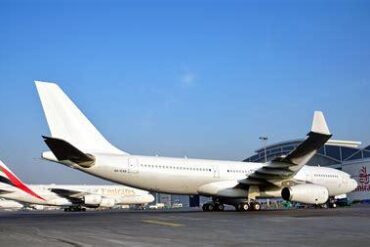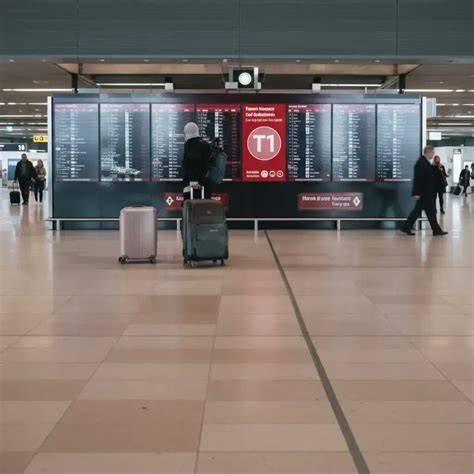
Emirates Puts Berlin Brandenburg Plans On Ice Despite September Breakthrough
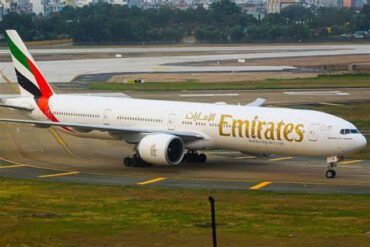
After more than two decades of lobbying, legal argument, and diplomatic pressure, Emirates has finally won the right to fly to Berlin. And for now, it has chosen not to use it. Speaking at the Routes World conference in Frankfurt, President Sir Tim Clark confirmed that the Dubai-based carrier will not launch services to Berlin Brandenburg Airport (BER) at present, despite Germany’s September decision to grant the United Arab Emirates a fifth airline destination inside German airspace. The announcement landed as a jolt to an industry that had spent 22 years treating Berlin as Emirates’ great unfinished European ambition, and it reframes a landmark liberalisation as a deal that remains, in practical terms, half-built.
Clark’s reasoning is not a retreat from the market but a refusal to fly under terms he considers unstable. He told delegates that Germany and the UAE appear to interpret parts of their agreement differently, pointing specifically to its wording and its translation. In his words, Emirates is ready to bring daily widebody connectivity to Berlin and link the German capital with its extensive global network, backed by substantial investment, but will not operate the route at the moment. The airline, he added, needs certainty that the spirit of the agreement and the way it was rendered across languages were correct. That language matters: the September arrangement was negotiated across two governments, two legal traditions, and at least two working languages, and the carrier is treating the textual margins as a genuine operational risk.
The reversal is all the more striking because of what preceded it. In recent months Emirates publicly committed to investing more than €100 million annually in new Berlin and Stuttgart operations if permission were granted, a figure that signalled deep confidence rather than caution. Clark has now placed the proposed Dubai International Airport (DXB) to Berlin route on ice, while leaving the door open to reconsideration once the ambiguities are resolved. There is no formal abandonment, no withdrawal of slot requests, and no public timetable for returning to the table, only a deliberate pause that shifts the burden of clarification onto regulators in Berlin and Abu Dhabi.
Frequency Caps and Disclosure Demands Undermine the Fifth-Destination Deal
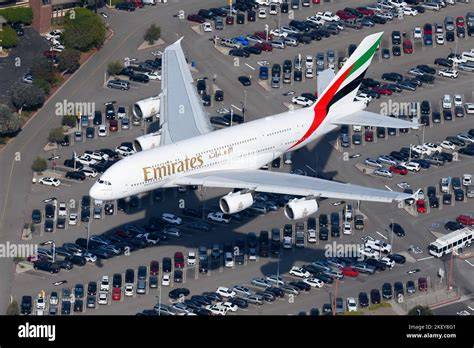
The sticking points are structural rather than cosmetic. Under the September agreement, one UAE national carrier may add a fifth German airport, reportedly with daily flights, but the same arrangement would cap frequencies at that carrier’s existing German destinations. For Emirates, that proviso is close to self-defeating. The airline currently operates nine daily departures from Germany: three from Frankfurt Airport (FRA) on Airbus A380 and Boeing 777 equipment, two from Munich Airport (MUC) flown entirely with the A380, two from Düsseldorf Airport (DUS) on A380 and 777, and two from Hamburg Airport (HAM) on the 777. A freeze at current levels would block the restoration of a third daily Munich service and stall a planned fourth daily Frankfurt rotation, meaning the new Berlin rights could effectively be purchased with growth surrendered elsewhere.
Restrictions on fifth-freedom rights add another layer of uncertainty, potentially limiting onward flying from Germany to third countries and reducing the commercial logic of a Berlin operation built to feed a wider network. Industry reporting also identifies a further condition that may prove decisive: requirements to disclose commercially sensitive company data. Clark has not publicly enumerated which clauses he wants rewritten, which is characteristic of a dispute being conducted through diplomatic channels rather than press releases.
Two Decades of Exclusion, Nine Daily Flights, and a Lufthansa Veto
The dispute reaches back to 2004, when Emirates first sought access to Berlin and Stuttgart Airport (STR). The governing 1994 bilateral agreement restricted UAE carriers to a fixed number of German destinations, capping the airline at four cities. Berlin’s exclusion persisted even after Brandenburg Airport opened in 2020, hardening into one of European aviation’s most durable controversies. Yet Emirates hardly sat idle. In 2025 the carrier flew 2.36 million passengers to and from Germany, with roughly 60% continuing beyond Dubai to onward markets including Australia and Southeast Asia, a statistic that explains both the airline’s patience and Lufthansa’s alarm.
Lufthansa has consistently opposed expanded Gulf access, arguing that unequal competitive conditions threaten German aviation jobs and connecting traffic, a position shared by German aviation unions. The breakthrough arrived during September’s UAE presidential visit, packaged alongside €40 billion in announced investment commitments. Berlin welcomed the decision; Lufthansa and the unions condemned it. That political asymmetry, a capital eager for investment against an incumbent defending its hub economics, helps explain why the resulting text leans toward compromise and why its ambiguities are now doing real damage.
Etihad, flydubai, and Air Arabia Circle Berlin as Emirates Waits
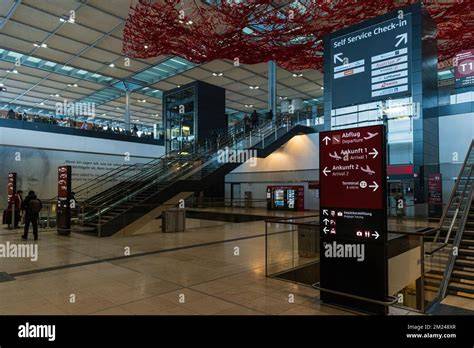
A further wrinkle is that the fifth-destination rights are not reserved for Emirates. Any UAE carrier may apply. Etihad Airways, already serving Frankfurt, Munich, and Düsseldorf, has reportedly expressed interest in Berlin, though Condor’s new daily Berlin-Abu Dhabi service under an Etihad codeshare already delivers access to its connecting network, reducing the urgency. Flydubai could mount a narrower-capacity Boeing 737 operation from Dubai, though its partnership with Emirates would not necessarily dissolve the restrictions. Air Arabia is expanding fastest in Germany, already serving Munich and adding Sharjah-Frankfurt on December 15 and Düsseldorf on December 16 with Airbus A320neo aircraft, taking its German footprint to three cities.
The unresolved provisions could deter those applicants as well, since the frequency caps and disclosure requirements would bind whichever carrier steps forward. Emirates nevertheless remains best placed: it previously requested Berlin slots, with Winter 2026 once considered a plausible launch window, and its widebody proposal is the only one matching Clark’s vision of daily long-haul connectivity. For now, the airline that spent 22 years fighting for Berlin will wait a little longer before it lands there.