Aviation comes with its own language, filled with hundreds of specific terms. Here, you’ll find both common and less familiar aviation terms. Some of these come from French, German, or military use, but it’s important to remember that English is the official language of aviation. You’ll need to learn abbreviations, slang, and key word meanings. Acronyms make up a big part of aviation talk. This glossary gives you basic definitions of airline jargon. It includes standard pilot terms and a few fun or surprising phrases. For example, a “handshake” in aviation means something quite different than what you’d expect. Be sure to check out our video too!
A
Absolute Altitude – This is the height between the aircraft and the ground right below it.
Absolute Ceiling – The maximum height an aircraft can reach with full throttle, while staying level and keeping a steady speed.
Accelerated Stall – A stall that happens at a higher airspeed than usual, usually because of a stronger load factor (g-force).
Adverse Yaw – When the aircraft’s nose turns away from the direction you’re trying to turn.
ADF (Automatic Direction Finder) – A navigation tool that shows where a radio signal is coming from. It uses signals in the medium or low-frequency range.
Adiabatic Lapse Rate – This refers to how temperature changes as you go up or down in altitude, assuming there’s no heat added or lost from outside sources.
Adverse Yaw – This happens when using the ailerons causes the plane to roll one way, but the nose swings the other way because of lift and drag differences on each wing.
Aeronautical Decision-Making – A process that teaches pilots how to make safe, smart decisions that reduce risk while flying.
Aeronautical Information Manual (AIM) – A rulebook from the FAA. It tells pilots how to fly safely in U.S. airspace and covers things like Air Traffic Control procedures.
AGL (Above Ground Level) – The vertical distance between the aircraft and the land beneath it.
Aileron – A hinged surface on the wing. Ailerons move in opposite directions on each wing to help control the plane’s roll.
AIM (Aeronautical Information Manual) – An official FAA manual that guides pilots on how to fly within the U.S. National Airspace System, including how to interact with ATC.
Air Defense Identification Zone (ADIZ) – An area of airspace, over land or water, where aircraft must identify themselves for national security reasons.
Airfoil – The shape of a wing, blade, or rotor when cut across its width. This shape helps generate lift.
Airline – A company that operates scheduled flight services along fixed routes.
Airspace Classes – Categories of airspace created by ICAO. These include controlled, uncontrolled, and special-use zones.
Air Speed Indicator (ASI) – A cockpit tool that shows how fast the aircraft is moving through the air. It reads in knots, miles per hour, or both.
Air Taxi Operator – A company that flies smaller aircraft under FAA Part 135 rules. These aircraft usually carry fewer than 60 passengers or up to 18,000 lbs of cargo. Flights can be scheduled, on-demand, or chartered.
Alpha Code – Also known as the NATO Phonetic Alphabet. Pilots use this to clearly spell out letters over radio communications.
Altimeter – A device that measures how high the aircraft is above a certain point, like sea level or ground level.
Altitude Indicator – Also called an attitude indicator, this tool shows how the aircraft is angled compared to the horizon.
AMT – Short for Aviation Maintenance Technician. It’s another term for an aircraft mechanic.
AME – Stands for Aviation Medical Examiner.
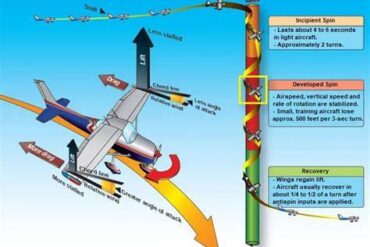
Angle of Attack – The angle between a fixed line on the wing and the direction the air is moving toward it.
Angle of Incidence – The angle between a line on the wing and the plane’s main body line from nose to tail.
Anhedral – When the wings angle downward from the horizontal plane of the aircraft.
Annual Inspection – A full aircraft check that must be done once every 12 calendar months.
A&P (Airframe and Powerplant Mechanic) – A certified aircraft mechanic trained to work on both the airframe and the engine systems of an aircraft.
Approach – This is the phase of flight when the pilot prepares to land. There are different types of approaches depending on whether the pilot is using visual flight rules (VFR) or instrument flight rules (IFR).
Apron – The paved section of an airport where planes park, refuel, load cargo, and allow passengers to board or exit.
ATC (Air Traffic Control) – A service based on the ground that helps guide and manage aircraft during takeoff, landing, and flight through designated airspace. Epic Flight Academy’s local ATC is KEVB.
ATIS (Automatic Terminal Information Service) – A nonstop broadcast of updated airport information. It’s available to pilots near certain airports and helps manage traffic, especially at busy locations.
Avionics Master Switch – A switch that controls the electrical power to all of the aircraft’s communication and navigation systems.
AWIS (Aviation Weather Information Service) – A service that provides real-time weather updates for flight planning and safety.
B
Base Leg – Part of an aircraft’s landing pattern. It’s the stretch flown at a right angle to the runway, heading toward the final turn for landing.
Baseline – The starting value or reference point used for comparison or measurement.
Best Lift Over Drag Ratio (L/D Max) – The point where an airfoil creates the most lift for the least drag. It’s a key factor in efficient flight.
Blade Angle – The angle between a propeller blade’s reference line and a flat plane at a right angle to its rotation.
Bleed Air – Hot, high-pressure air taken from the engine’s compressor stage. It’s used for systems like cabin pressurization and de-icing.
C
Cabin Crew – The team onboard responsible for passenger comfort and safety. This usually includes the flight attendants.
Calibrated Airspeed – The aircraft’s indicated airspeed, corrected for errors caused by the position of sensors and instrument calibration.
Camber – The curve or bulge on the top and bottom surfaces of a wing. It affects how much lift the wing produces.
CAVU (Ceiling and Visibility Unlimited) – A term for great flying weather: at least 10 miles of visibility and a cloud ceiling higher than 10,000 feet.
Cargo – Goods or freight that are transported by aircraft.
Ceiling – The height of the lowest layer of clouds or obstruction that covers more than half the sky, not counting thin or scattered clouds.
Center of Gravity (CG) – The spot on the aircraft where all weight is balanced. It’s important for safe and stable flight.
Charter – A flight arrangement where a person or company rents the entire aircraft rather than buying individual seats.
Checkride – The FAA’s name for the final flight test. Pilots must pass a checkride to earn new certificates or ratings.
Chord Line – An imaginary straight line from the front edge (leading edge) to the back edge (trailing edge) of a wing or airfoil.
Clearance – Permission from ATC that allows a pilot to perform specific actions in controlled airspace. This helps prevent mid-air conflicts.
Climb – The act of flying higher by increasing altitude. Usually done to reach a cruising level or avoid weather.
Cockpit – The front section of the aircraft where the pilot and co-pilot sit. It holds all the flight instruments and controls.
CofA (Certificate of Airworthiness) – An official document confirming that the aircraft meets safety and performance standards.
Common Traffic Advisory Frequency (CTAF) – A radio frequency used by pilots to talk to each other at airports that don’t have an active control tower.
Commuter – A type of aircraft limited to propeller-driven, multi-engine planes. These carry 19 or fewer passengers and weigh less than 19,000 pounds. Maneuvers are limited to normal operations, stalls (not whip stalls), and turns of up to 60 degrees.
Constant-Speed Propeller – A propeller that adjusts its blade angle automatically to keep engine RPM steady, even as flying conditions change.
Contrail – A visible line of condensation that forms behind a jet due to hot engine exhaust mixing with cold air at high altitudes.
Controlled Airspace – An area where aircraft must follow instructions and rules from ATC to ensure organized and safe flight operations.
Course Deviation Indicator (CDI) – A cockpit instrument that helps pilots stay on course. If the plane drifts left or right of the planned path, the needle shifts to show how far off course they are.
Cross-Country Flight (XC) – A flight that involves navigating and landing at an airport other than where you took off. For a private pilot license (PPL), the FAA requires three full-stop landings at different airports during cross-country training. It also requires detailed flight planning and navigation.
Crosswind – A wind that blows at an angle, typically perpendicular to the aircraft’s course or runway. Crosswind conditions can make takeoffs and landings more challenging.
D
DA (Density Altitude) – The altitude relative to standard atmospheric conditions at which the aircraft feels like it’s flying. It adjusts pressure altitude based on non-standard temperature and affects aircraft performance, especially on hot or high-elevation days.
Descent – The controlled reduction in altitude, typically used during the approach to landing or when changing cruising levels.
Distance Measuring Equipment (DME) – A type of radio navigation tool that tells pilots how far their aircraft is from a specific ground-based station.
Distress – A recognized emergency signal that indicates immediate danger. It means the aircraft or crew needs urgent help, such as during an engine failure or fire.
DME (Designated Mechanic Examiner) – A certified individual authorized by the FAA to test and issue mechanic certificates to applicants.
Dogfight – A term for a close-range aerial battle between fighter planes. These were a common combat tactic in wars from World War I through the early 1990s.
Downwind Leg – The part of an airport traffic pattern where the aircraft flies parallel to the landing runway but in the opposite direction. It’s followed by the base and final approach legs.
Drag – The aerodynamic force that acts opposite to an aircraft’s motion through the air. It slows the aircraft and must be overcome with thrust.
DUATS (Direct User Access Terminal Service) – A now-retired FAA service that allowed pilots to access weather briefings and file flight plans electronically.
E
EASA (European Aviation Safety Agency) – The regulatory agency that oversees aviation safety across the European Union. It’s the EU’s counterpart to the FAA.
Elevator – The movable control surfaces on the tail that control pitch, helping the aircraft climb or descend.
Empennage – The rear section of the aircraft, also called the tail assembly. It includes the stabilizer, rudder, and elevators, providing stability and control in flight.
ETA (Estimated Time of Arrival) – The predicted time the aircraft will arrive at a destination, based on local time.
ETD (Estimated Time of Departure) – The planned time at which the aircraft will begin its flight.
ETE (Estimated Time en Route) – The total estimated flight time between departure and arrival, not including delays on the ground.
F
FAA (Federal Aviation Administration) – The U.S. government body responsible for regulating all aspects of civil aviation, from pilot licensing to airspace management.
FARs (Federal Aviation Regulations) – The rules and standards set by the FAA to ensure safety in all aspects of U.S. civil aviation.
FBO (Fixed-Base Operator) – A company or service provider based at an airport offering a range of services to pilots, such as fuel, maintenance, hangars, and aircraft rentals.
Feathering – Adjusting the pitch of propeller blades so they align with the airflow. This reduces drag in the event of engine failure, especially in multi-engine aircraft.
Ferry Flight – A non-revenue flight used to deliver an aircraft for maintenance, repositioning, or delivery to a new owner or operator.
Final Approach – The last leg of the landing process. The aircraft lines up with the runway and begins its descent for landing.
Firewall – A heat-resistant barrier between the engine compartment and other parts of the aircraft. It protects occupants and critical systems in case of engine fire.
“Five by five” – A radio communication term meaning the signal is both loud and clear, rated 5 out of 5 for strength and clarity.
Fixed Base Operator (FBO) – See FBO above. Sometimes repeated in different contexts, but the definition remains the same.
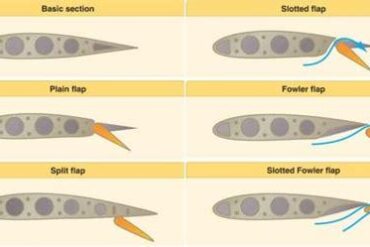
Flaps – Hinged panels on the wing edges that increase lift or drag depending on their position. They help during takeoff and landing by allowing slower speeds.
Flare – A maneuver during landing where the pilot gently raises the nose of the aircraft to reduce descent rate before touchdown.
Flight Bag – A specialized bag used by pilots to carry necessary items like charts, checklists, headsets, kneeboards, and flight logs.
Flight Computer – A manual or electronic tool (like the E6B) used by pilots to make calculations for navigation, wind correction, fuel consumption, and more.
Flight Deck – Another name for the cockpit. It’s where the pilot and co-pilot control the aircraft and monitor all flight systems.
Flight Envelope – Also called the aircraft’s performance limits. It defines the operational boundaries like airspeed, altitude, and load factor the plane can safely fly within.
Flight Plan – A formal record of a flight’s intended route, altitude, speed, and timing. It’s submitted to air traffic services for monitoring and coordination.
Flying Dirty – Flying with high-drag surfaces like flaps and landing gear extended. Often used in approach and landing to reduce speed.
F/O (First Officer) – Also known as the co-pilot, the First Officer is the second in command on the flight deck. They assist the captain with flying duties, navigation, and communication.
Fog – A dense collection of water droplets suspended near the ground that reduces visibility. It’s considered a hazard during takeoff, landing, and taxiing.
FSDO (Flight Standards District Office) – A regional FAA office that provides oversight, certification, and safety guidance to aviation operators within its district.
FSS (Flight Service Station) – A facility that offers weather briefings, flight plan processing, and other services to pilots, especially those flying under Visual Flight Rules (VFR).
Fuselage – The central body of the aircraft that holds the crew, passengers, cargo, and other components. It connects the wings, tail, and nose section.
G
General Aviation (GA) – Refers to all civil aviation operations except scheduled airline and military flights. This includes private flying, flight training, air ambulance services, and agricultural aviation.
Glass Cockpit – A flight deck equipped with electronic displays (typically LCD or LED) instead of traditional analog dials. It improves situational awareness by integrating multiple systems onto digital screens.
“George” – A lighthearted nickname that pilots often use for the autopilot system.
Go-Around – When a landing attempt is aborted, and the aircraft climbs away to rejoin the traffic pattern for another approach. This can happen due to unsafe conditions, runway obstruction, or unstable approach.
Gross Weight – The total weight of an aircraft at any given moment, including passengers, cargo, fuel, and equipment.
Ground Effect – A phenomenon where lift increases and drag decreases when an aircraft flies close to the ground, usually within a wingspan’s height. It’s most noticeable during takeoff and landing.
Groundspeed – The actual horizontal speed of the aircraft over the Earth’s surface. It is affected by wind direction and velocity.
H
Hand-off – A procedure where air traffic control (ATC) transfers radar and communication responsibility for an aircraft to another controller as it moves between sectors or facilities.
Handshake – A digital exchange between two systems—in aviation, often between the aircraft’s onboard systems and a satellite during initial contact. This process is critical in systems like satellite communication (SATCOM) and aircraft tracking.
Hangar – A structure used to house aircraft for storage, maintenance, or assembly.
Heavy – An ATC designation for aircraft with a maximum takeoff weight of 300,000 pounds (136 metric tonnes) or more. These aircraft require greater separation due to wake turbulence.
Horizontal Stabilizer – A tail surface that maintains the aircraft’s pitch stability by counteracting vertical movement. It usually supports the elevator.
Hypoxia – A condition where the body is deprived of sufficient oxygen. At high altitudes, pilots may experience dizziness, confusion, or even unconsciousness without supplemental oxygen.
I
ICAO (International Civil Aviation Organization) – A specialized UN agency that sets global aviation standards to ensure safe and efficient international flight operations.
ILS (Instrument Landing System) – A ground-based system that provides precise lateral and vertical guidance to aircraft on final approach, especially useful in low-visibility conditions.
Instrument Flight Rules (IFR) – Regulations that govern aircraft flight when pilots cannot rely on visual references. Flights operate using instruments and navigation systems.
Instrument Landing System (ILS) – (See above) – Provides radio-based navigational aid to guide aircraft in low visibility.
Indicated Airspeed (IAS) – The airspeed read directly from the aircraft’s airspeed indicator, based on pressure readings. It doesn’t account for external factors like air density or wind.
Instrument Meteorological Conditions (IMC) – Weather conditions that require pilots to fly under IFR due to limited visibility caused by clouds, fog, or precipitation.
J
Jet – An aircraft powered by jet engines, which propel the aircraft by expelling compressed air at high velocity.
Joystick – A type of flight control stick used to operate an aircraft’s primary control surfaces. In some modern aircraft, the joystick replaces the traditional yoke.
K
KCAS (Knots Calibrated Airspeed) – Indicated airspeed corrected for instrument error and position error. It provides a more accurate measure of performance than IAS.
KIAS (Knots Indicated Airspeed) – The speed shown on the airspeed indicator, measured in knots (nautical miles per hour). It is not corrected for temperature or altitude.
Kneeboard – A flat board strapped to a pilot’s leg, used as a writing surface to hold checklists, notes, navigation logs, or an iPad.
Knot – A unit of speed used in aviation and maritime travel. One knot equals one nautical mile per hour, or approximately 1.15 statute miles per hour.
KTAS (Knots True Airspeed) – The aircraft’s speed relative to the surrounding air mass, adjusted for altitude and temperature. It’s essential for accurate navigation and flight planning.
L
Laminar-Flow Airfoil – A specially designed airfoil that encourages smooth (laminar) airflow over the wing surface to minimize drag and enhance efficiency.
Lift – One of the four fundamental aerodynamic forces. It acts perpendicular to the oncoming airflow and supports the aircraft in flight by counteracting its weight.
Lighting – Aircraft lighting includes interior lights (for visibility and instruments) and exterior lights (navigation, anti-collision, landing, and taxi lights). These help pilots see and be seen, especially in low-light conditions.
Light Sport Aircraft (LSA) – A category of lightweight aircraft intended for sport and recreational flying. These are often confused with ultralights, but an LSA requires the pilot to hold at least a Sport Pilot certificate.
Load Factor (g) – A measure of the aerodynamic stress on an aircraft, expressed in terms of gravity (g). For example, a 2g load means the aircraft and occupants feel twice the force of gravity.
Longitudinal Axis – An imaginary line running horizontally from the aircraft’s nose to its tail. Movement around this axis is known as roll.
M
Mach – The ratio of an aircraft’s speed to the speed of sound in the surrounding medium. For example, Mach 1 equals the speed of sound.
Magnetic Compass – A basic navigation instrument that shows the aircraft’s heading relative to the Earth’s magnetic field.
Magnetic Deviation – The error caused by internal aircraft magnetic fields affecting the accuracy of the magnetic compass.
Magnetic North – The point on Earth’s surface where a magnetic compass needle points. It differs from true (geographic) North.
Magneto – A mechanical component of an aircraft engine that generates high voltage for spark plugs, allowing the engine to run independently of the electrical system.
Mean Sea Level (MSL) – A standardized reference point for altitude measurements, based on the average sea level of the Earth’s oceans.
METAR – A coded aviation weather report issued at regular intervals, containing wind, visibility, temperature, cloud cover, and other relevant flight conditions.
Morse Code – A system of dots and dashes still used to identify non-directional beacons (NDBs) and VOR stations. Pilots learn this code to verify radio navigation aids.
MSL – (See above: Mean Sea Level)
MTOW (Maximum Takeoff Weight) – The maximum weight at which a pilot is allowed to attempt takeoff, as defined by the aircraft manufacturer.
N
Narrow-Body Aircraft – A smaller passenger aircraft with a single aisle. These planes typically carry between 4 and 300 passengers.
Naval – Refers to aircraft operations associated with naval or military maritime forces.
NDB (Non-Directional Beacon) – A ground-based radio transmitter used for navigation. Aircraft equipped with Automatic Direction Finders (ADF) can use NDBs for course guidance.
NOTAMs (Notices to Airmen) – Real-time alerts published to inform pilots of potential hazards, changes, or restrictions affecting flight operations.
O
OAT (Outside Air Temperature) – The temperature of the air surrounding the aircraft, critical for calculating performance and avoiding icing conditions.
Operating Limitations – Restrictions defined by aircraft manufacturers, including weight limits, speed envelopes, and environmental conditions for safe operation.
Oshkosh – Refers to the EAA AirVenture Oshkosh event, the world’s largest annual air show and aviation gathering, held every July in Oshkosh, Wisconsin.
Overshoot – A landing in which the aircraft touches down beyond the intended portion of the runway, sometimes requiring a go-around or rollout into a safety area.
P
Payload – The total weight carried by an aircraft, including passengers, cargo, and baggage, excluding fuel and crew.
Pilot in Command (PIC) – The individual legally responsible for the operation and safety of the aircraft during the flight.
PIREP (Pilot Report) – A weather report given by a pilot during or after a flight describing actual atmospheric conditions encountered.
Pitch – The up or down movement of an aircraft’s nose, controlled along the lateral axis. It is regulated by the elevator on the tail.
Pitot Tube – A device on the exterior of an aircraft that measures dynamic air pressure for calculating airspeed.
POH (Pilot’s Operating Handbook) – An official document provided by the manufacturer containing performance data, procedures, limitations, and safety guidance for a specific aircraft.
Primary Flight Display (PFD) – A digital screen in modern aircraft that combines key flight data such as airspeed, attitude, altitude, and heading.
Propeller – A rotating airfoil driven by an aircraft engine, used to produce thrust for forward motion.
Q
QAR (Quick Access Recorder) – A type of flight data recorder that allows for fast retrieval of information via USB or wireless networks. Often used for operational monitoring and troubleshooting.
Quadraplane – An aircraft configuration with four main lifting surfaces or wings, typically stacked in two pairs vertically. This design is extremely rare.
R
Roll – The rotation of an aircraft about its longitudinal axis (nose to tail), controlled by the ailerons.
Rudder – A control surface attached to the vertical stabilizer that manages yaw, or side-to-side motion, of the aircraft’s nose.
Runway (RWY) – A defined strip of land at an airport designated for aircraft takeoff and landing.
Runway End Safety Area (RESA) – An area beyond the end of the runway designed to reduce the risk of damage if an aircraft overruns or undershoots the runway.
S
Second in Command (SIC) – The pilot who assists the PIC and may assume control in the event the PIC is unable to continue.
Seniority – A ranking based on length of service that affects pilot scheduling, promotion, and benefits within airlines.
Short Field – A runway that is shorter than standard lengths, requiring specific procedures to maximize performance during takeoff and landing.
Sideslip – A flight maneuver or unintentional condition where the aircraft slides sideways relative to its direction of motion, often due to wind or control input.
Skid – A sideways, outward movement of an aircraft that occurs during an uncoordinated, shallow turn when the aircraft’s tail moves outward due to excessive rudder input.
Slip – The opposite of a skid; a sideways, inward movement resulting from a steep turn or insufficient rudder, often used to lose altitude without gaining airspeed.
Soft Field – A non-paved runway made of materials such as dirt, grass, or gravel. Aircraft operations on soft fields require special techniques to avoid getting stuck or damaged.
Squawk – A four-digit code entered into an aircraft’s transponder to help air traffic control (ATC) identify and monitor the aircraft on radar.
Stability – The aircraft’s natural ability to return to a steady flight path after a disturbance. Types include static, dynamic, longitudinal, lateral, and directional stability.
Stall – A flight condition in which lift rapidly decreases due to the wing exceeding its critical angle of attack. This can lead to a loss of control if not corrected.
Standard Rate Turn – A consistent turn rate of 3 degrees per second, resulting in a full 360-degree turn in two minutes.
Straight-and-Level Flight – A condition of unaccelerated, coordinated flight where the aircraft maintains constant heading and altitude.
T
Tail – The rear structure of an aircraft, typically consisting of a horizontal stabilizer and vertical fin, providing pitch and yaw stability.
Tarmac – The paved surface at an airport used for parking, fueling, loading, and unloading aircraft. Commonly referred to as the apron or ramp.
Threshold – The beginning portion of a runway designated for landing, usually marked by white lines. It indicates where aircraft should touch down.
Throttle – A lever or control that regulates engine power by adjusting the flow of fuel or air. It influences thrust and airspeed.
Thrust – The forward-moving force generated by aircraft engines or propellers, opposing drag and enabling flight.
Torque – A rotational force produced by engines. In aircraft, torque effects are often countered by design features like rudder or propeller rotation direction.
Touch-and-Go – A flight training maneuver where an aircraft lands and then takes off again without coming to a full stop on the runway.
Transponder – A device onboard an aircraft that transmits a code (“squawk”) to ATC radar systems for aircraft identification and tracking.
Trim Tab – A small surface attached to a larger control surface (such as the elevator) that helps maintain flight attitudes with minimal pilot input.
True Airspeed (TAS) – The actual speed of an aircraft through the air, corrected for altitude and temperature effects.
True Altitude – The vertical distance of an aircraft above mean sea level (MSL), as opposed to above ground level (AGL).
Turbulence – Irregular or violent motion of the air, caused by factors like jet streams, weather fronts, or terrain, often resulting in sudden altitude or attitude changes.
TWR (Tower) – The control tower at an airport responsible for managing ground and air traffic near the airport, especially during takeoffs and landings.
TWY (Taxiway) – A designated path on an airport that connects runways with aprons, hangars, and terminals for ground movement of aircraft.
U
Ultralight Aircraft – A lightweight aircraft regulated under FAA Part 103 that does not require a pilot license. It typically accommodates only one person and has strict weight and speed limits.
Upwind Leg – A flight path segment in a traffic pattern that runs parallel and in the same direction as the runway where landing will occur.
Urgent – A level of radio call priority just below Distress, indicating a safety concern that requires prompt attention but not immediate emergency action.
Useful Load – The total allowable weight that can be added to the aircraft, including fuel, passengers, baggage, and cargo, excluding the empty aircraft weight.
UTC (Universal Time Coordinated) – The global time standard used in aviation for flight planning and operations. Also referred to as “Zulu” time.
V
V Speed – Standardized airspeeds used in aviation to indicate critical operational limits (e.g., Vne = never exceed speed, Vr = rotation speed). These vary by aircraft type and configuration.
Vertical Speed Indicator (VSI) – An instrument that shows the rate of climb or descent in feet per minute (fpm).
Very High Frequency (VHF) Omni-Directional Range (VOR) – A ground-based radio navigation system providing bearing information to aircraft, essential for enroute navigation.
Visual Flight Rules (VFR) – A set of aviation regulations allowing pilots to fly based on visual references rather than relying solely on instruments.
VFR On Top – A flight condition where the aircraft is operating under IFR rules but flying in VFR conditions above the cloud layer.
Visual Meteorological Conditions (VMC) – Weather conditions where visibility and cloud clearance are sufficient for pilots to fly under VFR.
VOR – See above; a system that provides pilots with azimuth information using a VHF radio signal.
W
Weight-Shift Control – A method used in hang gliders and ultralight trikes where pilots shift their body or move a control bar to maneuver the aircraft.
Wide-Body Aircraft – A large aircraft with two interior aisles, typically featuring a fuselage diameter of 16 to 20 feet. These aircraft are commonly used for long-haul international flights and can accommodate 200 to 850 passengers depending on configuration.
Wind Shear – A sudden and sharp change in wind speed or direction, occurring either vertically or horizontally. It poses significant risks during takeoff and landing.
Wx – An aviation abbreviation for “weather.”
X
XC (Cross-Country) – A flight that extends beyond the local flying area, often used in training to meet certification requirements.
Y
Yaw – The movement of an aircraft about its vertical axis, where the nose moves side-to-side. Controlled by the rudder, yaw affects directional control during flight.
Yoke – A primary flight control device resembling a steering wheel. Pilots use the yoke to control pitch (nose up/down) and roll (banking left/right).
Z
Zulu Time – Another term for UTC (Coordinated Universal Time). It is the global aviation standard for filing flight plans and logging operations. Zulu Time aligns with Greenwich Mean Time (GMT).