In the intricate world of aviation, where precision of communication can be the difference between seamless operations and potential hazards, every phrase and procedural callout holds weight. Recently, a question emerged from a private pilot license (PPL) checkride scenario: does the term “Flaps Clean” make sense as a valid cockpit callout, or should the standard “Flaps Up” be used instead? This inquiry prompts a broader exploration of terminology, operational clarity, and adherence to industry standards.
The situation unfolded when a candidate, after completing the takeoff phase, declared “Flaps Clean” to indicate the aircraft’s transition to a configuration without flap deployment. The designated pilot examiner (DPE) swiftly corrected the candidate, stating that the standard call is “Flaps Up.” This correction was not merely semantic; it reflected established norms within both general aviation and commercial flight operations.
Understanding ‘Clean’ in Aviation Contexts
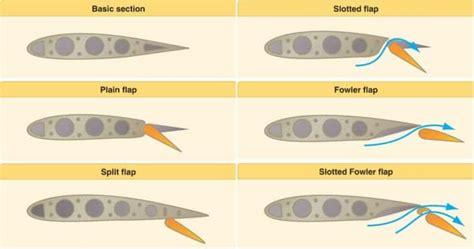
The term “clean configuration” holds a specific meaning in aviation circles. It generally refers to an aircraft state where all lift augmentation devices—flaps, slats, speed brakes—are fully retracted, with the landing gear stowed. In this configuration, the aircraft achieves its most aerodynamically efficient profile, minimizing drag and optimizing performance for cruise or climb.
However, while the term “clean” is universally recognized in engineering and operations manuals, it is not commonly deployed as a cockpit callout in standard phraseology, especially within the general aviation sector. Airlines, corporate operators, and training organizations emphasize standardized phraseology to maintain clarity, especially in multi-crew environments where ambiguity can introduce safety risks.
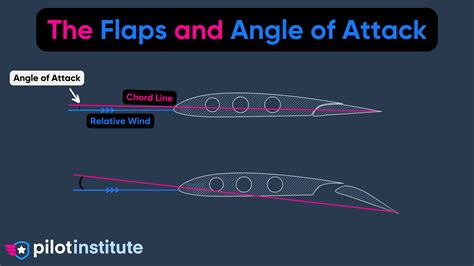
In general aviation, pilots are typically trained to use “Flaps Up” or “Flaps 0” as the verbal cue confirming that flaps have been retracted after takeoff or during a go-around. This phrase is clear, direct, and aligned with checklists and manufacturer procedures. Introducing alternative phrasing like “Flaps Clean” can inadvertently disrupt the shared mental model between pilots, examiners, or instructors.
Industry Standards Across Aircraft Types
When we examine procedural callouts across different aircraft categories, the distinction becomes even clearer. For example:
- Boeing procedures universally employ “Flaps Up” to denote flap retraction.
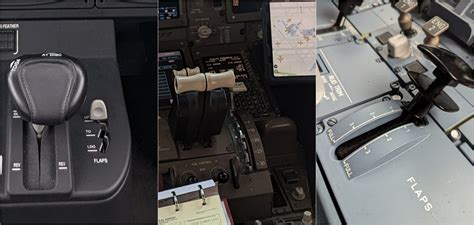
- Airbus operations specify “Flaps 0” or “Slats Retracted” depending on phase and configuration.
- Some corporate jet operators or type-rated pilots may refer to “clean wing” or even specific FMS (Flight Management System) indications like “SF-zero” (slat/flap zero), though these terms remain bounded by the operator’s standard operating procedures.
The key takeaway is that each operator and aircraft type prescribes its own lexicon, meticulously designed to align with checklists, automation cues, and crew resource management protocols. Deviating from these standards—even with technically accurate language like “clean”—risks misinterpretation, especially under pressure or abnormal conditions.
Why ‘Flaps Clean’ Feels Unfamiliar in the Cockpit
The discomfort with the term “Flaps Clean” arises not from a misunderstanding of its meaning but from its nonstandard placement in verbal communication. Among seasoned pilots, the phrase might evoke imagery or humor rather than functional clarity. In online aviation forums and instructor anecdotes, playful quips like “Flaps cleaner than a baby’s butthole” or “clean as a whistle” reveal how the term belongs more to informal banter than formal cockpit exchanges.

The FAA’s Airman Certification Standards and most PPL syllabi emphasize adherence to recognized callouts. The reason is simple: standardization breeds safety. Introducing idiosyncratic or novel phrasing—however logical or well-intentioned—can seed confusion during critical phases of flight. Imagine a multi-crew scenario where one pilot calls “Flaps Clean” and the other momentarily hesitates, parsing whether additional checks are implied beyond flap retraction.
The Importance of Standard Phraseology in Training and Beyond
We must remember that pilot training is not merely about learning how to fly the aircraft—it’s about inculcating habits and communication patterns that seamlessly transfer across different platforms, instructors, and operational environments. Even in single-pilot operations, the language we use in the cockpit reflects an alignment with broader aviation culture.
While “Flaps Clean” might convey the correct aerodynamic state, it introduces ambiguity by departing from a widely recognized callout. In aviation, clarity must supersede creativity. This is why examiners, instructors, and check airmen stress phraseology that aligns with manufacturer checklists, FAA guidance, and ICAO standards.
Interestingly, the debate over “Flaps Clean” versus “Flaps Up” also highlights the rich subculture of aviation humor and informal communication. Pilots love to riff off technical terminology, crafting memorable or humorous variations that may stick in training environments but fade in formal settings. Yet beneath this humor lies a fundamental truth: cockpit communication works best when it is simple, standardized, and universally understood.
Operational Context Shapes Terminology
It’s worth noting that in larger aircraft or specific operational contexts, “clean” can indeed encompass more than just flaps. For example, a captain might brief the crew that the aircraft will maintain a “clean configuration” until a certain waypoint—implicitly including gear, flaps, and slats. In these cases, “clean” functions as a broader operational descriptor rather than a discrete configuration callout.
However, in the scenario of a PPL checkride in a single-engine piston aircraft, such nuanced use of “clean” is unnecessary and potentially confusing. The examiner expects confirmation that flaps have been retracted—no more, no less. Deviating from “Flaps Up” complicates a moment that demands simplicity.
Final Analysis: Stick to the Standard
In conclusion, while “Flaps Clean” may be technically interpretable as correct, it is operationally nonstandard and should be avoided in favor of established callouts like “Flaps Up” or “Flaps 0.” Adhering to standard phraseology fosters a cockpit environment of mutual understanding, reduces cognitive load, and aligns with both training objectives and regulatory expectations.
For student pilots, flight instructors, and seasoned aviators alike, this discussion serves as a reminder that words matter in the cockpit. They are tools for safety, clarity, and professionalism. As tempting as it might be to innovate or personalize callouts, aviation’s long history of procedural refinement shows that there’s wisdom in sticking to the script.
By reinforcing standard phraseology at every phase—from initial training through recurrent checks—we contribute to an aviation culture where communication is not only effective but reliably so, under all conditions. And in the skies, that reliability is non-negotiable.