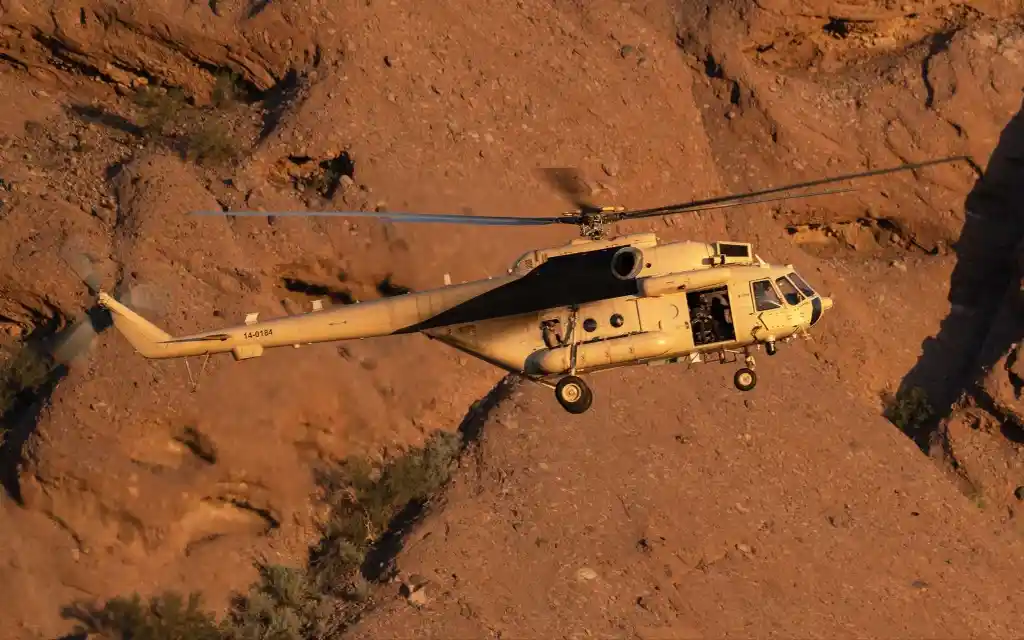
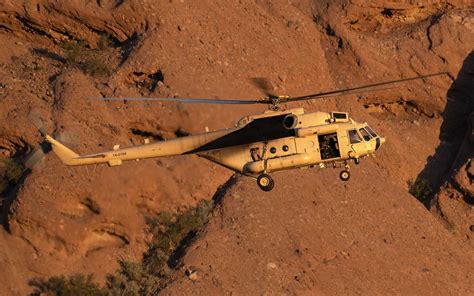
A Russian-built Mi-171E helicopter linked to the U.S. Army Aviation Technology Office (ATO) was observed returning from a local flight near Phoenix, Arizona, on January 31, 2026, drawing renewed attention to one of the most discreet aviation elements within the U.S. military structure. The aircraft, carrying serial number 14-0184, was photographed during its approach, offering a rare public glimpse into a fleet typically associated with sensitive missions and low-visibility operational profiles.
The sighting was notable not because foreign aircraft operate in U.S. airspace—that is routine under controlled circumstances—but because this particular airframe is tied to a unit historically tasked with missions where attribution, visibility, and overt U.S. military signatures are intentionally minimized. The Aviation Technology Office operates aircraft that diverge sharply from standard Army inventories, and the Mi-171E is among the most distinctive examples of that strategy.
The Mi-171E observed near Phoenix is not a captured relic nor a museum specimen. It is an actively maintained, operational platform integrated into a specialized fleet used for evaluation, discreet transport missions, and support to sensitive operations, including those linked to Joint Special Operations Command (JSOC) tasking. The presence of such an aircraft within the continental United States reflects ongoing training, testing, or currency flights rather than ad hoc activity.
The Aviation Technology Office and Its Covert Legacy
The Aviation Technology Office traces its lineage back to March 2, 1981, when a covert Army aviation element informally known as SEASPRAY was established. Operating under the cover designation “1st Rotary Wing Test Activity,” the unit was designed to provide aviation support that could not be easily traced to conventional U.S. military forces. During the early 1980s, it flew unmarked Hughes 500D helicopters and later expanded into fixed-wing platforms such as Cessna aircraft and Beechcraft King Air turboprops, often structured through civilian-style registrations.
Throughout the decade, the unit supported missions connected to U.S. interests in Central America. By the late 1980s, SEASPRAY was absorbed into Delta Force as its aviation component, commonly referred to as E Squadron. In the 1990s, it reemerged under the designation Flight Concepts Division, eventually adopting the Aviation Technology Office name by the 2010s. Administratively, the office remains linked to the Army Aviation Flight Test Directorate at Fort Eustis, Virginia, yet its operational posture is markedly distinct from standard Army aviation brigades.
ATO’s aircraft inventory has historically included Mil Mi-17 and Mi-171 helicopters, Bell 407 and Bell 429 light helicopters, MD-500 series aircraft, and fixed-wing turboprops. This diversity is not accidental. It allows crews to operate aircraft commonly seen in foreign military and paramilitary fleets, thereby supporting missions where the presence of a U.S.-marked UH-60 Black Hawk would be politically sensitive or operationally counterproductive.
Why a Russian Helicopter Matters
The decision to operate a Russian-designed Mi-171E reflects strategic practicality rather than symbolism. The Mi-8/Mi-17 family is one of the most widely produced helicopter series in history, with over 12,000 units manufactured and delivered to more than 100 countries. For special operations planners, familiarity with this platform has tangible advantages.
In environments where Mi-17 variants are commonplace—from Central Asia to Africa and Latin America—an aircraft of this type does not attract the same scrutiny as a distinctly American rotorcraft. The concept of plausible deniability depends not on invisibility but on ambiguity. An Mi-171E landing at a remote strip blends into a global aviation landscape where Russian-built helicopters are routine assets.
The aircraft’s configuration also supports versatile mission profiles. ATO aircraft are often configured with neutral markings or adapted equipment packages that align with host-nation aviation environments. This reduces the overt footprint of U.S. involvement while maintaining operational capability.
Technical Profile of the Mi-171E Helicopter
The Mi-171E is an export-designated variant of the Mi-8AMT, part of the broader Mi-8/Mi-17 family developed by the Mil design bureau. First flown in 1991 and entering service in 1992, the type has been produced primarily at the Ulan-Ude Aviation Plant, with related variants built at the Kazan Helicopter Plant.
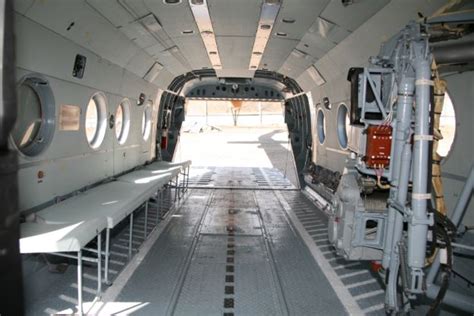
Structurally, the Mi-171E retains the classic Mi-8 airframe configuration: a conventional fuselage with a rear cargo compartment, large side doors, and a fixed landing gear arrangement suited to operations from unprepared surfaces. Its design prioritizes durability and adaptability over aerodynamic refinement.
Power is provided by twin Klimov TV3-117MT turboshaft engines, with later configurations incorporating the more powerful VK-2500 engines. In VK-2500-equipped versions, output can reach 2,400 horsepower in takeoff mode and up to 2,700 horsepower for limited-duration emergency power, significantly enhancing performance in hot-and-high conditions. These performance margins are critical for operations in mountainous terrain or desert climates, where density altitude degrades lift capability.
The helicopter features a five-bladed main rotor system and a tail rotor, with upgraded variants incorporating composite rotor blades and, in some cases, an X-shaped tail rotor configuration designed to improve control authority and reduce acoustic signature. An onboard auxiliary power unit (APU) enables autonomous engine starts and onboard electrical generation, including operations at elevations up to 6,000 meters.
Payload, Capacity, and Mission Flexibility
In its standard transport configuration, the Mi-171E can carry up to 27 passengers on foldable seats. For cargo operations, it is rated to transport up to 4,000 kilograms internally within the cabin or via an external sling, with certain upgrade packages increasing external sling capacity to 5,000 kilograms. This flexibility supports troop transport, resupply, medical evacuation, and government utility missions.
The cabin’s dimensions and rear clamshell-style access simplify loading procedures, particularly in austere environments. Fixed landing gear and robust structural elements allow operations from semi-prepared landing zones, including remote desert strips or improvised forward sites. For a unit like ATO, which may conduct short-duration deployments with minimal ground support, these characteristics are operationally significant.
Operational Context and Strategic Implications
The Mi-171E’s presence in Arizona likely reflects training, currency flights, system evaluation, or preparation for future deployments. ATO’s mission set combines direct operational aviation support with systematic evaluation of non-standard aircraft and systems. This includes testing avionics, communications, and navigation equipment not typically found in standard Army fleets.
Such evaluations are not abstract exercises. They inform readiness for missions in which U.S. forces must operate within aviation ecosystems dominated by foreign-built platforms. Performance in austere landing zones, long-range navigation profiles, and extreme environmental conditions is central to that assessment.
Historically, ATO and its predecessor units have been associated with providing aviation support to elite U.S. units operating under national-level tasking. While specific operations remain undisclosed, repeated linkages to Delta Force and broader JSOC-directed missions indicate a sustained role as an aviation enabler for small-unit activities where discretion is paramount.
The Phoenix sighting does not signal an abrupt policy shift or new procurement trend. Instead, it underscores a long-standing capability embedded within U.S. Army structures: the deliberate maintenance of aircraft that do not outwardly resemble U.S. military platforms. In a global security environment where perception can be as consequential as firepower, the ability to deploy a helicopter that appears entirely routine in many regions carries strategic weight.
The Mi-171E, serial 14-0184, is therefore less an anomaly than a visible fragment of a largely invisible architecture. Its brief appearance over Arizona airspace offers insight into a specialized aviation capability built over decades—one that blends technical evaluation, operational support, and strategic ambiguity into a single rotorcraft silhouette.