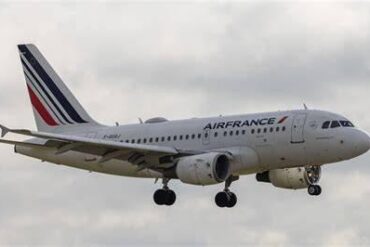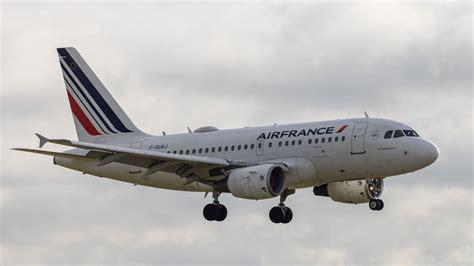
The Airbus A318 is approaching a historic moment in commercial aviation. Air France has extended the scheduled operation of its remaining A318 fleet until November 8, giving passengers and aviation enthusiasts a final opportunity to fly the smallest member of the A320 family in regular airline service. Unless the schedule changes again, that date will mark the end of scheduled passenger operations for the type.
The milestone is particularly significant because the A318 entered service only in 2003. Yet despite being part of Airbus’ most successful narrowbody family, it is now poised to become the first Airbus jetliner model to disappear entirely from scheduled passenger service. Older Airbus designs, including the A300 and A310, can still be found in limited passenger operations, particularly in Iran, while A340s continue to serve selected airlines.
The A318’s retirement is therefore less about age than economics. The aircraft was conceived as a compact solution for airlines needing fewer seats while retaining A320-family commonality. Instead, its relatively high operating costs and limited capacity made it difficult to compete against larger narrowbodies. Its story is one of Airbus’ most interesting commercial experiments—and one that will soon exist primarily in aviation history.
Air France A318 Fleet Enters Its Final Chapter
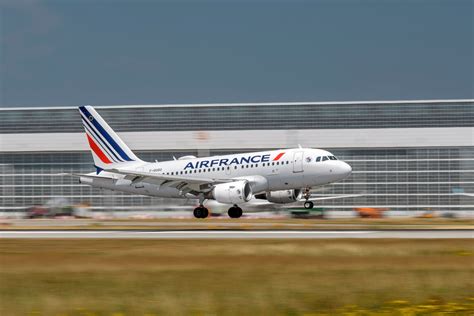
Air France is now the world’s only airline operating the Airbus A318 in scheduled passenger service. The carrier has just four aircraft remaining: F-GUGM, F-GUGN, F-GUGO and F-GUGP. All four were delivered in 2006 and are approaching two decades of service, although the airline’s relationship with the A318 goes back to 2003.
Air France received its first A318, F-GUGA, in October 2003 and became the first European operator of the aircraft. Over the years, the French airline operated 18 A318s, representing more than one-fifth of the 80 aircraft Airbus ultimately delivered. Its willingness to retain the type long after other operators had abandoned it has made Air France central to the A318’s final chapter.
The remaining aircraft are still being used on ordinary commercial routes rather than occasional farewell flights. More than 20 routes are scheduled to receive A318 service before November 8, providing travelers with opportunities to experience the distinctive aircraft while it remains part of the regular timetable.
Those routes include domestic services from Paris to destinations such as Lyon and Nantes, alongside European flights to cities including Lisbon, Copenhagen, Venice and Zagreb. For passengers, the A318 may look like a compact A320, but its short fuselage gives it a noticeably different character.
Why the Airbus A318 Failed to Find a Large Market
The A318 was introduced as the smallest member of the A320 family, offering airlines a way to serve thinner routes without abandoning the operational advantages of the Airbus narrowbody platform. Its commonality with the A319, A320 and A321 was supposed to make the aircraft attractive to existing Airbus operators.
The problem was that shrinking the aircraft did not shrink its economics by the same proportion. The A318 retained much of the structural weight, systems complexity, crew requirements and maintenance burden associated with a larger narrowbody. With space for fewer passengers, those costs had to be distributed across a smaller revenue base.
That became particularly damaging in a market already affected by weakening demand following the September 11 attacks. The A318 program also encountered engine difficulties. The original Pratt & Whitney PW6000 failed to meet its targeted fuel-consumption performance, prompting some customers to reconsider their plans and forcing others to select alternative engines.
One major blow came when American Airlines acquired TWA and canceled TWA’s planned order for 50 A318s. That cancellation removed a potentially important customer and highlighted the fundamental difficulty Airbus faced in selling the aircraft.
The numbers tell the story. Airbus delivered only 80 A318s before production ended in 2013, a tiny figure compared with the more than 20,000 aircraft delivered across the wider A320 family. The aircraft was technically successful, but commercially it occupied a narrow niche that proved difficult to sustain.
The Airbus A220 Explains Air France’s Decision
Air France’s decision to retire the A318 is closely connected to the arrival of the Airbus A220-300. The airline ordered 60 A220-300s to progressively replace both its A318 and A319 fleets, with the first aircraft arriving in September 2021.
The A220 addresses many of the weaknesses that made the A318 difficult to justify. Air France’s A220-300 seats 148 passengers, compared with 131 seats in its A318 configuration. That provides greater capacity without moving into the considerably larger A320 category.
More importantly, the A220 was designed specifically around the economics of the lower-capacity single-aisle market. According to Air France, it consumes 20% less fuel, generates 20% less CO2, and has a 34% smaller noise footprint than the aircraft it replaces. The airline has also stated that the A220 provides a 10% reduction in cost per seat compared with its A318 and A319.
That difference illustrates how aviation technology has moved forward in the two decades since the A318 entered service. The aircraft was intended to make smaller routes economical using an existing platform. The A220 approaches the same problem with a newer airframe, modern engines and a design optimized around efficiency.
British Airways Made the A318 Famous
Although the A318 never achieved major sales success, it became one of the most recognizable Airbus narrowbodies among aviation enthusiasts because of an extraordinary operation by British Airways.
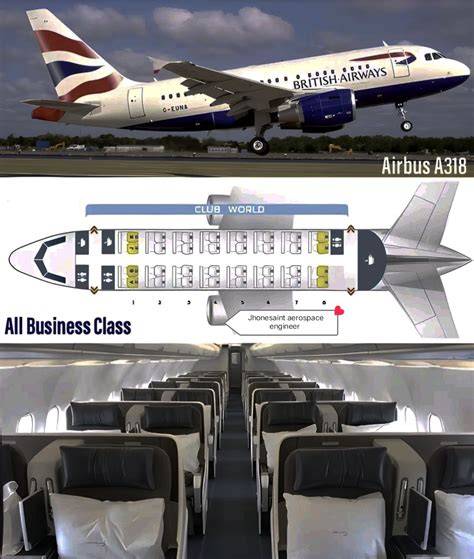
In 2009, British Airways introduced two specially configured A318s on its London City–New York JFK service. The aircraft carried only 32 passengers in lie-flat Club World seats, transforming a small narrowbody into an unusually exclusive transatlantic aircraft.
The route was famous for more than its premium cabin. The A318s operated under the historic BA001 through BA004 flight numbers, numbers previously associated with Concorde. Westbound flights stopped at Shannon Airport in Ireland for refueling and U.S. immigration processing, while eastbound flights could operate nonstop back to London City.
The aircraft also benefited from a specially developed steep-approach capability. London City Airport’s short runway and location among the Docklands required an approach angle of up to 5.5 degrees, significantly steeper than the roughly three-degree approaches common at many airports. Special flight-control modifications and crew training allowed the A318 to handle the demanding profile.
The service ended during the COVID-19 pandemic and never returned. Its disappearance removed the A318’s most distinctive commercial mission and left Air France as the aircraft’s final scheduled operator.
The Final Airbus A318 Flights
The A318’s commercial decline has been gradual. Frontier Airlines operated 11 examples before retiring them in 2013, while LAN Airlines replaced its 15 aircraft with larger A319s. Avianca and Avianca Brasil also moved away from the type, while Mexicana and Avianca Brasil ultimately ceased operations.
TAROM became the second-last scheduled A318 operator when it retired its remaining aircraft in 2024. That left Air France with a unique distinction: it became the final airline keeping the aircraft in regular passenger service.
Now, unless Air France extends its schedule again, the A318’s final scheduled chapter will close on November 8. Small numbers of government and corporate aircraft may continue flying afterward, so the aircraft itself will not immediately disappear from the skies.
But for ordinary paying passengers, the situation is different. The Airbus A318’s scheduled airline career is effectively reaching its end.
Why the A318 Still Matters
The A318 may be remembered as a commercial disappointment, but calling it a failure would overlook what made the aircraft interesting. It demonstrated both the strengths and limitations of aircraft-family commonality, showing that an aircraft cannot become economically efficient simply by becoming smaller.
Its unusual missions also created memorable moments in aviation. From ordinary European shuttle flights with Air France to the remarkable all-business-class transatlantic operation from London City, the A318 repeatedly found ways to do things larger aircraft could not easily replicate.
Its retirement also illustrates the relentless economics of modern airline fleets. Airlines need aircraft that deliver the right combination of capacity, fuel efficiency, maintenance costs and environmental performance. The A220 now occupies the market space that the A318 was intended to serve, but with a far more favorable economic proposition.
The Airbus A318 will therefore leave scheduled passenger service as an unusual aviation legacy: a remarkably capable aircraft that never achieved the sales success its manufacturer expected, yet became beloved by enthusiasts and associated with several extraordinary airline operations. When Air France finally withdraws its last four examples, the smallest A320-family member will become the first Airbus passenger jetliner model to vanish from scheduled commercial service—a modest ending for an aircraft that was anything but ordinary.