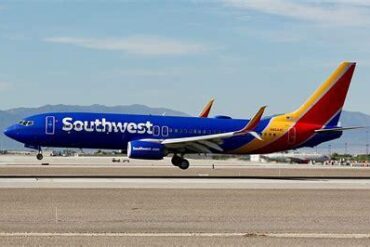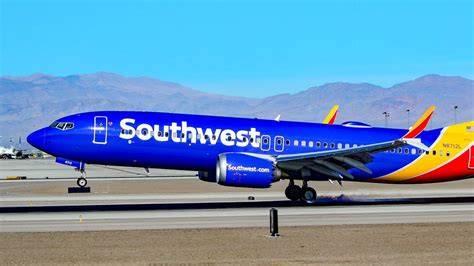
Southwest Airlines has slashed its full-year 2026 profit forecast, and the carrier is placing the blame squarely on jet fuel. Adjusted earnings guidance now stands at $2.60 to $2.85 per share, a steep collapse from the $3.25 to $4.25 range the airline issued in July. The revision makes Southwest the third major U.S. carrier to walk back its annual projection, following similar downgrades at American Airlines and United Airlines, and it lands as holiday travelers face double-digit fare increases on domestic routes.
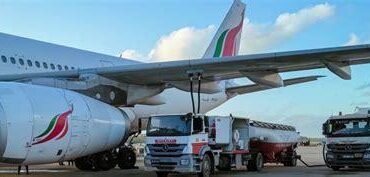
The mechanics behind the cut are unusually blunt. According to the company’s most recent fiscal report, Southwest is absorbing nearly $1 billion per quarter in added fuel expense, a sum large enough to erase the margin gains management had banked on earlier in the year. Jet fuel is among the most volatile line items on any airline income statement, and carriers typically hedge only a portion of their exposure, leaving the remainder to be repriced as crude markets move. With global oil supply repeatedly disrupted, those repricings have stacked up quarter after quarter rather than normalizing.
How Geopolitical Shockwaves Pushed Jet Fuel Into Southwest’s Bottom Line
The pressure originates well outside Dallas. Russia’s ongoing war in Ukraine and the joint U.S.-Israeli operation against Iran have kept global oil markets in a sustained state of volatility, and long-term energy forecasts now point to elevated jet fuel prices persisting through 2027. For an airline that operates an all-Boeing 737 narrowbody fleet on high-frequency domestic routes, fuel is not a marginal cost, since every additional cent per gallon flows almost directly against operating income.
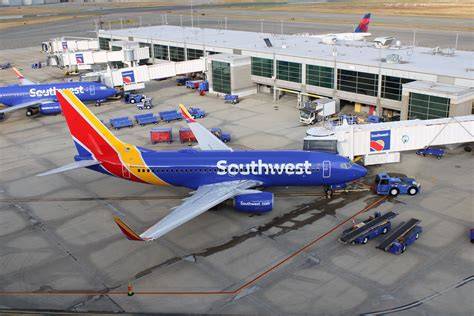
Southwest is far from alone in this squeeze. American and United both recalculated their margins this month as macroeconomic volatility forced a second look at assumptions built earlier in the year. What distinguishes Southwest is the scale of its exposure relative to its historically thin cost advantage. The carrier built a five-decade reputation on point-to-point efficiency and quick turnarounds, an operating model that works beautifully when fuel is cheap and fares stay low. When energy markets misbehave, that same model offers fewer hedges.
Fare Increases Fill the Gap Left by Spirit Airlines
To protect margins, major carriers are raising domestic fares with unusual speed. Holiday travelers are absorbing double-digit price increases, a shift that would normally invite competitive retaliation but has unfolded with remarkably little resistance. The reason sits in the wreckage of the ultra-low-cost segment: Spirit Airlines has exited the market, removing the airline that once anchored the bottom of the fare ladder.
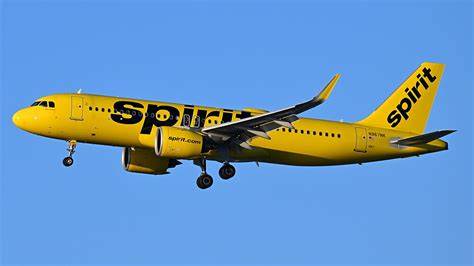
Spirit’s disappearance left a vacuum that industry observers and even officials at the Federal Aviation Administration warned would reshape commercial aviation. For years, the so-called Spirit Effect worked in travelers’ favor, because merely operating out of an airport forced every competing carrier on that city-pair to hold prices down. Terminal-level competition functioned as invisible regulation, and its removal has effectively decoupled ticket prices from product quality.
That decoupling raises an uncomfortable question about Southwest’s “robust demand.” Jordan has told shareholders that customers continued booking through the fourth quarter and pointed to “encouraging progress across our product and loyalty initiatives.” Yet when a market loses its cheapest competitor, demand measured in bookings says little about whether travelers are choosing an airline or simply the only route available. Southwest’s enduring traffic may reflect genuine loyalty, or it may reflect the absence of any alternative.
Limited Capacity and the Inelastic Reality of Domestic Flying
Carriers have limited capacity growth to match rising operating costs and overhead. Fewer available seats in any given market means less downward pressure on fares, and on long-distance domestic transit, commercial aviation behaves as an inelastic utility rather than a luxury service. Travelers cannot switch to rail for a coast-to-coast journey, and business travelers cannot postpone obligations indefinitely. That structural reality gives airlines room to shift the burden of fuel spikes directly onto passengers rather than absorbing it themselves.
Southwest’s Reinvention and the Hazardous Path for Budget Carriers
The fare environment sits atop a broader transformation. Driven by activist hedge fund Elliott Investment Management, Southwest has systematically dismantled the operational model that defined it for five decades. The airline has added assigned seating, premium cabin seating, overnight flying, airport lounges and baggage fees, and it has openly explored acquiring widebody aircraft for the first time in its history, with the Boeing 787 emerging as a leading candidate for long-haul expansion.
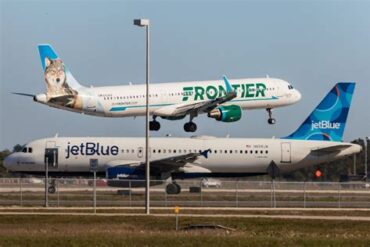
For remaining ultra-low-cost carriers, the horizon is bleaker. Frontier and Breeze face elevated fuel bills alongside restricted access to gate infrastructure at primary airports, and both are trimming routes to stay solvent rather than competing aggressively for price-sensitive passengers. If another budget brand liquidates, a legacy hub-to-mid-tier city-pair could find itself with zero low-cost competition, handing Southwest and the Big Three unprecedented leverage over fare prices.
Southwest may soon report stronger earnings as fares climb. Travelers, however, will be paying for that recovery at the booking window, one jet fuel dollar at a time.