The first quarter of 2026 delivered an unexpected win for air travelers across the United States. Despite a turbulent aviation environment marked by airline restructuring, aircraft delivery delays, shifting travel demand, and rising geopolitical uncertainty, passengers on many of the country’s busiest routes paid significantly less for airfare than they did a year earlier.
Fresh data from aviation analytics firm OAG reveals that fares declined on 13 of the 20 busiest US domestic and international routes during the quarter. The trend was particularly pronounced within the domestic market, where intense competition and expanding capacity from low-cost carriers helped drive substantial fare reductions. On several routes, average one-way ticket prices fell by more than 20%, while one of the nation’s busiest corridors experienced a staggering 41.7% decline.
The figures highlight a simple but powerful reality in commercial aviation: when airlines aggressively compete for market share, travelers often become the biggest beneficiaries.
The broader significance of the data extends beyond a single quarter. It offers a snapshot of an industry undergoing rapid transformation as carriers reposition networks, adapt to changing demand patterns, and attempt to replace capacity lost from weakened competitors.
Domestic Routes Lead the Airfare Decline
Among the ten busiest domestic routes analyzed by OAG, average seat capacity increased by 3.9%, while average fares fell by 11.5%. That combination created one of the most favorable pricing environments passengers have seen in recent years.
The standout example was the route between Hartsfield-Jackson Atlanta International Airport (ATL) and Fort Lauderdale-Hollywood International Airport (FLL). As the busiest domestic route in the dataset, it carried more than 837,000 seats during the quarter. Yet despite its enormous volume, average fares plunged by 41.7% year over year.
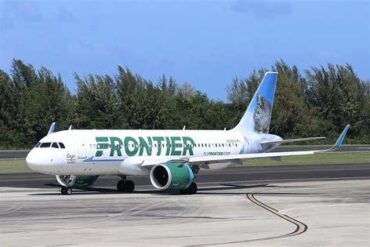
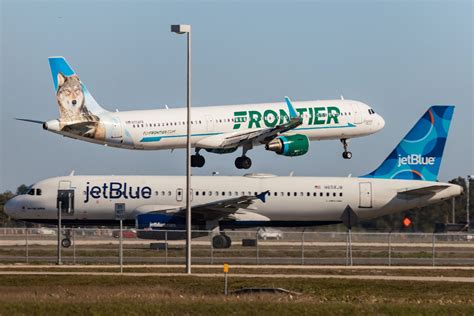
The dramatic decline was largely driven by a wave of competitive activity. Although Southwest Airlines exited the route, the resulting gap was quickly filled by other operators. JetBlue Airways launched three daily flights as part of its broader Fort Lauderdale expansion strategy, while Frontier Airlines significantly increased service levels. The resulting capacity increase of 23.6% created intense fare pressure across the market.
The Atlanta–Fort Lauderdale route illustrates how airline competition can rapidly alter pricing dynamics. When multiple carriers seek to expand market share simultaneously, lower fares often become the primary weapon.
The same competitive forces were visible elsewhere across the domestic network. Routes connecting major leisure destinations, particularly those involving Florida, recorded some of the most significant fare reductions. Atlanta–Orlando fares fell 14.4%, while Orlando–Chicago O’Hare experienced a 15.2% decline as capacity surged nearly 29%.
Meanwhile, the highly competitive Las Vegas–Los Angeles corridor saw average fares fall by 20.6%, despite an overall reduction in available seats. The presence of eight competing airlines helped sustain aggressive pricing behavior even as carriers adjusted capacity.
Low-Cost Carriers Continue to Influence Pricing
One of the clearest themes emerging from the data is the continued influence of low-cost carriers (LCCs) on airfare trends.
For years, airlines such as Spirit Airlines, Frontier Airlines, and JetBlue have exerted downward pressure on fares by challenging legacy carriers in major markets. Even when passengers ultimately fly with larger airlines, the presence of a budget competitor often forces those carriers to keep prices in check.
This phenomenon was evident throughout OAG’s domestic rankings. Routes with multiple competitors and meaningful low-cost carrier participation generally experienced the steepest fare declines.
The impact extends beyond direct ticket sales. Budget airlines frequently alter consumer expectations regarding pricing, creating market conditions where premium carriers must carefully balance profitability against competitive pressure.
However, the competitive landscape is changing. The collapse of Spirit Airlines has removed one of the industry’s most aggressive fare challengers. While Frontier and JetBlue have expanded in selected markets, replacing Spirit’s network-wide influence will prove far more difficult.
That loss could become increasingly important as airlines seek opportunities to raise fares later in the year.
Transcontinental Markets Show Mixed Results
Several major transcontinental routes also recorded meaningful fare declines, although the results were less uniform than in Florida-focused leisure markets.
The route connecting New York JFK and Los Angeles International Airport (LAX) saw capacity increase by 10.3%, while average fares declined by 14.9%. Given the route’s importance to both business and leisure travelers, the reduction demonstrates how additional seats can still pressure pricing even in premium-heavy markets.
Conversely, not every domestic route became cheaper.
The heavily traveled Los Angeles–San Francisco corridor experienced a modest fare increase of 1.2%, despite remaining one of the busiest routes in the country. Similarly, fares on the Honolulu–Kahului route rose by 4.5% even as capacity declined.
These exceptions highlight the importance of local market conditions. Competition, demand patterns, and available capacity all influence pricing outcomes, and no single factor guarantees lower fares.
Nevertheless, the overall domestic picture remained highly favorable for consumers during the quarter.
International Airfare Trends Reveal a Different Story
While domestic travelers enjoyed widespread fare relief, international passengers encountered a more varied environment.
Among the ten busiest international routes analyzed, only half recorded fare declines. The strongest pricing increases appeared on major long-haul business markets where demand remained resilient despite capacity reductions.
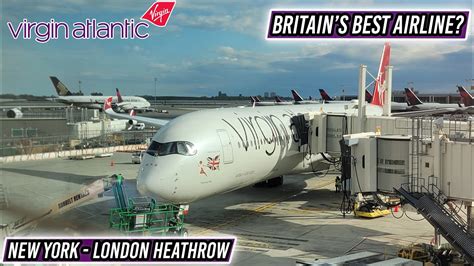
The most notable example was the flagship New York JFK–London Heathrow (LHR) route. As the largest international market by seat volume, it experienced a 10.8% decline in capacity while average fares increased 6.5%.
The route’s strong corporate travel demand likely enabled airlines to maintain pricing power despite offering fewer seats. Premium-cabin demand and business travel recovery continue to support yields on major transatlantic corridors.
A similar trend emerged on the New York JFK–Paris Charles de Gaulle (CDG) route. Capacity declined by 2.5%, while fares climbed 5.9%. The number of competing carriers also decreased, reducing some of the competitive pressure seen elsewhere.
These results contrast sharply with many domestic markets where expanding capacity and new entrants pushed fares downward.
New Entrants Trigger Major International Fare Reductions
Even within the international market, routes experiencing new competition saw dramatic pricing changes.
The most striking example was the route between New York LaGuardia Airport (LGA) and Toronto Pearson International Airport (YYZ). Average fares collapsed by 41.9% while capacity increased by 21.3%.
The primary catalyst was Porter Airlines, which entered the market with three daily flights. The additional competition immediately reshaped pricing dynamics and delivered substantial savings for travelers.
Another notable case involved the route between Miami International Airport (MIA) and Buenos Aires Ezeiza Airport (EZE). Historically dominated by a small number of carriers, the market experienced a major disruption when LATAM Airlines entered alongside existing operators.
Capacity surged by 40.5%, and average one-way fares dropped from approximately $1,250 to $875. The decline represented one of the most significant examples of competition-driven fare compression in the international dataset.
Meanwhile, Miami–London Heathrow fares fell 8.1%, suggesting softer leisure demand compared with business-focused routes originating in New York.
These examples reinforce a consistent pattern: additional competition frequently leads to lower prices, regardless of whether a route is domestic or international.
Rising Costs Threaten the Era of Cheaper Fares
Although the first-quarter numbers appear encouraging for consumers, industry conditions have shifted rapidly since the period covered by the report.
The biggest challenge comes from rising fuel prices. The escalation of conflict involving Iran has pushed jet fuel costs significantly higher, increasing one of the largest operating expenses faced by airlines worldwide.
When fuel costs rise sharply, carriers typically respond in one of two ways: reducing capacity or increasing fares. In many cases, they pursue both strategies simultaneously.
Evidence of this shift is already emerging. Data from the US Bureau of Labor Statistics indicates airline fares increased roughly 5.6% between February and April on a seasonally adjusted basis. By May, industry reporting suggested fares were running approximately 21% higher than the previous year.
Airline executives have acknowledged the trend. Several carriers have implemented multiple fare increases since February without reporting significant demand weakness.
The disappearance of Spirit Airlines further strengthens airlines’ ability to raise prices. Spirit served as a powerful force for fare discipline across numerous markets, compelling larger competitors to maintain lower entry-level pricing. Its absence removes a critical source of downward pressure precisely when operating costs are rising.
What Travelers Should Expect in the Months Ahead
The first quarter of 2026 may ultimately be remembered as a brief window during which competitive reshuffling and capacity growth combined to create unusually favorable pricing conditions.
Domestic leisure routes benefited most from the trend, while select international markets experienced similar advantages when new carriers entered the field. Travelers flying between Florida, major leisure destinations, and certain international gateways enjoyed some of the lowest fares seen in years.
However, the forces supporting those reductions are weakening. Higher fuel prices, tighter capacity management, and the loss of Spirit Airlines are gradually reshaping the market. Airlines appear increasingly confident in their ability to raise fares without sacrificing demand, particularly on high-value business and long-haul routes.
As a result, the widespread fare declines recorded across 13 of the 20 busiest US routes may represent the high-water mark for travelers rather than the beginning of a longer downward trend. The next set of industry data will reveal whether competition can continue offsetting rising costs, or whether the market is entering a new phase defined by higher ticket prices and reduced fare pressure.