Commercial aircraft are among the world’s most valuable mobile assets, yet their market price can change dramatically within hours when the airline operating them files for bankruptcy. While an aircraft may still be structurally sound, fully certified, and capable of flying for decades, financial distress at its operator immediately alters how investors, lessors, banks, and buyers value that aircraft. The difference between an aircraft’s long-term economic worth and the amount someone is actually willing to pay for it becomes painfully obvious the moment bankruptcy proceedings begin.
Aircraft finance specialists distinguish between Base Value, which reflects an aircraft’s long-term economic potential under stable market conditions, and Market Value, which represents what that aircraft can realistically sell for today. During normal economic cycles, these figures remain relatively close. Bankruptcy changes that equation almost instantly. The aircraft stops being viewed as a productive income-generating asset and instead becomes an uncertain financial liability whose future depends on legal proceedings, maintenance quality, market demand, and the speed of repossession.
For leasing companies that collectively own most of the world’s commercial fleet, this transition happens remarkably fast. Investors immediately begin pricing in legal risks, storage costs, maintenance uncertainty, and the possibility that dozens of identical aircraft could flood the secondary market simultaneously. Within days, lease rates fall, market valuations decline, and negotiations shift entirely in favor of prospective buyers.

The Immediate Gap Between Paper Value And Market Reality
One of the biggest misconceptions about aircraft values is assuming an airplane’s worth is determined solely by its age or technical condition. In reality, an aircraft’s financial value is heavily influenced by its ability to generate predictable leasing income. Once bankruptcy interrupts that revenue stream, valuation models change almost overnight.
Appraisers no longer focus exclusively on long-term earnings potential. Instead, they begin estimating what the aircraft could fetch in today’s distressed marketplace. That distinction can be enormous. During major airline failures and industry downturns, aviation valuation firms have observed the gap between theoretical Base Value and actual Market Value widening by as much as 40%.
The reason is straightforward. Aircraft buyers understand that owners are suddenly under pressure. Lessors want aircraft returned quickly, storage costs begin accumulating immediately, and uncertainty surrounding legal proceedings discourages aggressive bidding. Buyers therefore gain negotiating leverage, knowing sellers often have little choice but to accept lower offers.
This pricing pressure affects even modern aircraft. During periods of widespread airline failures, relatively young Boeing 787-8 aircraft that normally maintained stable values experienced significant reductions in distressed sale prices simply because too many similar aircraft entered the market simultaneously.
Why Fleet Groundings Create A Massive Supply Shock
Airline bankruptcies rarely involve just one aircraft. Large carriers often operate dozens or even hundreds of identical airframes. When those aircraft suddenly become available, the balance between supply and demand changes almost instantly.
Commercial aviation operates within a relatively small customer base. At any given moment, only a limited number of airlines are actively searching for additional aircraft of a particular model. If one major carrier returns an entire fleet of Boeing 737s, Airbus A320-family aircraft, Boeing 777s, or Airbus A330s, the secondary market simply cannot absorb that inventory without substantial price reductions.
Competition therefore shifts away from buyers competing for aircraft toward owners competing for airlines. Leasing companies begin underbidding one another, offering lower lease rates, flexible contract terms, maintenance concessions, or temporary payment arrangements simply to keep aircraft flying rather than sitting idle.
The resulting decline in lease income further reduces aircraft valuations because commercial aircraft are ultimately financial assets whose value depends heavily on expected future cash flow.
Lease Rates Collapse Alongside Market Value
Aircraft values and lease rates are inseparable. Investors purchasing aircraft expect reliable monthly rental income over many years. Bankruptcy immediately places those cash flows in doubt.
Courts overseeing restructurings often permit airlines to renegotiate lease agreements. Rather than paying previously agreed monthly rentals, airlines may request substantial reductions or temporary Power-by-the-Hour arrangements that require payments only when aircraft are actively flying.
Although these agreements can help struggling airlines survive, they significantly reduce expected income for lessors. Lower projected revenue translates directly into lower asset values because investors discount future earnings accordingly.
Even when aircraft remain in service throughout restructuring, uncertainty surrounding future payments often causes investors to reduce their valuation assumptions until the airline demonstrates long-term financial stability.
Why Bankruptcy Laws Can Protect Or Destroy Aircraft Value
Legal frameworks often determine whether an aircraft loses millions of dollars in value or returns to service relatively quickly.
One of the aviation industry’s most important legal protections is the Cape Town Convention and its Aircraft Protocol, particularly the Alternative A provisions. These rules establish a predictable timeline, generally around sixty days, requiring bankrupt airlines either to cure payment defaults and continue leasing aircraft or return them promptly to their owners.
This certainty benefits everyone involved. Owners regain possession quickly, aircraft spend less time sitting unused, maintenance schedules remain intact, and airlines seeking additional capacity can lease the aircraft before significant deterioration occurs.
Predictability also strengthens investor confidence. Since leasing companies finance a substantial portion of global aircraft deliveries, reliable repossession procedures are fundamental to keeping financing costs manageable across the aviation industry.
The opposite scenario can be devastating. In jurisdictions where international protections are inconsistently enforced or lengthy legal disputes delay repossession, aircraft can remain trapped for months or even years. During that time, owners continue paying insurance, parking, legal expenses, and preservation costs while earning no revenue whatsoever.

Physical Condition Quickly Becomes A Financial Liability
An aircraft parked on the ground is far from maintenance-free. Commercial jets require continuous preservation procedures regardless of whether they are carrying passengers.
When financially distressed airlines begin conserving cash, maintenance on grounded aircraft is frequently among the first expenditures reduced or postponed. Engines require regular preservation runs, hydraulic systems must be cycled, avionics need inspections, landing gear components require monitoring, and protective measures must shield sensitive systems from moisture, corrosion, dust, and wildlife.
Without proper storage procedures, deterioration accelerates surprisingly quickly. Rubber seals degrade, corrosion spreads, batteries fail, fluids become contaminated, and expensive engines may require extensive inspections before returning to service.
Every additional month of neglect increases restoration costs while simultaneously reducing buyer confidence. Prospective purchasers factor these unknown repair expenses into acquisition offers, resulting in significant discounts compared with well-maintained aircraft of identical age.
Why Maintenance Records Are Worth Millions
One of the least visible yet most valuable components of any commercial aircraft is its documentation.
Every inspection, repair, component replacement, software update, modification, airworthiness directive, and maintenance event must be meticulously recorded throughout the aircraft’s operational life. These records provide regulatory authorities with complete confidence that every safety requirement has been satisfied.
Industry specialists often estimate that technical documentation represents up to half of an aircraft’s economic value. Missing paperwork creates uncertainty that cannot simply be ignored.
During chaotic bankruptcies, maintenance records may become incomplete, misplaced, inaccessible, or held during legal disputes involving airport authorities, maintenance providers, or creditors seeking payment. Without continuous certified records, aviation regulators cannot approve the aircraft for commercial operations.
Owners must then invest millions reconstructing documentation, repeating inspections, performing additional maintenance checks, and verifying compliance before the aircraft can legally return to service. Buyers naturally reduce their offers to reflect these additional expenses.
Combined with physical deterioration, missing records can erase between 20% and 50% of an aircraft’s market value.
Virgin Australia Demonstrated That Not Every Aircraft Suffers Equally
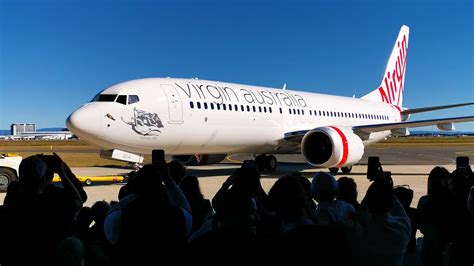
The 2020 restructuring of Virgin Australia illustrated that bankruptcy affects different aircraft types very differently.
Rather than ceasing operations entirely, the airline reorganized under new ownership while fundamentally reshaping its network strategy. Long-haul international flying disappeared from its immediate plans, leading the carrier to return its Airbus A330 and Boeing 777 fleets.
Unfortunately for lessors, these aircraft entered the market precisely when international demand had collapsed because of the COVID-19 pandemic. Modern widebody aircraft suddenly became extraordinarily difficult to place with other airlines. Many were transferred into long-term desert storage while owners absorbed substantial financial losses.
Meanwhile, Virgin Australia’s Boeing 737-800 fleet continued supporting domestic operations. Because these aircraft remained commercially useful and continued generating lease income, their values remained significantly more resilient.
The episode demonstrated that bankruptcy does not automatically reduce every aircraft by the same percentage. Market demand for individual aircraft categories plays an equally important role.
LATAM And Avianca Showed How Chapter 11 Reshapes Aircraft Portfolios
The Chapter 11 restructurings of LATAM and Avianca further highlighted how bankruptcy laws influence aircraft values.
United States bankruptcy procedures permit airlines to reject leases considered financially unattractive while retaining aircraft essential to future operations. This flexibility helps airlines survive but transfers considerable financial risk to aircraft owners.
Avianca accelerated retirement of older Airbus A319 aircraft and regional turboprops whose operating economics no longer justified continued service. As these aircraft entered an already weak secondary market, resale values deteriorated rapidly because demand for older technology remained extremely limited.
LATAM produced an even more striking example by rejecting leases on portions of its advanced Airbus A350 fleet. These aircraft represented some of the aviation industry’s most fuel-efficient long-haul assets, yet their technological advantages offered little protection when virtually no airline required additional international capacity during the pandemic.
Court proceedings demonstrated that even premium next-generation aircraft could experience dramatic temporary declines in value when market demand disappeared almost entirely.
Jet Airways Illustrated The Worst-Case Scenario
Few airline failures demonstrate value destruction more clearly than the collapse of Jet Airways in 2019.
Unlike structured reorganizations, Jet Airways ceased operations abruptly after exhausting available cash. More than one hundred aircraft became stranded across multiple Indian airports while owners attempted to recover their assets.
Repossession proved exceptionally difficult. Airport authorities sought payment for unpaid landing, parking, and service fees before permitting aircraft to depart. Legal disputes delayed recovery efforts while aircraft remained exposed to India’s challenging climate.
Months of inactivity without comprehensive preservation procedures caused engines, systems, and structural components to deteriorate. Simultaneously, documentation problems complicated certification efforts once owners finally regained possession.
Aircraft that would ordinarily have attracted strong international demand instead required costly inspections, engine maintenance, landing gear work, documentation reconstruction, and regulatory reviews before returning to commercial service. Unsurprisingly, their eventual liquidation values fell well below comparable aircraft maintained under normal operating conditions.
Why Investors Watch Airline Bankruptcies So Closely
For investors, aircraft manufacturers, banks, leasing companies, and institutional lenders, airline bankruptcies provide an immediate stress test of aviation asset values.
A commercial aircraft is not valued solely because it exists. Its worth depends upon reliable cash flow, legal certainty, maintenance quality, regulatory compliance, documentation integrity, market demand, and the financial health of its operator. Bankruptcy simultaneously introduces uncertainty into every one of those variables.
Modern aircraft generally recover value once demand returns and new operators place them back into service. However, that recovery depends heavily on how quickly repossession occurs, whether maintenance standards remain intact, and whether the aircraft avoids prolonged storage under unfavorable conditions.
Conclusion
The moment an airline files for bankruptcy, a commercial aircraft begins living two financial lives. On paper, its long-term Base Value may remain relatively stable because its engineering capability and operational lifespan have not changed. In the marketplace, however, buyers immediately reassess every financial, legal, operational, and technical risk associated with that aircraft.
Supply shocks, collapsing lease rates, uncertain legal proceedings, neglected maintenance, missing technical records, and prolonged storage can collectively erase tens of millions of dollars from an aircraft’s market value long before its first post-bankruptcy flight. The contrasting experiences of Virgin Australia, LATAM, Avianca, and Jet Airways demonstrate that while aircraft are designed to fly for decades, their financial value can change dramatically in the very first moments of an airline’s financial collapse.