Long-haul flights have a way of revealing everything—your habits, your stress levels, even how well you prepared the night before. To the untrained eye, a plane full of passengers may look like a sea of sameness. But to experienced flight attendants, it’s a living map of personalities, behaviors, and subtle signals that tell a deeper story within seconds of boarding.
What might feel like a private experience—your first journey across continents—is anything but invisible. Cabin crew are trained observers, constantly scanning for cues that help them ensure safety, efficiency, and comfort. And while they’ll always greet you with professionalism and warmth, they often know right away if this is your first long-haul flight.
Understanding what they see isn’t about avoiding judgment—it’s about gaining confidence. Because once you know the signals, you can travel smarter, smoother, and far more comfortably.
Boarding Behavior That Quietly Gives You Away
The moment you step onto the aircraft, the evaluation begins—not in a harsh or critical way, but in a practical, situational sense. Boarding is one of the most revealing stages of the journey, and even small hesitations can stand out.
First-time long-haul passengers often move through the aisle with a kind of cautious uncertainty. There’s a tendency to pause frequently, double-check seat numbers, or momentarily freeze when others are waiting behind. It’s not incompetence—it’s simply unfamiliarity with a fast-moving environment where spatial awareness matters.
More experienced travelers, by contrast, operate almost instinctively. They know how to keep the line moving, when to step aside, and how to quickly identify their row without creating a bottleneck. That efficiency isn’t arrogance—it’s rhythm, built through repetition.
What flight attendants notice most is something often described as “tunnel vision.” New travelers become so focused on their own task—finding their seat, adjusting their bag—that they unintentionally block the flow of others. It’s a small behavior with a big ripple effect, especially on full flights where timing is everything.
Airlines operate on tight schedules, and even minor delays during boarding can cascade into larger operational disruptions. That’s why crew members are trained to quickly identify passengers who might need a bit more guidance or patience.
The Subtle Language of Anxiety in the Cabin
Not all signs are about movement—some are deeply human, rooted in emotion. Anxiety is one of the clearest indicators that someone may be experiencing their first long-haul flight.
It doesn’t always show up dramatically. In fact, it’s often quiet. A passenger gripping their boarding pass a little too tightly. A quick, shallow breathing pattern. Eyes scanning the cabin repeatedly as if trying to make sense of everything at once.
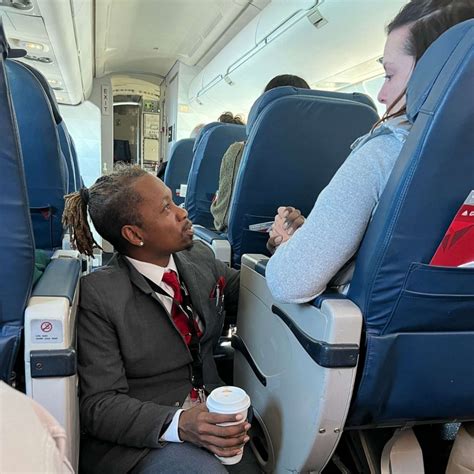
Flight attendants are trained to read these signals with remarkable precision. They understand that air travel, especially over long distances, can trigger a complex mix of emotions—anticipation, fear, excitement, and uncertainty—all at once.
The journey to the aircraft itself often amplifies this. Security checks, crowded terminals, and time pressure can gradually elevate stress levels before a passenger even sits down. By the time boarding begins, some travelers are already emotionally fatigued.
This is where the crew’s role becomes quietly powerful. A calm tone of voice, steady eye contact, or even a simple reassurance can shift the emotional atmosphere for a nervous traveler. In more noticeable cases, they may check in more frequently or offer small adjustments—like suggesting a more comfortable seating position or helping the passenger settle in.
What stands out isn’t the anxiety itself—it’s how unfamiliar passengers are with managing it in a flight environment. Seasoned travelers have rituals: headphones on, seatbelt fastened, distractions ready. First-timers are still figuring that out in real time.
Luggage Habits That Signal Inexperience Instantly
If there’s one universal giveaway, it’s luggage. Nothing exposes inexperience faster than the way a passenger handles their carry-on.
An overstuffed bag is the classic sign. It bulges awkwardly, resists fitting into the overhead bin, and often requires multiple attempts—or assistance—to store properly. While it may seem like a minor inconvenience, it creates a domino effect during boarding, slowing everyone down.
But it’s not just about size. It’s about preparedness.
Passengers who begin rummaging through their bags mid-aisle—searching for passports, headphones, or essential documents—immediately draw attention. The aisle is not designed for stopping; it’s a flow channel. Blocking it, even briefly, disrupts the entire boarding rhythm.
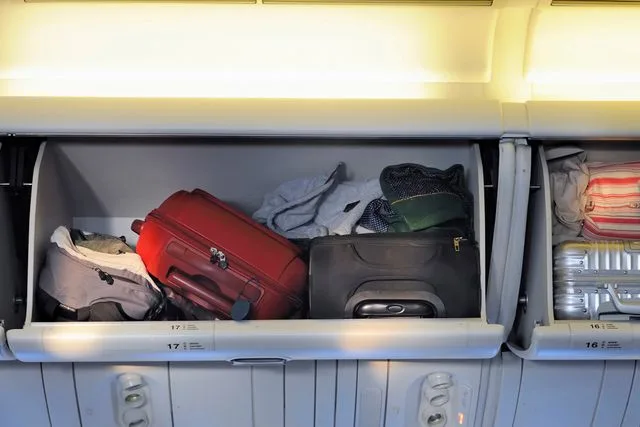
Experienced travelers treat their carry-on like a well-organized toolkit. Essentials are easily accessible, liquids are pre-packed, and everything has its place. There’s no last-minute digging or reshuffling.
Another common sign is hesitation when lifting luggage. If a passenger pauses, repositions, or visibly struggles, it signals that the bag may be too heavy or poorly packed. Flight attendants notice this not just for efficiency, but for safety. Improper lifting can lead to injuries or dropped items—both avoidable with better preparation.
Interestingly, crew members are also scanning for the opposite: physically capable passengers who could assist in an emergency. It’s a subtle but important layer of situational awareness happening during what most people assume is a routine process.
The Call Button: A Small Detail with Big Implications
Mid-flight behavior reveals just as much as boarding—and one of the clearest indicators of inexperience is how the call button is used.
For first-time long-haul travelers, the call button can feel like a direct line to immediate assistance at any moment. And while that’s technically true, its misuse is surprisingly common.
Frequent, non-essential use—such as requesting items already scheduled to be served or asking questions that could wait—signals unfamiliarity with how cabin service operates. Flight attendants work within a carefully structured flow, balancing safety checks, meal services, and passenger needs across hundreds of people.
Interrupting that flow repeatedly doesn’t just affect one interaction—it can disrupt the entire cabin dynamic.
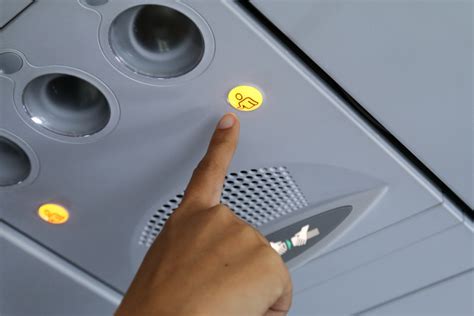
That said, the nuance matters. Using the call button appropriately is not only acceptable—it’s encouraged when genuinely needed. Situations involving discomfort, illness, or immediate assistance are exactly what it’s there for.
The difference lies in judgment. Experienced travelers develop an intuitive sense of timing. They observe the rhythm of service, anticipate when crew will pass through, and use the call button sparingly.
First-time passengers, on the other hand, are still calibrating that awareness. It’s not wrong—it’s simply part of the learning curve.
Struggling with the Physical Reality of Long-Haul Travel
Long-haul flights are not just extended versions of short trips—they are a completely different physical experience. And for first-time passengers, the body often reacts in unexpected ways.
The cabin environment introduces a unique set of challenges: reduced air pressure, lower humidity, prolonged sitting, and constant background noise. These factors can combine to create fatigue, dehydration, and mild disorientation.
For inexperienced travelers, these sensations can feel overwhelming. Nausea, dizziness, or even a sense of panic can emerge, especially on flights lasting 10 hours or more. It’s not uncommon for first-time passengers to underestimate how taxing the journey can be.
Flight attendants are trained to spot these signs early. A passenger shifting uncomfortably, breathing irregularly, or appearing unusually pale may receive quiet attention from the crew. In more serious cases, intervention becomes necessary to ensure the passenger’s well-being.
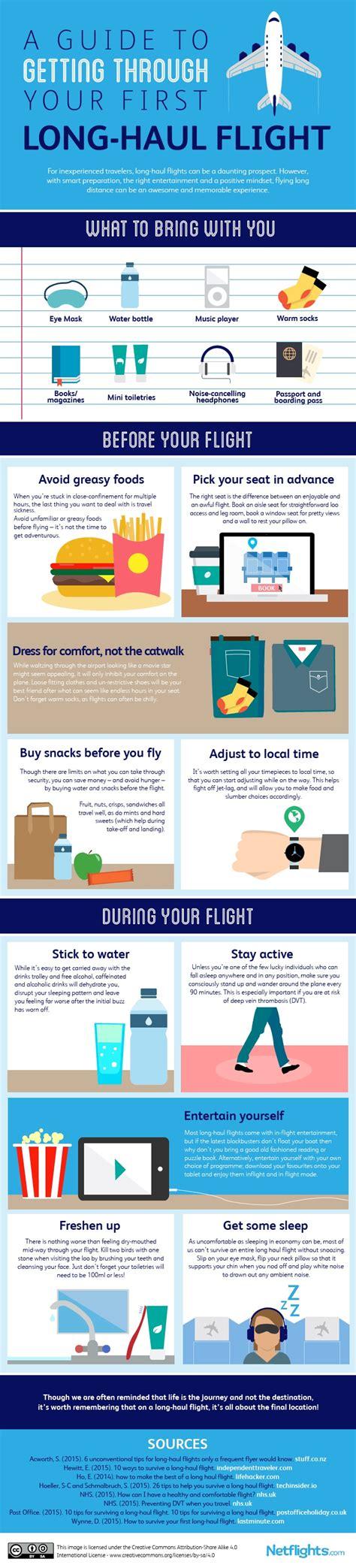
What often separates experienced travelers is preparation. Hydration, strategic sleep planning, and simple movement exercises can dramatically improve comfort. Even something as straightforward as choosing the right seat—closer to the wings for reduced motion—can make a noticeable difference.
First-time passengers, understandably, may not know these strategies yet. They’re learning through experience, one hour at a time.
Why Flight Attendants Pay Attention—and Why It Matters
It’s easy to assume that these observations are about efficiency alone, but the reality runs deeper. Flight attendants are responsible for far more than service—they are trained safety professionals managing a complex, high-altitude environment.
Every behavior they observe feeds into a broader awareness of the cabin. Who might need assistance during turbulence? Who could help in an emergency? Who may require extra reassurance during a stressful moment?
This constant assessment isn’t intrusive—it’s protective.
Passengers experiencing their first long-haul flight are not judged; they are quietly supported. The crew adapts, often without the passenger even realizing it. A little extra patience here, a subtle check-in there—these small actions shape the overall experience in meaningful ways.
How to Travel Like a Seasoned Passenger—Even on Your First Flight
Confidence in long-haul travel doesn’t come from pretending to know everything. It comes from understanding a few key principles that make the journey smoother—for you and everyone around you.
Preparation is the foundation. Knowing where your essentials are, packing efficiently, and understanding the basic flow of boarding can eliminate most common stress points. Awareness is the next layer—being mindful of your surroundings, the pace of the aisle, and the needs of fellow passengers.
And perhaps most importantly, it’s about pacing yourself. Long-haul flights are marathons, not sprints. Settle in, find your rhythm, and allow yourself to adapt gradually.
There’s a quiet confidence that experienced travelers carry—not because they’ve mastered every detail, but because they’ve learned what truly matters and what doesn’t.
The Invisible Transformation from First-Time Flyer to Confident Traveler
Every seasoned traveler was once exactly where you are—uncertain, observant, and learning on the go. The difference is simply experience, accumulated over time and shaped by moments just like these.
Flight attendants recognize that journey instantly. They see the hesitation, the curiosity, the subtle missteps—and they also see the potential for growth.
The beauty of long-haul travel is that it transforms you. By the time you land, something has shifted. The environment feels less intimidating, the processes more familiar, and your confidence noticeably stronger.
And on your next flight, without even realizing it, you’ll move a little faster down the aisle, store your bag a little more efficiently, and settle into your seat with quiet ease.
That’s the moment when the signals change—when you’re no longer the passenger being read, but the one who understands the rhythm of the sky.