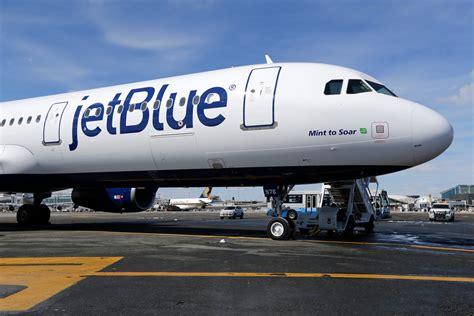
The financial health of JetBlue Airways, one of the United States’ most recognizable low-cost carriers, has recently become the focus of intense industry speculation. Rising fuel prices, mounting debt obligations, and a difficult macroeconomic environment have fueled questions about whether the airline might eventually be forced into a restructuring process. However, the company’s leadership has moved decisively to shut down those rumors. In a direct message to employees and stakeholders, JetBlue CEO Joanna Geraghty emphasized that bankruptcy is not under consideration, reinforcing the airline’s commitment to navigating its financial challenges through strategic financing and operational adjustments rather than a court-led restructuring.
The statement comes at a crucial moment for the airline. The broader aviation industry continues to face elevated operating costs, especially fuel prices that have climbed far above analysts’ earlier projections. For carriers operating on thin margins, such volatility can quickly erode profitability. Against this backdrop, JetBlue’s leadership sought to stabilize confidence among investors, staff, and customers by making its position clear: the airline still has liquidity, access to capital, and a roadmap for recovery.
The memo has become a focal point in discussions surrounding the airline’s financial trajectory, largely because it arrives during a period when several carriers worldwide are facing renewed financial stress. By addressing the issue directly, JetBlue’s leadership hopes to prevent speculation from shaping the narrative around its future.
JetBlue Leadership Moves to Calm Bankruptcy Concerns
In her internal communication to employees, Joanna Geraghty delivered an unambiguous message about the airline’s financial strategy and near-term outlook. She stated plainly that JetBlue is not considering filing for bankruptcy during the current fiscal year, countering widespread speculation that had circulated among analysts and industry observers.
Geraghty emphasized that the airline still maintains ample liquidity, allowing it to continue operating while executing its broader financial turnaround strategy. The tone of the message reflected a deliberate effort to reassure employees who might be worried about the airline’s stability. In industries such as aviation—where staff retention, morale, and operational reliability are closely linked—maintaining internal confidence is critical.
Her message also signaled that JetBlue still has multiple avenues for accessing capital. Instead of turning toward a legal restructuring process like Chapter 11 bankruptcy protection, management intends to rely on financing options and operational adjustments to manage financial pressure. By publicly communicating this stance, the airline aims to reinforce stability at a time when uncertainty could otherwise disrupt business operations.
Financing Moves Strengthen Liquidity Position
One of the central reasons JetBlue leadership remains confident about avoiding bankruptcy lies in the airline’s recent financing arrangements. The carrier recently secured a $500 million debt commitment backed by aircraft assets, a move designed to strengthen its liquidity position during a period of heightened operational costs.
Aircraft-backed financing is a common strategy in the airline industry, as fleets represent some of the most valuable assets carriers possess. By leveraging these assets, JetBlue has created additional financial breathing room without resorting to more drastic restructuring measures.
Importantly, the airline also retains the option to raise an additional $250 million, providing further flexibility should operating conditions worsen. This ability to access additional capital is a crucial safeguard in a volatile industry where unexpected cost spikes—particularly in fuel—can quickly disrupt financial forecasts.
These financing measures demonstrate that the airline is still capable of attracting lender support. For investors and creditors, continued access to capital markets often signals that a company remains viable, even during periods of financial stress.
Why Bankruptcy Speculation Emerged
Despite these assurances, the rumors surrounding JetBlue’s potential bankruptcy did not emerge without reason. The airline has faced a combination of financial pressures that collectively raised concern among analysts and shareholders.
First, JetBlue remained unprofitable throughout much of 2025, delaying its anticipated return to positive earnings. Management acknowledged that macroeconomic uncertainty—combined with operational disruptions and rising costs—slowed progress toward restoring profitability.
At the same time, the airline has relied heavily on borrowing to support its balance sheet. Over the course of 2024, JetBlue accumulated more than $3 billion in additional debt, a figure that prompted credit rating agencies such as S&P Global Ratings and Moody’s Investors Service to downgrade the airline’s credit outlook.
Fuel costs have also played a major role in shaping the airline’s financial challenges. Unlike some competitors, JetBlue operates without fuel hedging strategies, leaving it more exposed to sudden spikes in jet fuel prices. When fuel costs surged, analysts warned that the airline could experience significant cash burn before reaching break-even profitability.
These combined pressures—rising debt, elevated fuel prices, and delayed profitability—created the conditions that allowed bankruptcy speculation to spread across the aviation sector.
Strategic Messaging to Stabilize Investor and Employee Confidence
The public rejection of bankruptcy speculation serves an important strategic purpose beyond simple clarification. In the airline industry, perception can influence financial outcomes almost as strongly as actual performance.
If investors, suppliers, or travelers begin to believe that a carrier is approaching bankruptcy, their behavior can unintentionally accelerate financial distress. Suppliers may tighten credit terms, passengers may hesitate to book flights, and lenders may demand higher borrowing costs.
By drawing a firm line against restructuring speculation, JetBlue’s leadership hopes to maintain confidence among all of these groups. The message signals that management intends to continue executing its JetForward strategy, which focuses on improving operational efficiency, optimizing routes, and gradually restoring profitability.
JetBlue’s Path Forward in a Challenging Market
Even with the reassurance from leadership, JetBlue still faces a demanding road ahead. The airline must convert its liquidity runway and financing flexibility into sustainable long-term profitability, something that remains uncertain in a volatile economic environment.
However, the CEO’s statement changes the narrative from one of immediate crisis to one of pressured but manageable recovery. Instead of preparing for a restructuring process, the company is focused on stabilizing operations, managing debt responsibly, and navigating the difficult cost environment facing the aviation sector.
For employees and passengers alike, the message is intended to be clear: JetBlue remains committed to flying forward, not filing for bankruptcy.