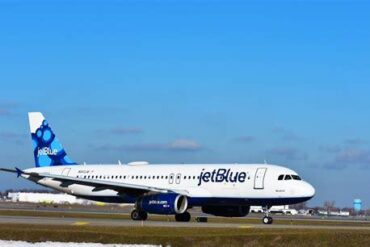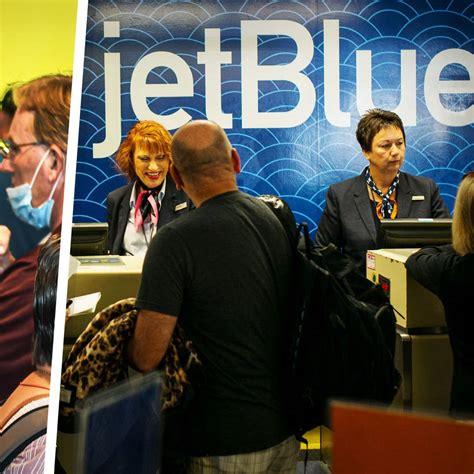
The American airline industry is entering one of its most financially dangerous periods since the aftermath of the COVID-19 pandemic, and few carriers are attracting more concern than JetBlue Airways. Once viewed as an innovative challenger brand capable of disrupting legacy airlines with affordable fares and premium customer service, JetBlue now faces mounting debt, persistent losses, rising fuel costs, and a strategic identity crisis that analysts believe could push the carrier toward bankruptcy by 2027.
The warning signs are no longer subtle. Credit markets have become increasingly skeptical of JetBlue’s ability to return to sustained profitability, especially after the airline’s credit rating was downgraded to CCC+, a level commonly associated with distressed companies carrying substantial default risk. Investors, lenders, and aviation analysts are now examining whether JetBlue could become the next major US airline forced into a restructuring process after Spirit Airlines collapsed under similar pressures.
What makes the situation particularly alarming is that JetBlue’s problems are not limited to one isolated weakness. The airline is simultaneously fighting on multiple fronts: elevated debt obligations, shrinking margins, high operating costs, failed expansion efforts, competitive pressure from both budget and legacy airlines, and an industry-wide surge in fuel expenses. Combined together, these factors are creating a financial environment that many analysts believe may become unsustainable within the next two years.
The estimated 75% probability of bankruptcy by 2027 reflects growing fears that JetBlue may run out of realistic pathways to stabilize its balance sheet before a massive wave of debt obligations arrives later in the decade.
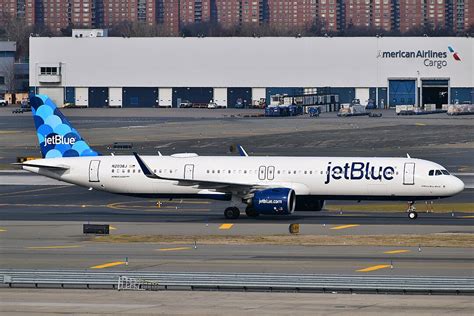
JetBlue’s Financial Position Is Deteriorating Faster Than Expected
At first glance, JetBlue still appears to possess enough liquidity to survive the near term. The airline ended the first quarter of 2026 with approximately $2.4 billion in available liquidity, alongside access to a further $600 million revolving credit facility. In addition, the carrier still controls more than $6 billion in unencumbered assets, theoretically giving it room to raise additional financing if necessary.
That temporary financial cushion, however, masks a much deeper structural problem. JetBlue has now recorded six consecutive years of losses, steadily eroding investor confidence while weakening its long-term ability to refinance debt efficiently. Airlines can survive temporary downturns, but prolonged unprofitability fundamentally changes how lenders and investors evaluate risk.
The downgrade to CCC+ status dramatically worsens that challenge. Once an airline enters distressed credit territory, borrowing costs rise sharply because lenders demand significantly higher interest rates to compensate for the increased probability of default. Refinancing becomes more difficult, stricter loan conditions emerge, and access to capital markets gradually narrows.
This creates a dangerous cycle. Higher borrowing costs increase financial pressure, which then makes profitability even harder to achieve. As operating losses continue accumulating, liquidity reserves that once looked comfortable can begin shrinking surprisingly fast.
For JetBlue, the concern is no longer simply whether the airline can survive the next quarter. The real concern is whether it can reverse years of financial underperformance before its larger debt obligations begin approaching maturity.
The Massive 2029 Debt Wall Is Terrifying Investors
Much of the current anxiety surrounding JetBlue centers on what analysts increasingly describe as the airline’s looming “debt wall.” While JetBlue’s near-term obligations remain manageable under normal conditions, the size of future maturities becomes increasingly intimidating as the decade progresses.
The airline faces roughly:
- $755 million in maturities during 2026
- $411 million due in 2027
- $516 million due in 2028
- A staggering $1.768 billion balloon payment in 2029
Under healthy market conditions, airlines routinely refinance large portions of their debt. The problem for JetBlue is that refinancing only works when lenders believe future profitability is realistic. Six years of continuous losses make that assumption increasingly difficult to defend.
Analysts fear that by 2027, markets may already begin pricing in a restructuring scenario if JetBlue fails to demonstrate credible earnings improvement. In the airline industry, bankruptcy often unfolds gradually before accelerating with brutal speed once confidence disappears. Liquidity declines slowly, refinancing becomes more expensive, lenders grow cautious, and eventually the financial system surrounding the airline begins tightening all at once.
That is precisely why 2027 has become such a critical year in many bankruptcy forecasts. If JetBlue enters that period still struggling with weak margins and deteriorating cash flow, investors may conclude that the airline lacks a realistic pathway to address its 2029 obligations without major restructuring.
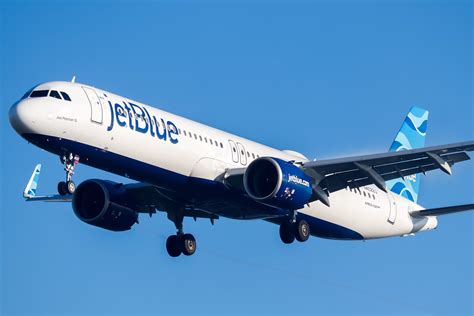
Rising Fuel Prices Are Intensifying The Crisis
Fuel costs are becoming another major threat to financially weaker airlines across the United States. By late April 2026, jet fuel prices had climbed toward approximately $4.20 to $4.30 per gallon, representing one of the sharpest increases seen in recent months.
For airlines operating on already thin margins, that kind of spike can devastate quarterly earnings.
Fuel typically accounts for between 15% and 20% of total airline operating expenses, meaning sustained increases rapidly damage profitability. The impact becomes especially severe for airlines like JetBlue and Frontier because they lack the pricing power enjoyed by larger global carriers.
Legacy airlines with dominant corporate travel networks can often offset rising costs through premium cabin revenue, international business demand, and stronger loyalty ecosystems. JetBlue does not possess the same advantages at scale. Its customer base remains heavily price-sensitive, making aggressive fare increases risky.
The timing of fuel inflation also creates an additional financial trap. Airlines frequently sell tickets months in advance, locking in fares before operating costs rise. As a result, carriers may suddenly face sharply higher fuel expenses while revenue remains tied to older, lower-priced tickets already sold to passengers.
That mismatch can severely pressure cash flow, particularly during prolonged inflationary periods.
For JetBlue, already struggling with years of losses, higher fuel prices threaten to eliminate whatever limited margin recovery opportunities still exist.
JetBlue Is Stuck In A Dangerous Middle Ground
One of JetBlue’s biggest long-term problems is strategic positioning. The airline occupies an increasingly uncomfortable space between ultra-low-cost carriers and dominant legacy airlines, without fully matching the advantages of either group.
This middle-ground problem has become one of the defining weaknesses behind JetBlue’s financial decline.
On one side, ultra-low-cost airlines such as Frontier aggressively compete on price, targeting travelers who prioritize the absolute cheapest fare possible. On the other side, legacy giants like Delta, United, and American dominate corporate travel through enormous global networks, premium cabins, frequent schedules, and powerful loyalty programs.
JetBlue struggles to win decisively in either category.
Its operating costs are generally too high to consistently beat ultra-low-cost carriers in price wars, yet its network remains too limited to compete effectively for the most lucrative corporate travelers. That strategic squeeze leaves the airline trapped in one of the most competitive segments of the aviation market.
This also explains why JetBlue aggressively pursued mergers and partnerships in recent years. Its failed merger attempt involving Spirit Airlines and previous alliance efforts with American Airlines were both designed to solve the same fundamental problem: scale.
Without significantly larger route networks and broader connectivity, JetBlue risks remaining permanently disadvantaged against stronger competitors.
Spirit Airlines’ Collapse Changed The Industry Conversation
The collapse of Spirit Airlines dramatically altered how investors evaluate financially vulnerable carriers. Before Spirit’s downfall, many analysts believed low-cost airlines would remain relatively resilient because of strong post-pandemic travel demand. That optimism has faded considerably.
Spirit demonstrated how quickly conditions can deteriorate once financing markets lose confidence in an airline’s long-term survival. Despite attempts to restructure operations and pursue mergers, the airline ultimately failed to overcome mounting debt, lease obligations, and prolonged financial losses.
Now investors are asking whether JetBlue could follow a similar trajectory.
The comparison is not perfect. JetBlue maintains a stronger brand, larger liquidity reserves, and a more diversified network than Spirit possessed before its collapse. However, the broader warning remains highly relevant: airlines with weak profitability and heavy financial obligations can unravel surprisingly quickly once external pressures intensify.
The industry environment today is arguably even more dangerous than during Spirit’s final years. Fuel prices are rising, interest rates remain elevated, financing costs are increasing, and competitive pressure continues squeezing margins throughout the domestic market.
Those factors collectively explain why bankruptcy risk estimates for JetBlue have climbed so sharply.
Frontier Airlines Faces Similar Pressures
While JetBlue currently attracts most of the headlines, Frontier Airlines is also under growing financial pressure, though for somewhat different reasons.
Unlike JetBlue, Frontier does not face an enormous long-term debt wall. Its direct maturities remain relatively modest, including approximately $303 million due in 2026 and just $63 million in 2027. However, Frontier’s business model creates different vulnerabilities.
The airline carries nearly $800 million in annual aircraft lease obligations alongside roughly $1.4 billion in aircraft purchase commitments scheduled for 2026. Those commitments become increasingly difficult to manage when ticket pricing remains under competitive pressure.
Ultra-low-cost carriers depend heavily on efficiency and volume. Even relatively small increases in fuel, labor, maintenance, or financing costs can rapidly damage profitability because budget travelers are extremely sensitive to fare increases.
Frontier still retains some flexibility through delivery deferrals and sale-leaseback transactions, but those measures often raise long-term costs while reducing future financial flexibility.
Analysts currently estimate Frontier’s bankruptcy risk closer to 45% to 50%, significantly lower than JetBlue’s estimated risk but still alarmingly elevated by historical airline standards.
Bankruptcy Would Not Necessarily Mean The End Of JetBlue
Despite the alarming forecasts, bankruptcy in the airline industry does not automatically mean liquidation or operational collapse. In many cases, Chapter 11 restructuring functions more like a financial reset mechanism than a shutdown.
Several major US airlines have successfully used bankruptcy protection to renegotiate debt, restructure aircraft leases, reduce labor costs, and stabilize operations before eventually returning to profitability. Delta Air Lines, United Airlines, and American Airlines all previously underwent restructuring periods before rebuilding their businesses.
Passengers often experience relatively limited disruption during those processes because airlines continue operating flights while reorganizing financially under court supervision.
For JetBlue, a future bankruptcy filing—if it occurs—would likely focus on balance sheet repair rather than immediate liquidation. The airline still possesses valuable assets, a recognizable consumer brand, strong positions in important markets like New York and Boston, and a loyal customer base.
The larger question is whether management can stabilize operations before conditions force that scenario.
If fuel prices moderate, demand remains resilient, and JetBlue finally succeeds in restoring profitability, the airline could still avoid formal restructuring entirely. However, if losses continue accumulating through 2027 while debt obligations approach maturity, the pressure from lenders and investors may become overwhelming.
The next two years may ultimately determine whether JetBlue successfully reinvents itself—or becomes the latest cautionary tale in the brutally cyclical airline industry.