The United Kingdom remains ranked among the world’s most powerful militaries. Yet behind the headline figures lies a deeply uncomfortable truth: senior British commanders now admit the country may be unable to defend itself in a sustained conflict. When former and serving Chiefs of the Defence Staff publicly acknowledge hollow forces, vanishing munitions stockpiles, and the absence of a modern war plan, the issue is no longer partisan politics—it is national survival.
According to the 2026 Global Firepower (GFP) Index, Britain ranks 8th out of 145 nations, with a PowerIndex score of 0.1881. On paper, this places the UK ahead of most of the world. But rankings can obscure operational realities. The United States, Russia, China, India, and South Korea sit ahead, reflecting not just troop numbers but industrial depth, missile capacity, and mobilization readiness. Britain’s relative position masks a structural erosion decades in the making.
The uncomfortable consensus among defence insiders is stark: the UK has spent years harvesting a “peace dividend” without reinvesting in strategic resilience. As geopolitical tensions surge—from Eastern Europe to the Indo-Pacific—the British armed forces are confronting the consequences of long-term contraction.
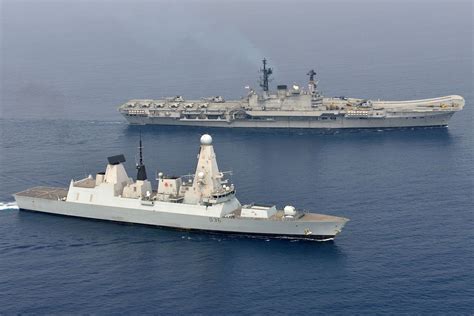
“Hollow Armed Forces”: Generals Sound the Alarm
General Sir Nick Carter, former Chief of the Defence Staff, delivered perhaps the bluntest assessment. His warning was not rhetorical flourish. He argued that Britain’s armed forces are now “hollow”—a term used in military planning to describe units that exist structurally but lack the manpower, equipment, or ammunition to fight effectively.
Carter’s breakdown is sobering. He estimates the British Army could field no more than 10,000 combat-ready troops for high-intensity warfare. The Royal Navy can deploy roughly 10 major combat warships. The Royal Air Force operates just nine combat air squadrons, totaling around 140 aircraft—a fraction of Cold War-era strength.
Numbers alone do not tell the whole story, but in modern warfare, scale matters. Sustained operations require rotation, logistics, spare parts, and redundancy. A force that can deploy 10 ships cannot absorb heavy attrition. An air force with 140 aircraft cannot sustain prolonged high-tempo operations without exhausting crews and maintenance capacity.
Even more alarming is the reported shortage of precision-guided munitions and missile stockpiles. The war in Ukraine has demonstrated that modern conflicts consume weapons at astonishing rates. Artillery shells, air defense interceptors, and long-range missiles are not optional extras; they are decisive factors. Britain’s reserves are described by insiders as “parlously low.”
An Island Nation, Critically Exposed
Britain’s geography once provided a natural moat. Today, that moat has become a vulnerability.
The UK imports approximately 40% of its food and 45% of its energy, much of it through undersea pipelines. Around 90% of national data flows through subsea cables. These cables and pipelines are critical infrastructure—and highly exposed to sabotage, cyber interference, or hybrid warfare tactics.
Modern conflict does not begin with tanks crossing borders. It begins with cyber attacks on power grids, disruption of logistics networks, and strikes on communications infrastructure. Britain’s limited ballistic missile defence and relatively thin air defence network raise additional concerns. Lessons from Ukraine illustrate how vulnerable infrastructure can be without layered protection systems.
The uncomfortable reality is that the UK’s resilience in a high-intensity conflict scenario is uncertain. An island nation dependent on imports must secure sea lanes, protect subsea assets, and ensure domestic supply continuity. That demands more than elite special forces and advanced fighter jets—it demands depth.
No War Plan: The Missing Government War Book
Perhaps the most astonishing revelation comes from Air Chief Marshal Sir Richard Knighton, the current Chief of the Defence Staff. He has indicated that Britain does not currently maintain an updated equivalent of the historic “Government War Book.”
The original War Book was a comprehensive framework coordinating the transition from peace to war. It covered not only military mobilization but also hospitals, policing, industry, education, and even cultural institutions. It was last meaningfully maintained during the Cold War.
Despite the return of large-scale conflict to Europe after Russia’s invasion of Ukraine, Britain has not produced a fully modernized national war plan. For a NATO member bound by Article 3 obligations to maintain collective defence capacity, this absence is striking.
A military without a mobilization blueprint is like a fire brigade without an evacuation map. Planning is not paranoia—it is prudence.
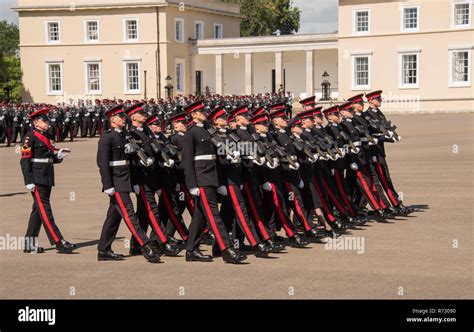
The Manpower Crisis and Public Reluctance
The structural problem extends beyond equipment. It is demographic and cultural.
Polling data reveals that 38% of Britons under 40 would refuse military service in a new world war. Even more striking, 30% would refuse to serve even if the UK faced imminent invasion. While modern professional armies do not rely on mass conscription in peacetime, public willingness to mobilize remains a strategic factor.
Recruitment shortfalls compound the issue. The British Army has struggled to meet enlistment targets for years. A shrinking pool of recruits means fewer deployable units and reduced resilience in prolonged conflict scenarios.
This is not a uniquely British phenomenon; many Western societies face similar challenges. Yet for a country seeking to remain a global strategic actor, manpower erosion carries serious implications.
Defence Spending: Numbers Versus Reality
In 2024–25, Britain allocated approximately £66 billion, equivalent to 2.3% of GDP, to defence. That figure meets NATO’s 2% threshold and represents a significant nominal increase over time. However, historical context matters.
In 1955–56, Britain spent 7.6% of GDP on defence. Even in 1990–91, at the end of the Cold War, the figure stood at 3.2%. The long decline reflects a political decision to prioritize domestic programs during a period of relative peace.
The government’s recent Strategic Defence Review (SDR)—titled Making Britain Safer – Secure at Home, Strong Abroad—promises modernization, technological innovation, and a whole-of-society security approach by 2035. The target of raising spending toward 3% of GDP signals intent.
Yet critics argue that ambition without industrial acceleration is insufficient. General Carter has suggested that only 5% of GDP would generate the scale required to rebuild credible warfighting capacity. Meanwhile, Sir Richard Knighton has openly acknowledged that existing budgets cannot cover both current commitments and the SDR’s expanded goals.
Industrial Base: The Forgotten Backbone
The Defence Committee of the British Parliament has delivered a blunt assessment: the UK is “nowhere near” ready to defend itself or its allies in a high-intensity conflict.
The core issue is the defence industrial base. Sustained warfare requires factories capable of producing ammunition, missiles, armored vehicles, and spare parts at scale. It requires skilled labor, secure supply chains, accessible financing for defence firms—including SMEs and startups—and efficient procurement systems.
Britain’s industrial capacity has atrophied relative to Cold War levels. Production lines optimized for peacetime efficiency struggle to pivot toward wartime surge. Without predictable contracts and long-term investment, manufacturers cannot justify expanding capacity.
Rebuilding industrial resilience is not merely about patriotism; it is about math. Modern wars consume vast quantities of materiel. Industrial depth determines endurance.
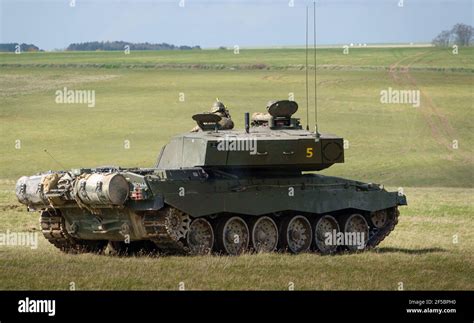
Dependence on the United States
A persistent theme in British strategic circles is reliance on the United States. From intelligence-sharing arrangements to advanced munitions and nuclear deterrence via the Trident system, the UK’s defence architecture is deeply intertwined with Washington.
For decades, this partnership allowed Britain to project influence beyond its independent capacity. However, shifting American priorities—and the unpredictability of global politics—have sparked debate within London’s policy community.
Strategic autonomy does not imply abandoning alliances. It means ensuring that national defence does not hinge entirely on external guarantees. If U.S. support becomes less certain or more conditional, Britain must possess sufficient sovereign capability to deter aggression independently.
Strategic Crossroads: Rebuild or Retreat
The United Kingdom faces a defining choice. It can accept a reduced global role, aligning defence commitments strictly with limited resources. Or it can undertake a substantial reinvestment in manpower, munitions, missile defence, cyber resilience, and industrial regeneration.
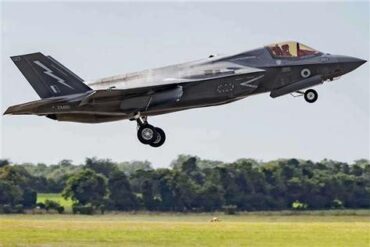
The warning signs are no longer confined to think tanks. They are voiced by former Chiefs of the Defence Staff and scrutinized by parliamentary committees. A credible defence posture demands not only advanced platforms like the F-35 or aircraft carriers, but also depth—stockpiles, reserves, redundancy, and national preparedness.
The era of comfortable assumptions has ended. High-intensity conflict in Europe has shattered illusions about the permanence of peace. Britain’s challenge is not merely to climb rankings but to restore substance behind the statistics.
Whether London responds with incremental adjustments or transformative reform will determine whether the United Kingdom remains a credible military power—or a strategically exposed island hoping others will stand guard.