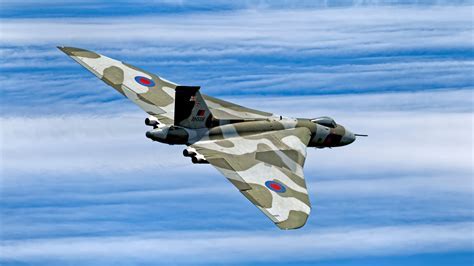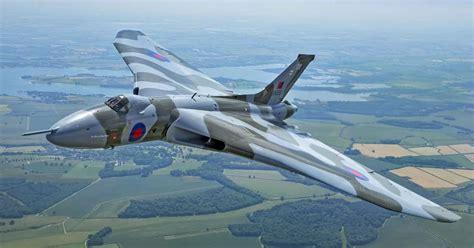
In the annals of British aviation, few aircraft have achieved the legendary status of Avro Vulcan XH558, affectionately named “The Spirit of Great Britain.” As the final airworthy example of the iconic delta-wing V-bomber fleet, XH558 not only symbolizes the apex of Cold War-era aerospace engineering but also the enduring power of public memory and heritage preservation. Over 55 years of distinguished service culminated in a dramatic farewell flight on 28 October 2015, and today, XH558 survives in retirement thanks to the tireless efforts of the Vulcan to the Sky Trust.
Born from Deterrence: The Genesis of the Avro Vulcan
Following the end of World War II, Britain faced the emerging specter of global nuclear conflict. Determined never to be caught unprepared, the UK government issued a tender for a new generation of bombers—aircraft capable of delivering nuclear payloads over 4,000 miles and from altitudes as high as 45,000 feet. The solution arrived in the form of the V-bomber trio: the Vickers Valiant, Handley Page Victor, and the Avro Vulcan.
Among these, the Vulcan stood out with its radical delta-wing design and cutting-edge performance. First taking to the skies in August 1952, the production model Vulcan B.1 entered service in 1955. Subsequent developments led to the Vulcan B.2, boasting Rolls-Royce Olympus engines, electronic countermeasures, a larger wing, auxiliary power units, and air-to-air refueling capabilities.
With the introduction of submarine-based Polaris missiles in the 1960s, the Vulcan’s strategic nuclear role evolved into one that included conventional bombing, reconnaissance, and long-range strike duties.
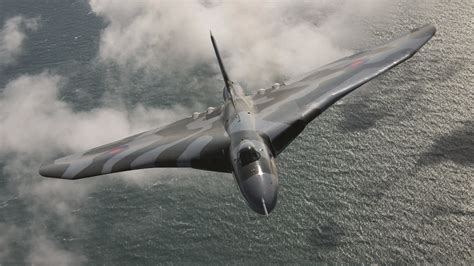
The Rise of XH558: From Factory Floor to Strategic Icon
XH558 was one of 35 Vulcan B.2 units ordered in 1954. Although twelfth on the production line, it became the first B.2 delivered to the Royal Air Force after other units were delayed by modifications. Its maiden flight occurred on 25 May 1960 from Woodford, and by 1 July, it arrived at RAF Waddington, joining the 230 Operational Conversion Unit to train pilots transitioning from earlier Vulcan models.
Adorned in the characteristic anti-flash white, designed to reflect the thermal effects of nuclear detonations, XH558 played a vital role in Cold War readiness. From 1961, it operated from RAF Finningley—later Doncaster Sheffield Airport (DSA)—a key V-bomber base, contributing to rapid dispersal exercises and deterrence patrols aimed at countering Soviet threats.
From Frontline to Display: XH558’s Second Chapter
XH558 retired from active duty in September 1984, but its story was far from over. The aircraft transitioned into a new role as part of the RAF Vulcan Display Flight (VDF), captivating airshow audiences nationwide until 1992, when Ministry of Defence budget cuts grounded the aircraft permanently. Without official backing, XH558 was moved to Bruntingthorpe and faced the very real prospect of being scrapped.
The Public Rescues a Legend
Public sentiment surged to save the aircraft. A 100,000-signature petition delivered to 10 Downing Street catalyzed efforts, and the Walton family stepped forward to acquire the aircraft from the MoD—alongside 600 tons of spares and two brand-new engines. In 1997, David Walton joined forces with Dr. Robert Pleming to establish the Vulcan to the Sky Trust, with the mission of returning XH558 to flight.
Return to Glory: The Second Flight Era (2007–2015)
After a decade of painstaking work, supported by thousands of volunteers and donors, XH558 returned to the skies in 2007. This monumental achievement became one of the most complex heritage aircraft restorations in history. Flying under a CAA Permit to Fly, XH558 stunned airshow crowds once more for eight glorious years, reinforcing her status as an aviation icon.
But all good things come to an end. Regulatory limitations required ongoing support from the original equipment manufacturers (BAE Systems, Rolls-Royce, and Marshall Aerospace). In 2015, these companies withdrew support, citing diminishing expertise, and the Trust was forced to end XH558’s flying career.
The Final Flight: A Salute to Service
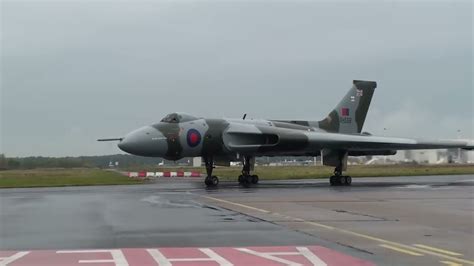
On 28 October 2015, XH558 lifted off for a final, secretive 15-minute flight from Doncaster Sheffield Airport. Spectators were absent due to safety concerns, but the flight—featuring low-level circuits, a touch-and-go, and a water cannon salute—was recorded for posterity. It marked the emotional end of an era.
Post-Flight Preservation: Challenges and Setbacks
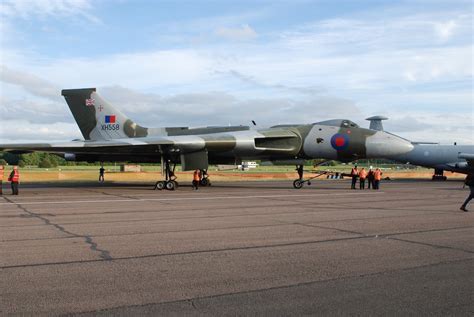
Upon retirement, XH558 returned to DSA, where it remained hangared for public visits and private events. Weddings, concerts, and guided tours generated crucial funding. However, in 2016, the airport’s lease was not renewed, and the aircraft was moved outdoors, severely limiting public access and revenue.
In 2017, the Trust launched a funding appeal, aiming to raise £2.4 million for a new hangar. Although a £400,000 local council grant offered some relief, the goal remained elusive. Then the COVID-19 pandemic hit in 2020, halting all operations and deepening financial strains.
The Trust introduced creative initiatives like a “Name on the Vulcan” campaign, allowing donors to inscribe names on the aircraft’s fuselage. Over 100,000 names now decorate the jet’s iconic bodywork.
Tragedy struck in 2021 with the death of Dr. Robert Pleming, casting uncertainty over the Trust’s future. In 2022, the airport instructed the Trust to vacate, ceasing engine run demonstrations—a loss estimated at £230,000 in potential revenue. Later that year, Doncaster Sheffield Airport closed, suspending relocation plans that would have cost £750,000.
A New Chapter: The Vulcan’s Future Takes Shape
In early 2025, the announcement of the airport’s reopening under new management brought renewed hope. A suitable site within the airfield has been identified for a dedicated Vulcan Experience facility. The plan includes restoring indoor accommodation, educational exhibits, and a return of immersive public events.
The Trust expects to welcome 50,000 visitors annually, establishing a self-sustaining model supported by tours, retail merchandise, donations, and events. The much-loved engine ground runs—a key revenue source and fan favorite—may also resume following rigorous testing.
The Mission Continues: The Trust’s Four Pillars
Under the leadership of CEO Marc Walters, the Vulcan to the Sky Trust remains focused on four principal goals:
- Preserve and protect XH558, returning her to full ground-working order and showcasing her, along with other aviation artefacts, in a custom-built facility.
- Educate the public on XH558’s engineering legacy, historical significance, and strategic role during the Cold War—supported by volunteers, many of whom served during the aircraft’s active years.
- Advance knowledge in aerospace engineering through practical demonstrations, inspiring future generations of aviators and engineers.
- Promote awareness of aviation’s role in climate change, offering insights into sustainable technologies and mitigation strategies.
Legacy in Steel and Spirit
Though grounded, XH558 remains a living monument to British ingenuity, Cold War history, and collective perseverance. Her sleek delta-wing silhouette and rumbling jet heritage continue to captivate a nation. As plans progress for her new permanent home, XH558’s story proves that with enough passion, history doesn’t fade—it flies again in the minds of those who remember.