Modern satellite technology has transformed how governments, scientists, and private companies observe the planet, but the latest generation of orbital sensors is also reviving difficult questions about privacy. The United Kingdom’s HotSat-2 thermal imaging satellite has become the center of that debate after demonstrating an ability to detect detailed heat signatures from industrial facilities, transportation infrastructure, and even activity occurring inside buildings under certain conditions. While the technology promises enormous commercial and security benefits, critics argue that its growing capabilities are advancing faster than legal protections designed to safeguard individual privacy.
Why HotSat-2 Is Drawing Global Attention
Developed by British space company SatVu, HotSat-2 represents a significant leap forward in high-resolution thermal Earth observation. Unlike conventional optical satellites that rely on visible light, thermal sensors capture infrared radiation emitted by objects based on temperature differences. This allows the satellite to operate both day and night while identifying operational activity that ordinary imagery cannot reveal.
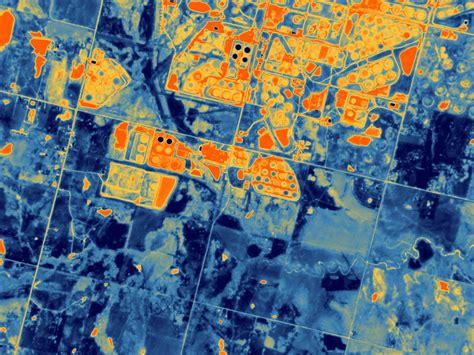
Instead of simply photographing rooftops or roads, HotSat-2 can identify whether industrial machinery is operating, detect abnormal heat emissions, monitor transportation hubs, and measure changing thermal patterns across entire cities. Such capabilities make the satellite valuable for infrastructure management, disaster response, environmental monitoring, and energy efficiency analysis. However, the same technology can also reveal information that many people assume remains private.
Thermal Signatures Can Reveal More Than Expected
Although HotSat-2 cannot see through walls like science fiction imaging systems, thermal analysis can still expose surprising amounts of operational information. Heat escaping from buildings, factories, or industrial equipment creates distinct infrared patterns that sophisticated software can interpret. Analysts may determine whether pumps inside a nuclear facility are active, identify production cycles at manufacturing plants, or estimate operational changes at refineries without physically entering the sites.
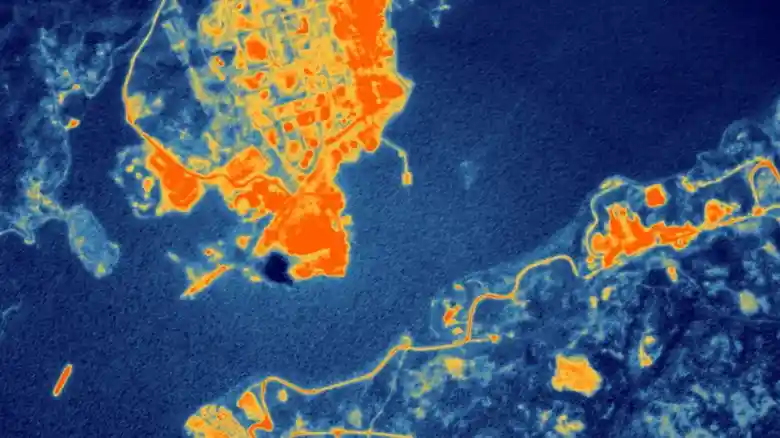
SatVu has highlighted demonstrations involving locations such as Yokosuka Naval Base in Japan, the Ruwais Refinery in the United Arab Emirates, and Albuquerque International Airport in the United States. These examples illustrate how thermal intelligence extends beyond traditional photography by emphasizing activity instead of appearance. For governments and commercial customers, that operational insight is extremely valuable. For privacy advocates, it represents a new layer of surveillance that few legal systems have fully addressed.
National Security Benefits Come With Privacy Questions
The company openly markets HotSat-2 for national security applications, describing its ability to monitor activity, identify unusual thermal behavior, and observe strategically important locations. Intelligence agencies have long relied on thermal imagery to evaluate military facilities, transportation networks, and critical infrastructure. Public reports have even described similar technology being used to assess operational conditions at nuclear facilities by analyzing equipment heat signatures.
At present, there is no documented evidence that SatVu has violated personal privacy or civil liberties using HotSat-2. Nevertheless, experts note that technological capability often develops more rapidly than legislation. As thermal resolution improves and satellite constellations become larger, concerns naturally expand beyond industrial monitoring toward broader questions about persistent observation from orbit.
Past Court Cases Show Privacy Concerns Are Not New
The legal debate surrounding thermal surveillance predates modern commercial satellites. In 2001, the U.S. Supreme Court ruled in Kyllo v. United States that law enforcement violated constitutional protections by using a thermal imaging device to examine a private residence without obtaining a warrant. The Court concluded that technology unavailable to the general public should not be used to reveal information about the interior of a home without judicial authorization.
Although HotSat-2 operates hundreds of kilometers above Earth rather than outside a neighborhood house, the underlying privacy principle remains relevant. If thermal technology can indirectly disclose information about activities occurring inside buildings, lawmakers may eventually need to reconsider existing legal frameworks for satellite surveillance.
A Growing Satellite Network Could Expand Monitoring Capabilities
HotSat-2 launched on March 30, 2026, initially serving as a technology demonstration before becoming fully operational on June 29, 2026. Shortly afterward, it reportedly captured thermal activity at an oil refinery in Cuba before public announcements confirmed operational changes. Similar observations at South Africa’s Sasol Secunda complex demonstrated how analysts could assess industrial output using only orbital heat measurements.

The satellite also represents only the beginning of SatVu’s broader vision. The company plans to deploy an expanding constellation of thermal imaging satellites capable of providing increasingly frequent observations worldwide. As revisit times shrink and analytical software grows more advanced, the balance between valuable Earth observation and personal privacy will likely become one of the defining policy debates of the modern space age.