In the field of aerospace engineering, the margin for error is razor-thin. Mission success hinges on systems that perform under the most extreme conditions imaginable—intense vibration, searing heat, subzero cold, radiation, and the vacuum of space. Among the most mission-critical components are aerospace cameras, tasked with capturing ultra-precise imagery to monitor system integrity, guide navigation, and support scientific discovery. At the forefront of this domain stands IMPERX, a U.S.-based leader in rugged, high-performance imaging technology.
IMPERX aerospace cameras have been deployed in thousands of missions, from low Earth orbit to deep space exploratory flights. Built with military-grade components and certified to withstand punishing environmental stressors, these imaging systems are engineered for unwavering reliability and performance.
High-End Durability for Mission-Critical Operations
Aerospace is not just another market for imaging—it is the ultimate stress test. IMPERX cameras are subjected to rigorous quality assurance protocols and certified under MIL-STD-810F, a military standard for environmental engineering considerations and laboratory testing. These cameras are built with industrial-grade components that offer an operational temperature range from -40°C to +85°C, with a shock/vibration resistance exceeding 1000G/100G. Such specifications are essential for launch vehicles, where hardware faces immense acceleration forces and rapid atmospheric transitions.
The cameras boast a mean time between failures (MTBF) of over 660,000 hours at 40°C, according to Telcordia SR-332 standards. This staggering durability underscores their suitability for long-duration missions, including lunar and interplanetary expeditions.
Real-Time Monitoring and Analysis in Rocket Systems
IMPERX imaging systems have been instrumental in monitoring some of the world’s most ambitious aerospace projects. For instance, during NASA’s Artemis I mission, cameras were mounted externally on the Space Launch System (SLS) to observe critical rocket components, including the RS-25 engines and first-stage separation. Real-time video captured with these cameras was used to assess engine plume uniformity, detect anomalies, and inform ground-based decisions.
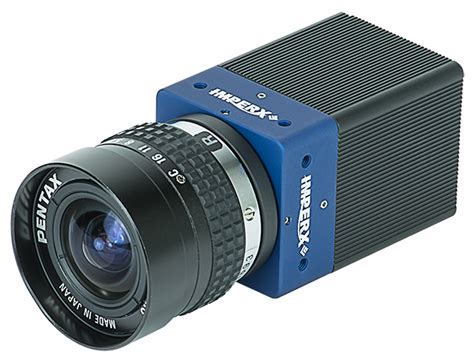
Their integration enables deep insight into launch dynamics, capturing visual data that accelerates post-flight analysis and helps refine the performance of future missions. With low power consumption and compact architecture, these systems are optimized for spacecraft where payload mass and energy efficiency are tightly controlled.
Lunar and Suborbital Flight Applications
In 2019, SpaceIL’s Beresheet lunar lander, launched aboard a reused SpaceX Falcon 9, utilized IMPERX cameras to document its trajectory and orbital maneuvers around the Moon. Although the mission did not culminate in a successful landing, it was a landmark effort—the first attempted Moon landing by a privately funded entity. The high-resolution images collected offered valuable data and vivid visuals of deep space.
Likewise, Virgin Galactic’s VSS Unity, part of the company’s pioneering space tourism program, employed IMPERX cameras during its rocket-powered test flight over the Mojave Desert. These cameras documented the view from space, including breathtaking scenes of the Sierra Nevada mountain range—images that proved both technically and commercially significant.
Decades of Excellence: Delta IV Heavy Missions
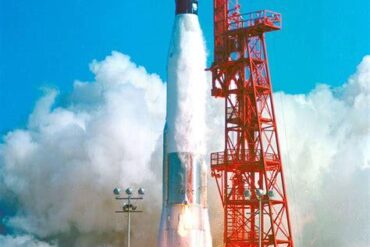
The Delta IV Heavy, one of the most powerful rockets in operation, routinely carries national security payloads for the U.S. Air Force and the National Reconnaissance Office. For over 15 years, IMPERX cameras have been integrated into these missions, consistently delivering flawless imaging under extreme launch conditions. As the rocket lifts off, cameras capture every moment—from ignition to orbit—providing essential diagnostics and supporting milestone verification.
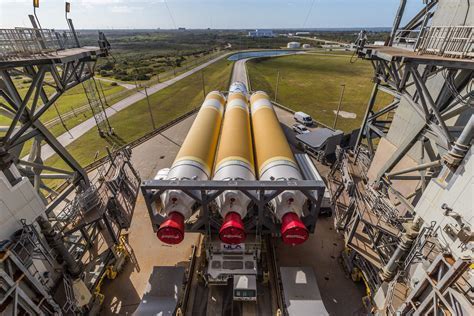
The continued use of IMPERX imaging systems in these classified missions reflects deep institutional trust in their operational dependability and technical excellence.
Aerospace Imaging Technologies: CMOS, IP67, and SPC-S2010
IMPERX’s portfolio includes advanced imaging solutions like the CMOS Cheetah series, known for high dynamic range, flexible triggering, and programmable imaging parameters. These models are designed with aerospace integrators in mind, offering compatibility with a variety of system architectures and communication protocols.
The IP67-rated cameras provide complete protection against dust ingress and water immersion, making them ideal for exposed applications like external fuselage mounting or engine nacelle monitoring. Built with Sony Gen2 and Gen3 Pregius global shutter sensors, they deliver crisp, distortion-free imagery even at high frame rates.
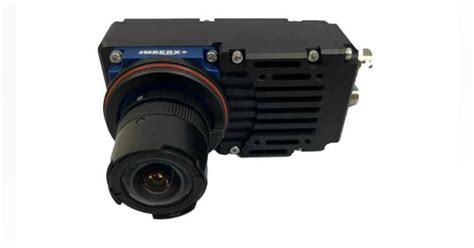
Developed under a NASA Space Act Agreement, the SPC-S2010 model is a testament to precision engineering. It offers exceptional sensitivity, a wide dynamic range, and adaptability for missions requiring versatile optics and lightweight configuration. This makes it suitable for multiple launch vehicle platforms, including experimental payload tests and next-gen satellite programs.
Custom-Built Solutions and Adaptability
One of the hallmarks of IMPERX’s success in aerospace is its willingness and ability to customize imaging solutions. Any standard camera can be modified or redesigned to meet highly specific mission criteria, whether the requirement is for unique housing form factors, special lens configurations, or integration with non-standard avionics systems.
This adaptability has proven crucial in projects involving prototype spacecraft, one-off experimental platforms, and payload integration under strict mass and power constraints. Whether it’s a minimal tweak or a ground-up re-engineered solution, IMPERX’s engineering team collaborates directly with aerospace clients to ensure mission goals are met.
Advanced Image Processing for Enhanced Data Insight
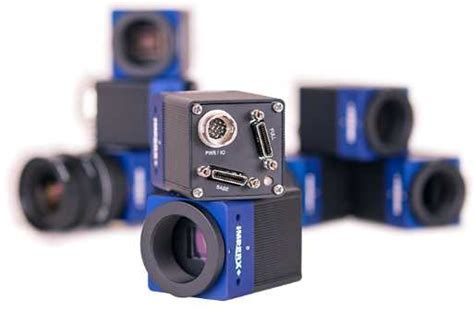
Aerospace missions rely not only on image capture, but also on accurate interpretation. IMPERX cameras feature onboard advanced image processing algorithms designed to minimize noise, enhance contrast, and improve edge definition in real-time. These features enable automated systems to make rapid decisions based on visual input and empower scientists with high-fidelity datasets for post-mission analysis.
The cameras also support multiple output formats and trigger/strobe configurations, facilitating synchronization with other onboard systems, including navigation tools, thermal imagers, and scientific payloads.
Conclusion: The Future of Aerospace Imaging
As aerospace ventures grow increasingly ambitious—from Mars colonization to commercial orbital hotels—the role of reliable, high-performance imaging systems will only intensify. Cameras must serve as eyes in the void, documenting uncharted terrain, guiding navigation, verifying mechanical operations, and supporting the scientific method.
With its robust portfolio, proven mission track record, and deep customization capabilities, IMPERX stands as a foundational partner for aerospace imaging needs. In a realm where performance is paramount and compromise is not an option, IMPERX cameras provide the clarity, endurance, and intelligence that modern space exploration demands.