We stand at a remarkable point in modern history where space is no longer the sole domain of one iconic federal agency. While popular imagination still gravitates toward government-led exploration, a parallel legacy has been unfolding for decades in the United States. We can see it in classified military programs, privately funded satellites, commercial space tourism, and experimental missions that dared to defy convention. These historic U.S. space missions, conducted without NASA leadership, have quietly redefined what access to orbit and beyond truly means. Their stories are not side notes to history; they are foundational chapters in the evolution of independent spaceflight, revealing how technological courage and private-sector ingenuity steadily reshaped the boundaries of what is possible.
The X-37B Orbital Test Vehicle and the Rise of Autonomous Military Spaceplanes
The X-37B Orbital Test Vehicle represents one of the most sophisticated leaps in reusable spacecraft ever accomplished by the United States without NASA’s operational involvement. Developed by Boeing and operated by the U.S. Space Force, this uncrewed spaceplane blurs the line between satellite and spacecraft by combining long-duration orbital capability with runway landings. Since its first flight in 2010, the X-37B has remained an enigma, flying largely classified missions that test advanced propulsion concepts, thermal protection systems, and next-generation materials under the harsh realities of prolonged exposure to space.
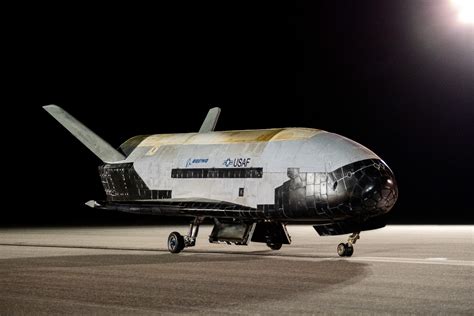
What makes the X-37B historically significant is not merely its secrecy but the way it demonstrates operational independence and technological maturity. Unlike traditional expendable spacecraft, it stays in orbit for more than a year at a time, autonomously conducting experiments before gliding back through Earth’s atmosphere. During the OTV-7 mission, launched in late 2023 and concluded in early 2025, the vehicle spent over 434 days in orbit and validated aerobraking techniques that allow dramatic orbital changes with minimal fuel consumption. This marked a major advancement in sustainable military spacecraft operations, showing how reusable platforms can serve as long-term orbital laboratories without reliance on NASA’s infrastructure.
The Global Positioning System and the Invisible Architecture of Modern Life
The Global Positioning System is perhaps the most quietly powerful non-NASA space mission in American history. Conceived in the 1970s by the U.S. Department of Defense and now overseen by the United States Space Force, GPS was originally designed to give military forces precise, real-time navigation anywhere on Earth. Over time, it expanded into a global service that now underpins civilian life on a scale few technologies can match. From aviation and maritime navigation to smartphone maps, financial networks, and power grid synchronization, GPS has become invisible infrastructure that modern civilization would struggle to function without.
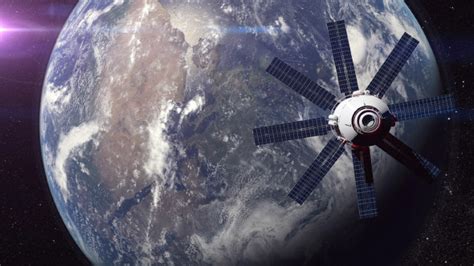
The system operates through a constellation of satellites orbiting roughly 12,550 kilometers above Earth, maintaining at least 24 active spacecraft and typically more than 30 in service to ensure full planetary coverage. Full operational capability was achieved in 1995, marking a turning point in satellite navigation. The modern GPS III satellites introduced stronger, more resilient signals and improved resistance to interference, ensuring higher accuracy and reliability. The historical importance of GPS lies in how it normalized space as a permanent utility rather than an exploratory frontier, proving that independent military-managed space systems could become essential public resources without NASA direct control.
Dove Constellation and the Daily Imaging of a Living Planet
When Planet Labs launched the first members of the Dove constellation, it introduced a radical idea to space operations: Earth observation as a continuous, commercial service owned and operated entirely by a private company. Founded by engineers who had previously worked within NASA’s ecosystem but deliberately stepped outside its structure, Planet Labs created a fleet of CubeSats that now image almost every point of Earth’s landmass on a daily basis. These shoebox-sized satellites capture imagery at resolutions of roughly three to five meters per pixel, sufficient to monitor deforestation, urban expansion, agricultural health, disaster zones, and coastal changes with near real-time clarity.
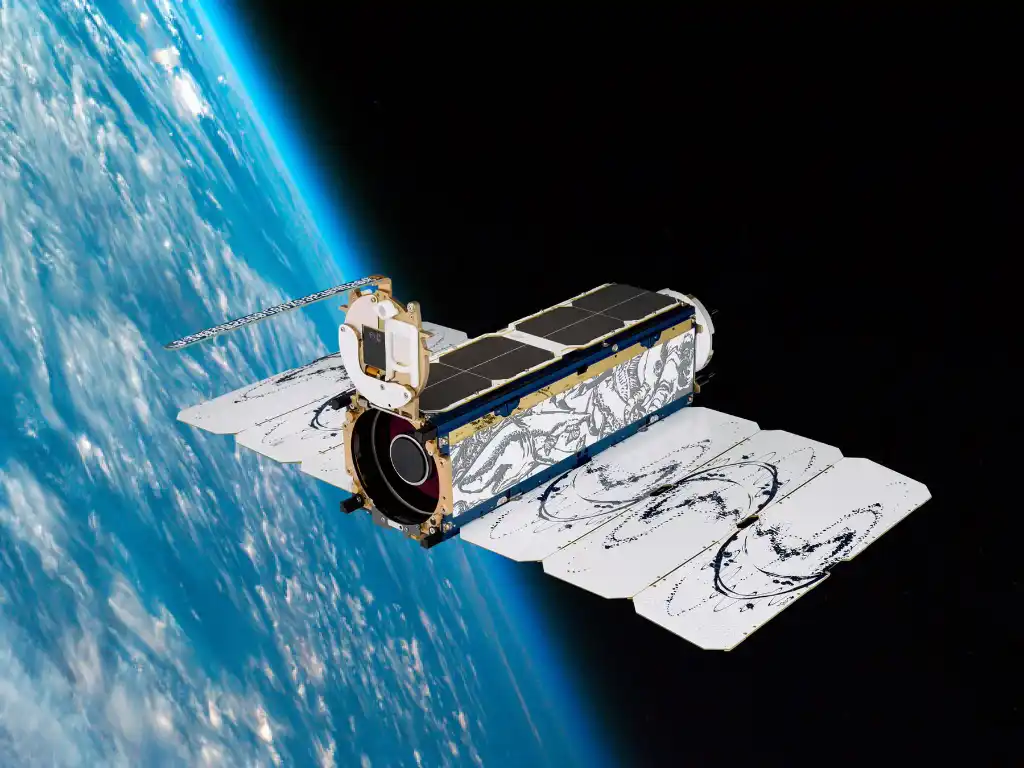
What makes this mission historic is its scale and philosophy. Instead of building a few large, expensive satellites, the Dove program embraced mass production and rapid deployment, launching dozens of satellites at once, including a record batch of 88 in a single mission. Operating independently from NASA, Planet Labs manages spacecraft design, operational control, and data delivery internally. The constellation orbits between 280 and 360 miles above Earth, forming a living, constantly updated visual archive of the planet. This mission effectively transformed Earth observation from a slow, government-driven process into a private, high-frequency global service that changed the way governments, companies, and researchers understand planetary change.
New Shepard and the Commercialization of Human Suborbital Spaceflight
Blue Origin’s New Shepard system represents a profound cultural and technological shift in American space history. Rather than focusing solely on government astronauts and research institutions, this reusable suborbital launch system made space accessible to private citizens and commercial experiments without NASA operational direction. Developed to reach the Kármán line, widely recognized as the boundary of space, New Shepard carries both people and research payloads on short but transformative flights lasting approximately ten minutes.
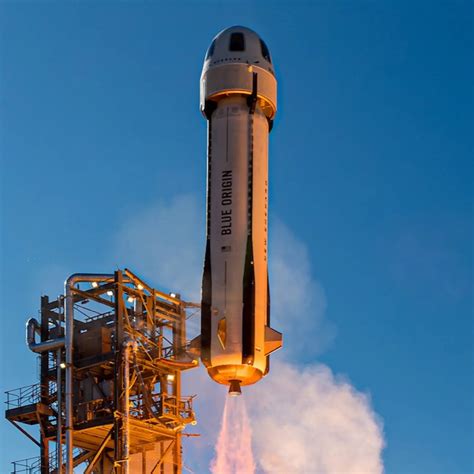
The system’s vertical launch and landing architecture has proven the viability of reusable rockets for human spaceflight in a commercial context. Passengers experience several minutes of weightlessness and a sweeping view of Earth before returning safely via parachute to the Texas desert. By October 2025, the program had flown dozens of missions and carried a growing number of individuals into space, while also hosting university and startup research in microgravity conditions. Historically, New Shepard stands as evidence that private companies can safely conduct human space missions, turning what was once an exclusive national capability into an emerging industry defined by accessibility, efficiency, and reusability.
Arkyd-6 and the First Practical Steps Toward Commercial Asteroid Mining
The Arkyd-6 mission occupies a uniquely visionary place in the story of independent American space exploration. Developed by Planetary Resources, a private company with the ambitious goal of harvesting resources from near-Earth asteroids, this small 6U CubeSat served as a technology demonstration for instruments designed to identify water and mineral deposits in space. Launched in January 2018 aboard an Indian PSLV rocket, Arkyd-6 carried 17 onboard experiments, including a mid-wave infrared imager capable of detecting water vapor and volatile compounds.
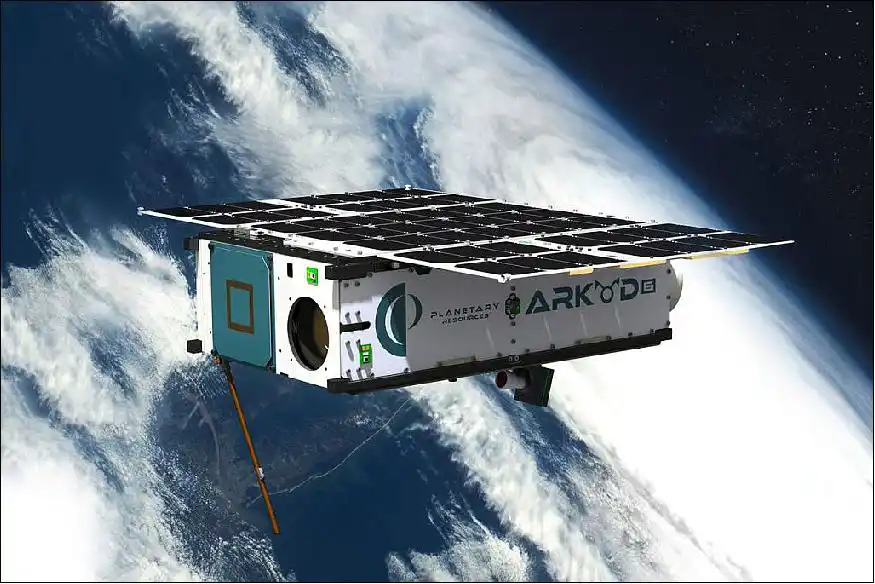
Although the spacecraft operated in low Earth orbit rather than traveling to an asteroid, the mission successfully validated communication, navigation, and sensor systems critical for future deep-space resource exploration. Even though Planetary Resources was later acquired and its larger ambitions paused, the Arkyd-6 project proved that private, non-governmental teams could conduct sophisticated space missions on relatively modest budgets. Its historical importance rests in how it shifted asteroid mining from the realm of theoretical science fiction into practical engineering, showing that commercial resource extraction beyond Earth was no longer purely speculative.
How Independent US Space Missions Redefined Power, Access, and Purpose in Orbit
Taken together, these non-NASA U.S. space missions tell a larger story about power, access, and purpose beyond Earth. We can see a clear evolution from centralized, government-driven exploration toward a distributed ecosystem of military, commercial, and private actors shaping orbital space. The X-37B demonstrated how classified military spaceplanes could operate for years without human crews. GPS transformed satellites into permanent infrastructure. The Dove constellation turned Earth observation into a commercial, near real-time utility. New Shepard opened the door to routine human access to the edge of space. Arkyd-6 tested the first tools of off-world resource prospecting.
Historically, these missions did more than achieve technical milestones. They altered cultural expectations around who “owns” space and who gets to use it. The United States, through these efforts, pioneered a model in which innovation often emerges from competition, secrecy, entrepreneurship, and private risk-taking rather than centralized bureaucracy. This model accelerated development cycles, reduced costs through reuse and miniaturization, and invited new industries to view space as a viable operational environment rather than a distant aspiration.
The Enduring Legacy of Non-NASA Spaceflight in the American Innovation Tradition
The enduring legacy of these historic missions lies in their quiet but irreversible transformation of the aerospace landscape. We now live in a world where satellites are built in batches, rockets land themselves, civilians buy tickets to space, and private firms casually collect planetary-scale data every day. None of this required NASA to be in command. Instead, these missions showed how American innovation thrives when diverse institutions compete, collaborate, and experiment beyond traditional boundaries.
They also reshaped the strategic importance of space. Navigation, communications, surveillance, climate monitoring, and future resource extraction now depend on systems born outside NASA’s direct control. In doing so, these missions expanded the definition of “exploration” from planting flags on distant worlds to building permanent, functional architectures that operate silently above us.
A New Era Defined by Non-NASA US Space Missions
We now understand that the history of American spaceflight is not a single, centralized narrative. It is a tapestry woven from classified military aircraft, commercial imaging constellations, reusable suborbital rockets, and experimental resource prospectors. These historic U.S. missions to space that weren’t NASA did not merely supplement traditional exploration; they redefined it. They proved that space can be simultaneously a laboratory, a marketplace, a battlefield, and a frontier for private ambition.
As these independent missions continue to evolve, they point toward a future where access to orbit is routine, resources may be harvested beyond Earth, and the boundary between Earth and space becomes a dynamic, commercially active zone. The quiet revolution they began has already succeeded, and it continues to shape how humanity lives, navigates, observes, and dreams beyond the sky.