NASA’s exploration of Mars reveals a story of ambition measured not only in scientific breakthroughs but also in dollars. Each mission reflects a moment in technological evolution, budgetary philosophy, and the shifting arc of scientific curiosity. When we trace these costs across six decades, we gain more than a ledger of expenditures. We gain a map of human determination, showing how far we are willing to reach for knowledge beyond Earth. The investments behind these missions demonstrate how science, engineering, and policy weave together to shape the pace of Martian discovery.
The financial history of Mars exploration is striking. Early flyby missions, modest in scope and design, cost only a fraction of what today’s rovers require. Yet when adjusted for inflation, even 1960s spacecraft carry weighty price tags, revealing how groundbreaking it was to push hardware toward another world with mid-century technology. Later missions grew increasingly sophisticated—orbiters with high-resolution imagers, landers with robotic arms, and rovers carrying laboratories capable of identifying ancient habitable environments. These projects became more expensive not simply because they became larger, but because expectations rose with each scientific victory.
By examining the cost of each major Mars mission—from Mariner to Perseverance—we recognize how the price of progress evolves alongside our appetite for answers.
Mariner Era Costs: The First Steps Toward Mars
The Mariner program marked the beginning of the United States’ serious attempts to understand Mars. These missions balanced simplicity with boldness, venturing into an unexplored domain where every maneuver counted. Mariner 4, launched in 1964, cost roughly $83 million in nominal dollars, equivalent to about $800 million when adjusted to modern currency. The spacecraft returned the first close-up images of the Martian surface, revealing a cratered, seemingly lifeless landscape that overturned speculation about canals and civilizations.
The twin missions Mariner 6 and 7, launched in 1969, expanded on Mariner 4’s foundation at a combined cost of $148 million, or approximately $1.2 billion today. Their contributions refined our early understanding of Mars’ atmosphere and surface composition, offering the first data that helped scientists model Martian climate with any confidence.
Mariner 9, launched in 1971, was the first spacecraft to orbit another planet. Its nominal cost of $137 million, or $1 billion in modern dollars, bought a vantage point that changed everything. Mariner 9 revealed canyons, volcanoes, dust storms, and ancient riverbeds—features that reshaped scientific hypotheses and seeded decades of future missions.
Viking’s Monumental Price Tag: The Most Expensive Mars Mission in History
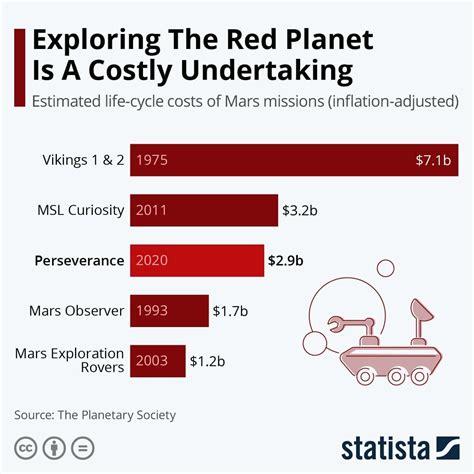
In 1975, the Viking 1 and Viking 2 mission complex took Mars exploration to another level. These paired orbiter-lander spacecraft constitute the most expensive robotic planetary mission NASA has ever undertaken. With a nominal cost of $1.06 billion, equating to $7.1 billion adjusted, Viking became the gold standard for ambition.
The price reflected not only the engineering but the philosophy of the era—NASA sought definitive answers about life on Mars. The landers performed the first experiments explicitly designed to detect biological activity. While the results remain debated, Viking’s impact is undeniable. The mission provided tens of thousands of images, weather data, soil analyses, and hard lessons about the challenge of interpreting a planet with unfamiliar chemistry.
Viking’s expense set a financial benchmark that influenced NASA’s later shift toward the more cost-conscious “faster, better, cheaper” model of the 1990s.
The Cost-Cutting Revolution: Mars in the 1990s
The 1990s represented a recalibration of affordability. After the Challenger disaster and a changing political climate, NASA reimagined how to produce results on constrained budgets.
Mars Global Surveyor, launched in 1996 for $219 million plus $40 million in operations, delivered an extraordinary scientific return for a mission that cost only about $500 million today. It mapped Mars with unprecedented precision, revealing layering in its crust, evidence of past water erosion, and detailed gravity models that shaped future landings.
Mars Pathfinder, which arrived in 1997 with the Sojourner rover, cost only $265 million—a remarkably low figure for what became a cultural phenomenon. Adjusted to today’s dollars, Pathfinder totals $485 million. Its airbag landing system, its autonomous rover navigation, and its clever public-friendly outreach changed how the world perceived Mars missions.
This era proved that world-class discoveries did not always require breathtaking budgets.
Early 2000s Orbital Workhorses: Reliable Science at Mid-Level Costs
As the early 2000s unfolded, orbital missions became scientific engines, carrying sophisticated instruments at sustainable costs.
The 2001 Mars Odyssey orbiter launched with a total cost of $297 million, or roughly $480 million adjusted. Odyssey identified water ice just beneath the surface—a discovery that transformed our understanding of Martian geology and future human exploration prospects.
In 2003, NASA sent the Spirit and Opportunity rovers, a twin-rover project that cost $1.08 billion including 15 years of operations. When adjusted, the price reaches about $1.5 billion. Their success exceeded every expectation. Opportunity, designed for 90 days, roamed the planet for nearly 15 years, exploring craters, dunes, and mineral deposits that fundamentally altered theories about Mars’ aqueous past.
The Mars Reconnaissance Orbiter (MRO) followed in 2005, carrying the HiRISE camera, which still produces the most detailed surface images of Mars. At $717 million nominal, or $1 billion adjusted, MRO provided reconnaissance so detailed that mission planners now rely on it to select landing sites with pinpoint accuracy.
Phoenix and MAVEN: Specialized Missions With Targeted Budgets
Moving toward the late 2000s, NASA launched missions with highly focused scientific goals.
The Phoenix lander, launched in 2007 for $420 million (about $550 million today), confirmed the presence of water ice in the Martian arctic. Its robotic digging arm and onboard laboratory revealed perchlorates—chemicals that influence astrobiology and future human habitation.
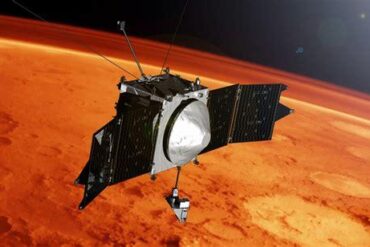
Then came MAVEN in 2013, an orbiter designed to unravel how Mars lost its atmosphere over billions of years. At a cost of $583 million, or about $700 million adjusted, MAVEN’s data illuminated the solar-wind stripping process, showing why Mars changed from a warm, wet world to the cold desert we see today.
Curiosity: The Billion-Dollar Laboratory on Wheels
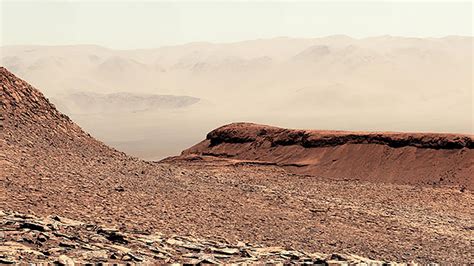
The arrival of the Mars Science Laboratory (Curiosity) in 2011 marked a return to large-scale spending. With a nominal cost of $2.53 billion, equivalent to $3.2 billion today, Curiosity carried the most sophisticated payload ever sent to another planet.
Its instruments—spectrometers, radiation detectors, environmental sensors, and a sample-analysis laboratory—turned the rover into a mobile geology and chemistry suite. Curiosity confirmed that Mars once hosted environments capable of supporting microbial life. It uncovered evidence of ancient lakes, organic molecules, and long-lasting habitable conditions.
Curiosity’s precision landing with the “sky crane” system became a technological breakthrough that set the stage for future missions.
InSight and the Geophysical Moment
The InSight lander, launched in 2018 with a total cost of $814 million (about $850 million adjusted), focused on interior structure—an entirely new domain of Martian science. Its seismometer detected Marsquakes, offering the first seismic activity measurements outside Earth and the Moon. These data points helped scientists understand Mars’ crust, mantle, and core, deepening knowledge of rocky planet evolution.
InSight represented a targeted, moderately priced mission delivering deeply specialized insights.
Perseverance and Ingenuity: Modern Ambition at a Multi-Billion-Dollar Scale
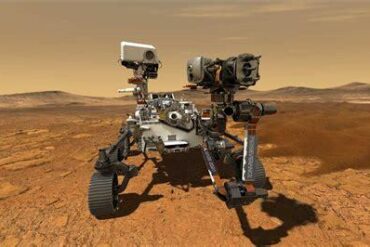
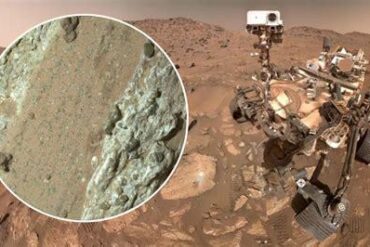
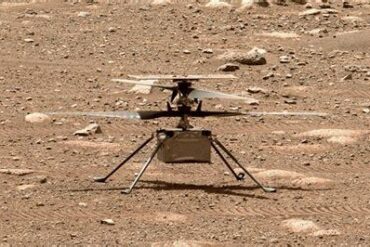
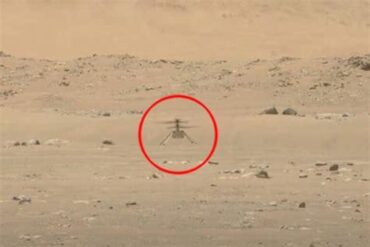
The Mars 2020 mission, carrying the Perseverance rover and the Ingenuity helicopter, launched with a cost of $2.7 billion, or $2.9 billion in slightly adjusted terms. This mission introduced technologies critical for future human exploration. Perseverance’s ability to cache samples for eventual return to Earth marks a turning point in Mars science. Ingenuity, the first aircraft to fly on another planet, demonstrated powered flight in an environment with only 1% of Earth’s atmospheric density.
This mission’s cost reflects its dual scientific and technological mandates: to search directly for biosignatures and to test systems essential for eventual human expeditions.
The Bigger Picture: Total Investment in Six Decades of Mars Exploration
Since 1964, NASA has spent over $30 billion in nominal dollars and more than $50 billion when adjusted for inflation on Mars missions. These funds built a layered scientific legacy:
- Early flybys taught us Mars was a cratered desert.
- Orbiters revealed global patterns in geology, climate, and water ice.
- Landers confirmed the presence of water and complex soil chemistry.
- Rovers uncovered ancient lakes, habitable environments, and organic molecules.
- Atmospheric orbiters explained how Mars lost its once-thick atmosphere.
This investment is the price of answering one of humanity’s oldest questions: whether life ever emerged on another world.
Future missions, including the proposed Mars Sample Return project, could cost $8–11 billion, marking the next dramatic leap in both science and budget. Each dollar reflects a decision to explore farther, understand deeper, and push the frontier of human knowledge.
Mars exploration is expensive because discovery is expensive. Yet every mission adds to a growing archive that reshapes our understanding of planets, habitability, and our place in the universe. NASA’s financial chronology on Mars, while measured in billions, tells a larger story measured in curiosity, persistence, and the steady expansion of our reach beyond Earth’s horizon.