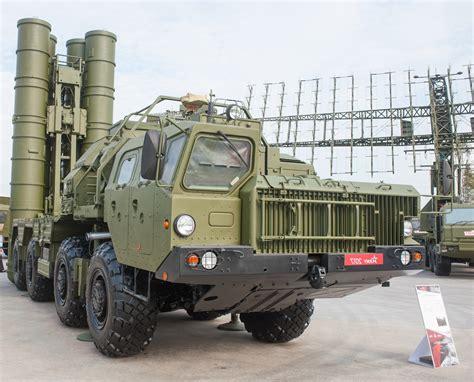
The S-400 Triumph, developed by Almaz-Antey for the Russian Armed Forces, stands at the apex of modern air defense systems. With its multi-layered protection, long-range interception capability, and versatility against various aerial threats, the S-400 has rapidly become one of the most sought-after strategic defense assets in the world. As geopolitical tensions rise and nations seek to fortify their skies, understanding the true cost of each S-400 missile and how it stacks up against its global counterparts like the U.S. THAAD system becomes imperative.
Understanding the S-400 Triumph System
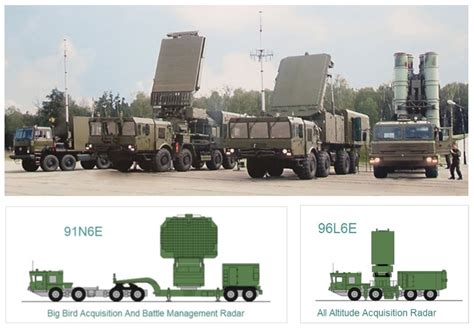
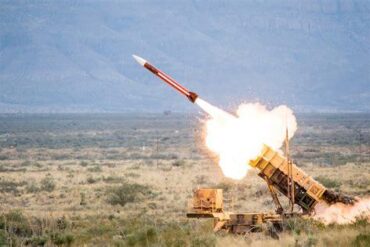
The S-400 is not a singular weapon but a complex integrated system comprising radars, command centers, and multiple types of surface-to-air missiles. Designed to neutralize enemy aircraft, stealth fighters, drones, cruise missiles, and even ballistic missiles, it leverages cutting-edge technologies in guidance, tracking, and propulsion.
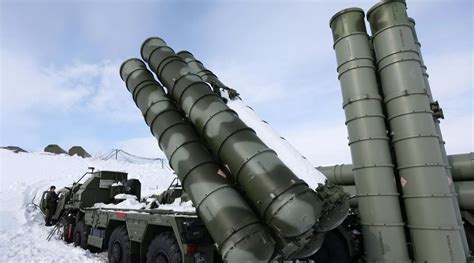
At the heart of its appeal is its multi-missile capability, which allows it to engage targets at varying distances and altitudes. This flexibility makes it a formidable force multiplier and a key element in any nation’s strategic air defense architecture.
The Four Missiles That Power the S-400
The S-400 Triumph system is uniquely configured to operate with four distinct types of missiles, each tailored to meet different threat scenarios and engagement envelopes:
- 48N6E3: With a range of up to 250 kilometers, this missile is optimized for targeting aircraft and incoming missiles at medium to long ranges. It is fast, reliable, and forms the backbone of the S-400’s standard engagement.
- 40N6E: The most powerful and expensive of the group, this missile can hit targets up to 400 kilometers away. It is particularly effective against high-value airborne assets and has semi-active radar homing.
- 9M96E and 9M96E2: These short-range, high-speed missiles are designed for rapid interception of maneuvering targets. Their cost-efficiency makes them ideal for shooting down drones and tactical missiles.
Each of these missiles comes with its own production complexity and technological sophistication, leading to a wide range of pricing.
Cost Per Missile: Breaking Down the Figures
The price of an S-400 missile varies significantly depending on its type and associated hardware. Here is a detailed look at the pricing:
- Basic missiles such as the 9M96E and 9M96E2 reportedly cost between $300,000 to $500,000.
- The 48N6E3, with its greater range and advanced electronics, is estimated to be priced around $1 million.
- The 40N6E, the crown jewel of the system, can cost anywhere from $1 million to $2 million per unit, depending on production batch and configuration.
These costs are influenced not only by the missile’s range and payload but also by embedded technologies such as target tracking sensors, GPS guidance systems, and command link upgrades. The research and development overhead of each missile family also plays a role in its market price.
Why Are These Missiles So Expensive?
S-400 missiles are packed with high-end electronic warfare components, navigation systems, and advanced propulsion mechanisms that allow them to strike agile, fast-moving targets. The cost reflects more than just hardware — it encompasses decades of military innovation, testing, and systems integration.
Furthermore, each launch requires a sophisticated command-and-control infrastructure that processes surveillance data from radar units capable of tracking up to 300 targets simultaneously, and engaging up to 36 targets at once. This level of sophistication ensures each missile launch is precise, strategic, and impactful.
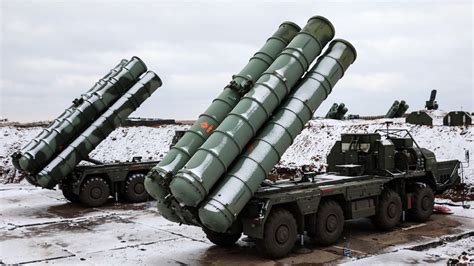
However, critics argue that the cost-effectiveness of using such high-value missiles is diminishing, especially when deployed against low-cost aerial threats like kamikaze drones priced at merely $20,000. When a $2 million missile is used to neutralize a $20,000 threat, the math becomes unfavorable, prompting militaries to develop lower-tier defenses for minor threats.
Which Countries Own the S-400?
Despite U.S. sanctions and geopolitical friction, three countries have officially acquired the S-400 Triumph system:
- India: Signed a $5.43 billion deal in 2018 to purchase five S-400 regiments. The first units began arriving in late 2021.
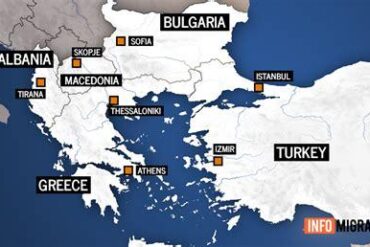
- Turkey: Entered into a $2.5 billion agreement with Russia for four batteries, drawing sharp rebukes from NATO and the U.S.
- China: Became the first international buyer, with deliveries starting in 2018 under a $3 billion agreement.
These deals often bundle multiple components — including radars, launchers, command posts, and upwards of 144 missiles per package — which complicates the per-unit cost estimation.
Breaking Down the Package Cost
Taking Turkey’s deal as a benchmark, we observe the following:
- Total Package Cost: $2.5 billion
- Number of Batteries: 4
- Estimated Missiles: ~144
If we isolate the missile component and exclude supporting infrastructure (radars, TELs, command vehicles), the per-missile cost ranges from $0.5 million to $1 million — a stark contrast from the average $17 million figure often cited when infrastructure is included.
This underlines the importance of contextualizing cost — raw missile prices vs. complete integrated system acquisition.
S-400 vs. THAAD: A Cost and Capability Comparison
The Terminal High Altitude Area Defense (THAAD) system developed by the United States represents one of the most advanced anti-ballistic missile systems in the world. However, it comes with a substantially higher price tag:
- One THAAD battery costs approximately $3 billion.
- Each THAAD interceptor missile is priced around $11 million to $20 million.
Compared to the S-400’s $500 million per battery estimate, this makes THAAD 5 to 6 times more expensive in terms of infrastructure and 10 to 20 times more expensive per missile.
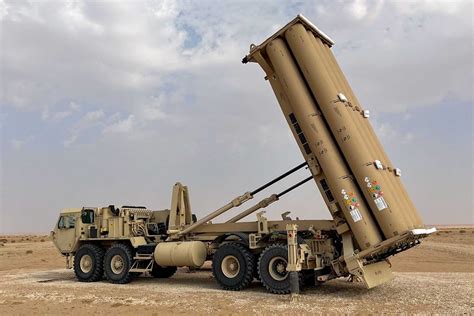
Capability-wise, THAAD is primarily designed for exo-atmospheric interception of ballistic missiles, whereas the S-400 is more versatile, capable of engaging a wider variety of airborne threats at multiple altitudes and ranges. While THAAD excels in missile defense against long-range threats, it is less adaptable for tactical battlefield use, unlike the multi-mission flexibility of the S-400.
Economic Sustainability of Air Defense Strategy
The growing threat from low-cost drones and loitering munitions is forcing nations to rethink their air defense cost structures. Shooting down a $50,000 drone with a $2 million missile is no longer considered sustainable. The emphasis is shifting toward layered defense systems:
- High-tier systems like S-400 for long-range and high-value targets.
- Medium-tier interceptors such as Buk-M2 and Pantsir-S for medium-range threats.
- Low-cost anti-drone systems, including laser weapons and jamming technologies for UAVs and swarm attacks.
Countries are rapidly modernizing their military doctrines to ensure maximum strategic impact while optimizing cost-per-interception ratios. The S-400’s strength lies in its role as a strategic umbrella, not in neutralizing every airspace intrusion.
Conclusion: Cost, Capability, and Strategic Value
The S-400 missile system offers a potent combination of flexibility, firepower, and affordability, particularly when compared to western counterparts like THAAD and Patriot systems. Though missile costs range from $300,000 to $2 million, the value lies in the system’s ability to deter and neutralize complex aerial threats over vast distances.
However, as warfare evolves with swarm drones, stealth technology, and cyber warfare, even systems like the S-400 must adapt. Its value remains undeniable — a symbol of strategic autonomy for countries like India, Turkey, and China — but it must be integrated into a broader layered defense architecture to remain economically and militarily viable in the long term.