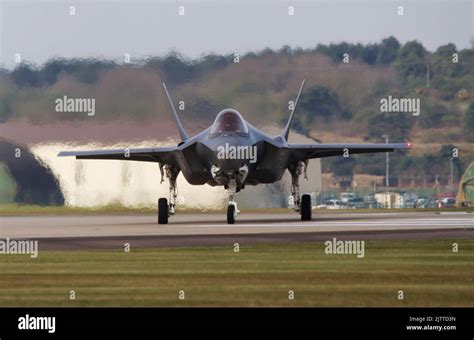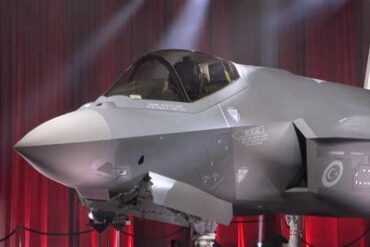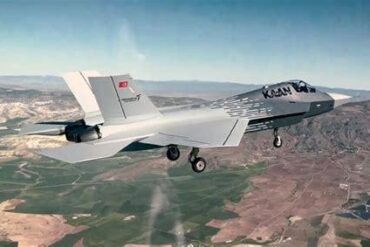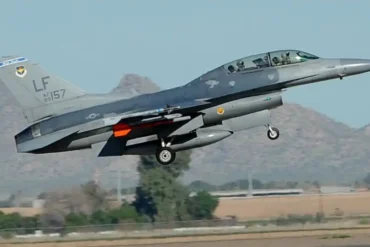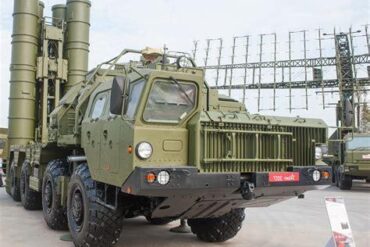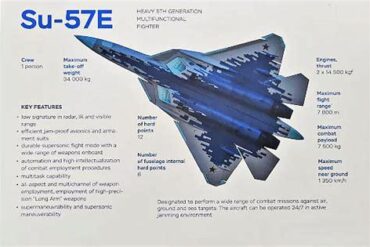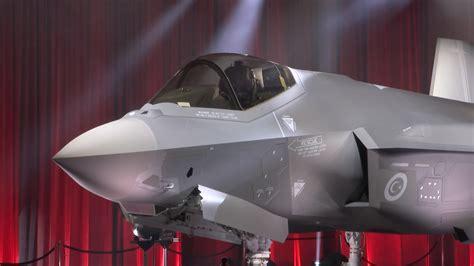
In a dramatic reversal that signals a shift in both defense doctrine and geopolitical alignment, Turkey appears poised to abandon its controversial Russian S-400 missile system in favor of rejoining the U.S.-led F-35 Joint Strike Fighter (JSF) program. This bold move not only paves the way for Ankara’s return to NATO’s cutting-edge stealth fighter ecosystem but may also lead to a potential transfer of the dormant Russian system to none other than India, a strategic rival on multiple fronts.
A Tale of Two Strategies: Turkey and India Diverge on Defense Paths
Despite occupying different corners of the Eurasian map, India and Turkey are increasingly clashing across a spectrum of geopolitical theaters—from the Mediterranean to the Caucasus and South Asia. While Ankara sided with Pakistan during the May 2025 India-Pakistan conflict, New Delhi responded diplomatically by backing Cyprus and expanding ties with Armenia, which Turkey staunchly opposes.
This widening chasm is also reflected in how both nations are choosing to defend their airspace. Turkey is steering away from Russian systems and leaning back toward U.S. alliances, whereas India is doubling down on its Russian S-400 investments.
Turkey’s ‘Steel Dome’: A Homegrown Shield Without the S-400
Turkey’s defense narrative is now centered around its indigenous ‘Steel Dome’ air defense network, a multi-layered shield integrating technologies from top local defense contractors like Aselsan, Roketsan, and MKE. This ambitious architecture, spanning very short to long-range interceptors, is designed to neutralize aerial threats ranging from drones to ballistic missiles.
The network comprises:
- Very Short Range (up to 10 km): Korkut, Gökberk, Sungur
- Short Range (5–10 km): Herikks, Hisar A+, Gökdemir
- Medium Range (10–15 km): Kalkan 1, Kalkan 2, Hisar O+
- Long Range (15–100+ km): Siper system
Funded with over $616 million by the Turkish Ministry of Industry and Technology, the Steel Dome represents Turkey’s sovereign leap into strategic autonomy. But conspicuously absent from this setup is the $2.5 billion Russian-made S-400, which remains unactivated and stored at a secret location.
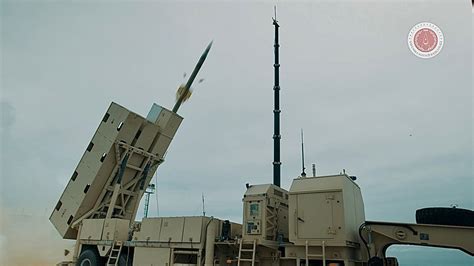
Why the S-400 Was Always a Square Peg in a Round NATO Hole
The S-400’s omission isn’t just symbolic—it’s systemic. Integrating the Russian-made radar and fire control systems with NATO-standard command-and-control infrastructure proved to be an insurmountable challenge. As defense analyst Sinan Elgin explained, “For a system like Steel Dome to succeed, every sensor, weapon, and module must communicate seamlessly. Foreign systems like the S-400 threaten that cohesion.”
Additionally, the system’s activation could reignite sanctions under the U.S. Countering America’s Adversaries Through Sanctions Act (CAATSA), which led to Turkey’s expulsion from the F-35 program in 2021. The Russian system was perceived as a major security risk by the Pentagon due to its surveillance capabilities that could potentially spy on NATO aircraft, especially stealth fighters like the F-35.
F-35 Reentry: Erdogan’s Strategic Playbook
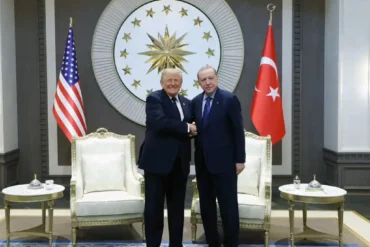
Speaking after the recent NATO summit in The Hague, President Recep Tayyip Erdogan confirmed Ankara’s intention to rejoin the F-35 consortium. His remarks followed closed-door talks with former U.S. President Donald Trump, suggesting a behind-the-scenes thaw in U.S.-Turkey defense ties.
“We have not given up on the F-35s,” Erdogan stated. “We are discussing our intention to return to the program with our counterparts. God willing, we will make progress.”
This political overture comes as Greece, Turkey’s regional adversary, moves ahead with acquiring 20 F-35As in a deal worth $8.6 billion, adding urgency to Ankara’s own stealth fighter ambitions. Israel, another rival, already operates nearly 40 F-35I “Adir” jets.

S-400 for Sale? Ankara’s Next Move
With the S-400 effectively mothballed and politically toxic, Ankara may seek to offload the system to a third-party buyer. One candidate—ironically—is India.
Former Turkish minister Cavit Çağlar floated this idea, stating that “Pakistan will buy them, India will buy them,” when asked about the S-400’s future. This isn’t just idle speculation. India already has three of five S-400 squadrons operational, with contracts signed for the remaining two under a $5.43 billion deal inked with Moscow in 2018.
In the aftermath of the May 2025 India-Pakistan conflict, New Delhi has accelerated the request to expedite deliveries of the remaining S-400 units. Indian defense officials are even reportedly considering two additional squadrons, a sign of deepening commitment to the Russian-made defense shield.
India’s Calculated Rejection of the F-35
Despite Washington’s quiet pitch, India has shown little enthusiasm for joining the F-35 program. Strategic planners in New Delhi see the platform as overkill for current needs and incompatible with India’s existing air doctrine, which focuses on air denial rather than dominance.
Furthermore, India is aware of potential operational incompatibilities and political baggage that could accompany a platform so deeply enmeshed with NATO’s ecosystem. Instead, India is doubling down on integrated air defense systems (IADS) and developing its indigenous AMCA fifth-generation fighter, though it remains years—possibly a decade—away from field readiness.
Strategic Calculus: NATO Leverage vs. Sovereign Defense
The divergence in Turkey and India’s strategies is shaped by their institutional affiliations and threat perceptions. As a NATO member, Turkey’s alignment with Russian systems introduced existential contradictions, pushing Ankara to choose between technological sovereignty and alliance cohesion.
India, not bound by NATO protocols and dealing with a two-front threat from China and Pakistan, sees value in S-400’s multi-target tracking and long-range interception capabilities, especially as Beijing inducts over 200 J-20 Mighty Dragons and supplies 40 J-35 fighters to Islamabad.
Meanwhile, Turkey faces a different security environment. With Greece and Israel deploying F-35s, and NATO allies increasingly focused on interoperability, returning to the JSF program is as much about staying relevant as it is about restoring aerial parity.
What’s Next: An F-35 Comeback and the Unmaking of the S-400 Gamble
Signals from both Ankara and Washington suggest that Turkey’s reintegration into the F-35 program could materialize by the end of 2025, particularly as bilateral negotiations over CAATSA sanctions begin to show signs of resolution. U.S. Ambassador Tom Barrack’s June 29 statement hinted at progress: “My belief is that by the year-end, we have the possibility of having a solution.”
For Turkey, this is more than a procurement issue—it’s a return to the strategic mainstream. For India, the path diverges into a more Russia-tethered model of air defense, albeit one adapted to its unique regional challenges.
Should Ankara succeed in rejoining the F-35 ecosystem and offloading the S-400, it would mark a definitive break from Moscow’s military-industrial grip and realignment with NATO priorities. For India, the potential acquisition of Turkey’s idle S-400s could further entrench its eastern-centric defense model.
In the end, both nations are scripting radically different chapters in their national security playbooks. One leans westward into stealth-enabled air dominance; the other fortifies its skies against threats it believes are already too close to ignore.