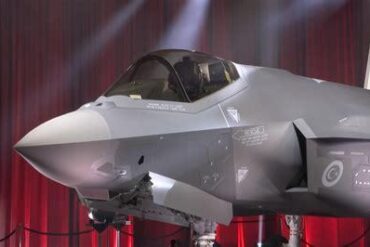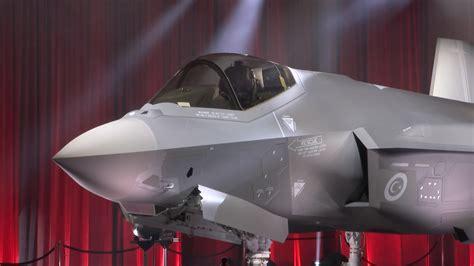
After years of geopolitical tension and defense diplomacy stalemates, Turkey is once again positioning itself at the center of the F-35 debate. With former U.S. President Donald Trump back in office and a renewed thaw in U.S.-Turkey relations, Ankara’s hopes for rejoining the F-35 Lightning II program have been rekindled. The question now: Will Trump 2.0 approve the transfer of fifth-generation stealth fighters to a NATO ally once expelled from the program over its controversial defense choices?
Erdogan’s Renewed Push to Rejoin the F-35 Program
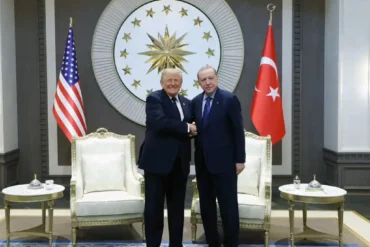
On June 26, 2025, Turkish President Recep Tayyip Erdoğan made a bold declaration aboard his flight from the NATO Summit in The Hague: “We have not given up on the F-35s.” This statement came after behind-closed-door discussions with Trump himself. It’s the clearest signal yet that Ankara seeks to turn the page on its past transgressions—namely, the 2019 decision to purchase Russia’s S-400 missile defense system, which led to Turkey’s ejection from the F-35 consortium.
Erdoğan emphasized that technical talks had already resumed and expressed confidence in a favorable outcome. His optimism is not unfounded. The two leaders—once adversaries in defense negotiations—now appear to be navigating a more cooperative phase, bolstered by Trump’s historically transactional approach to foreign policy.
$1.4 Billion and a Lost Partnership
Before its expulsion, Turkey was a full industrial partner in the F-35 program, manufacturing over 900 components for the aircraft. Ankara had also placed an order for 100 F-35A jets and prepaid around $1.4 billion. That sum, still unreimbursed, has become a potent bargaining chip in Turkey’s efforts to restore its position in the program.
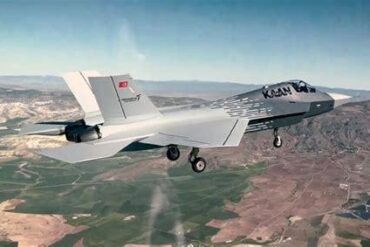
Despite being booted from the program, Turkey never abandoned its long-term vision to operate the F-35. Instead, it escalated development of its indigenous fifth-generation fighter jet KAAN and pursued parallel procurement options like the Eurofighter Typhoon and upgraded F-16s. However, none have matched the combat versatility and stealth profile of the Lockheed Martin-manufactured F-35.
S-400: The Persistent Quagmire
The S-400 surface-to-air missile system, acquired from Russia despite U.S. objections, remains the core issue. The U.S. viewed the system as a significant security risk—its advanced radars could potentially expose F-35 operational secrets. The result: Ankara’s ejection under CAATSA sanctions, with the Pentagon demanding a full dismantlement or relocation of the S-400 as a precondition for reentry.
Trump has reportedly warmed to the idea of resuming the F-35 sale if Turkey disables or removes the S-400 from active service. Proposals include housing the system at a U.S. base in Turkey or rendering it non-operational. Such compromises are now at the center of renewed negotiations.
Israeli Objections: Preserving the Regional Edge
While U.S.-Turkey ties may be on the mend, Israel remains a formidable obstacle. Prime Minister Benjamin Netanyahu is actively lobbying U.S. policymakers to block the sale, citing Turkey’s growing regional ambitions, especially in Syria, and Ankara’s increasingly autonomous foreign policy.
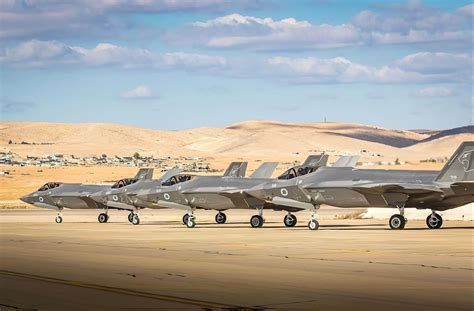
The issue of Israel’s “Qualitative Military Edge” (QME)—a doctrine codified in U.S. law—further complicates matters. This stipulates that U.S. arms sales in the region must not compromise Israel’s military superiority. Since Israel is the only current operator of the F-35 in the Middle East, any sale to Turkey, despite its NATO membership, could potentially alter the balance.
Europe’s Role: The Eurofighter Typhoon Conundrum
Turkey’s pursuit of the Eurofighter Typhoon offers a parallel story of frustrated procurement. Ankara has shown interest in acquiring 40 Typhoons to fill the generational gap in its air fleet. But Germany’s blockade, driven by Ankara’s human rights record and military campaigns against Kurdish groups in Syria, has kept the deal in limbo.
Recent reports from German daily Handelsblatt suggest that Chancellor Friedrich Merz may adopt a more flexible stance, potentially unblocking the deal. A successful Typhoon purchase would boost Turkey’s operational readiness, but the real crown jewel remains the F-35.
Trump’s Second Term: A Window of Opportunity
There are growing indications that Trump’s return to the White House could fast-track Turkey’s reentry into the F-35 club. Trump has previously offered the fighter to India, another S-400 operator, hinting that concerns about the missile system’s compatibility may be softening in U.S. defense circles.
In addition, Trump’s defense envoy to Ankara, Tom Barrack, has been quietly engaging in diplomatic backchanneling. This aligns with Erdoğan’s own statements about a “softening in CAATSA”, citing a friendlier tone and shared strategic goals.
As Aaron Stein, a prominent foreign policy analyst, noted: “The time is right for renewed negotiations. The U.S. Air Force may have to reduce its F-35 orders due to budgetary constraints, increasing the urgency to export the jet.”
Strategic Implications for NATO and the Mediterranean
Turkey’s strategic position between Europe and Asia makes its air force modernization not just a national priority, but a NATO imperative. With Greece receiving U.S. F-35s and bolstering its Mediterranean air presence, Ankara views parity as essential.
The rivalry between Athens and Ankara, long marked by territorial disputes in the Aegean Sea and conflicting maritime claims, has intensified with each military procurement. Turkey’s exclusion from the F-35 program has left a strategic void that Greece is eager to exploit.
Reinstating Turkey into the program could help rebalance this dynamic and reintegrate a major regional power into NATO’s tactical and strategic planning.
The KAAN Factor: A National Ambition Takes Flight
Turkey’s indigenous KAAN stealth fighter—scheduled for its first production batch by the end of the decade—symbolizes the nation’s desire for defense autonomy. But despite its ambitious design, KAAN remains years away from full operational capability.
In the interim, the absence of a fifth-gen aircraft places Turkey at a tactical disadvantage, especially when operating in proximity to Greek F-35s or Israeli F-35Is. Acquiring the F-35 would bridge that gap and grant Turkey a technological edge far sooner than KAAN can deliver.
What Lies Ahead: From Lobbying to Logistics
As technical discussions unfold and political lobbying intensifies in Washington, Ankara’s window of opportunity is now open—but not indefinitely. The logistical groundwork laid during Turkey’s initial participation in the F-35 consortium gives it a head start. Facilities exist. Pilots have trained. And the $1.4 billion already invested makes for a compelling case.
But the U.S. must tread carefully. Any decision to sell F-35s to Turkey will require meticulous vetting by Congress, recalibration of QME agreements, and assurance that the S-400 issue is irreversibly resolved.
Erdoğan’s outreach, Trump’s transactional tendencies, and shifting geopolitical realities might finally converge in a way that reopens the F-35 hangar doors to Turkey. But success hinges on compromise, diplomacy, and the strategic will to reintegrate a sometimes fractious—but still vital—ally.